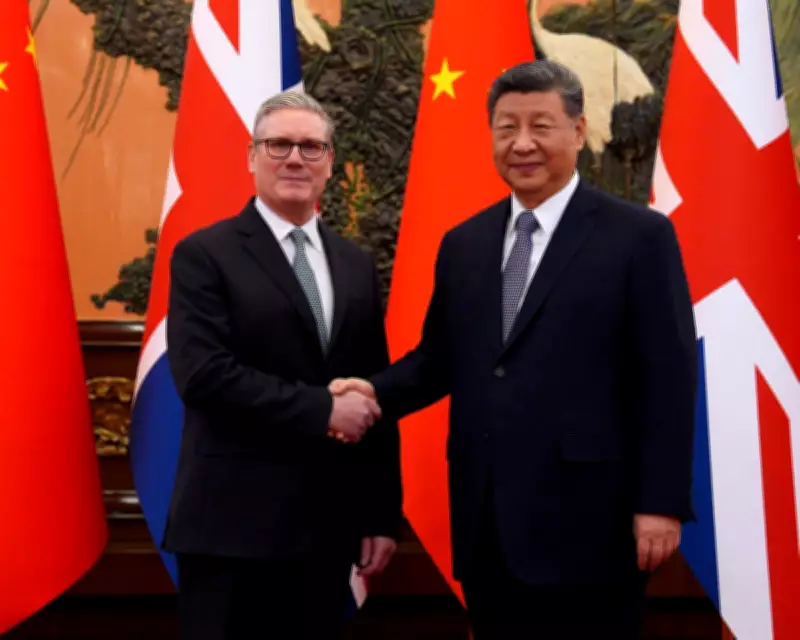
Keir Starmer Engages in High-Stakes Talks with China's Xi Jinping
In a significant diplomatic move, Keir Starmer has become the first British prime minister to visit China since Theresa May's trip in 2018. The meeting with Chinese leader Xi Jinping marks a pivotal moment as the UK seeks to redefine its relationship with the world's second-largest economy. Starmer has emphasised his commitment to bringing "stability and clarity" to Britain's approach towards Beijing, acknowledging the complex history of "twists and turns" between the two nations.
A Delicate Balancing Act for the UK
Number 10 is acutely aware that China cannot be overlooked, given its dominant role in green technologies, artificial intelligence, and global geopolitics. In response to Xi's call for a more "consistent" partnership, Starmer has expressed a desire for a "more sophisticated" relationship. This cautious engagement reflects a broader strategy to navigate the delicate balance between economic opportunities and security risks, without alienating key allies like the United States and the European Union.
Insights from Policy Experts
Laura Chappell, associate director for international policy at the Institute for Public Policy Research (IPPR), provides valuable context on the visit. She describes the UK's China policy as "confused," with past governments struggling to implement a coherent strategy. Chappell notes that while Labour's framework of "cooperate, compete, challenge" mirrors similar approaches by the Conservatives and the Biden administration, it has often lacked actionable follow-through.
Chappell highlights the economic imperative for the UK, with China being Britain's third-largest trading partner, accounting for £98.4 billion in goods and services trade in 2024. However, she also points to significant security concerns, including cyber-attacks on UK parliamentarians and controversies over espionage cases. Starmer's challenge is to leverage China's pivotal position in the green transition and AI sectors while mitigating these risks.
China's Expectations and UK Objectives
From Beijing's perspective, the visit is less about expecting dramatic policy shifts and more about receiving positive political signals. China seeks reassurance that it is being prioritised as a strategic partner, despite pressure from Washington. Chappell suggests that discrete deliverables, such as investment deals or visa facilitations for business travellers, are likely on the agenda.
For the Labour government, the core objectives revolve around economic growth, diplomatic finesse, and focused attention. Starmer aims to secure tangible economic benefits, such as increased trade and investment, while maintaining strong ties with the EU and US. Chappell remains skeptical about any transformative outcomes, viewing the trip as a step towards "warming relationships" rather than a definitive realignment.
The Path Forward: Clarity and Caution
Ultimately, Chappell advocates for a clearer, more strategic approach from the UK. She argues that Britain should move beyond treading a middle ground and instead actively seize opportunities while managing risks. Starmer's technocratic style may lend itself to this measured approach, focusing on incremental progress rather than radical change.
As global instability rises, with events like Trump's warnings to Iran and tensions in the Middle East, Starmer's China gamble underscores the need for nuanced diplomacy. The visit forces a deeper engagement with China's complexities, offering a chance to recalibrate Britain's role on the world stage. Whether this cautious reset will pay off remains to be seen, but it signals a renewed effort to navigate an increasingly multipolar world.