Starmer's Diplomatic Tightrope: Economic Engagement Meets Security Vigilance in Beijing
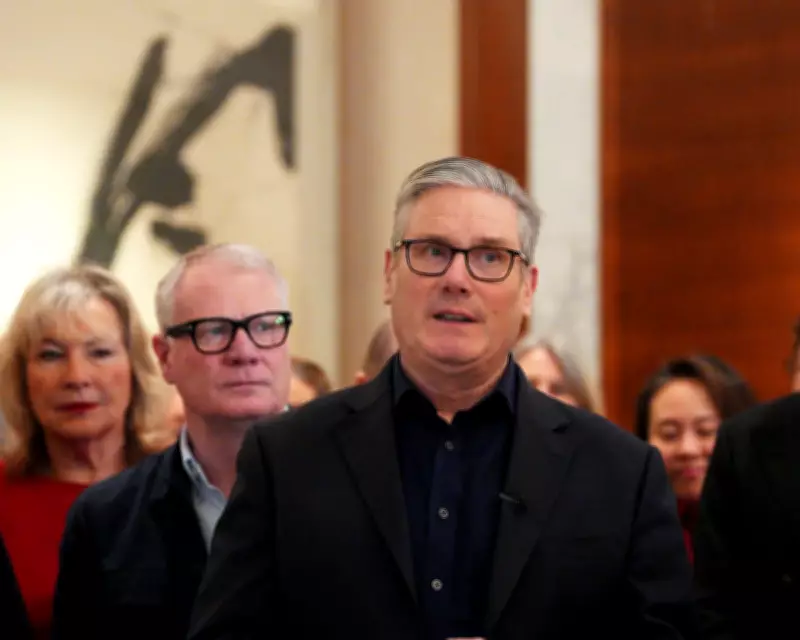
Prime Minister Keir Starmer has embarked on a historic diplomatic mission to Beijing, becoming the first UK leader in eight years to engage in direct talks with Chinese President Xi Jinping. The high-stakes visit, occurring against a backdrop of global economic uncertainty and shifting geopolitical alliances, represents a calculated attempt to recalibrate Britain's relationship with the world's second-largest economy.
A New Chapter in UK-China Relations
The centrepiece of this diplomatic endeavour was a forty-minute meeting between Starmer and Xi at the Great Hall of the People, followed by a series of cultural and business receptions. During his flight to Beijing, the Prime Minister articulated his objective to inject "stability and clarity" into bilateral relations, contrasting this approach with what he described as years of "inconsistency" under previous Conservative governments that saw relations fluctuate dramatically.
This diplomatic outreach comes at a crucial juncture for the UK economy. China stands as Britain's third-largest trading partner, with annual exports of goods and services valued at approximately forty-five billion pounds. With growing concerns about the reliability of traditional alliances, particularly with the United States, the British government views strengthened economic ties with Beijing as a strategic imperative for national prosperity.
Security Concerns and Human Rights Commitments
Despite the economic imperative, Downing Street has emphasised that Starmer approaches these negotiations with what he terms a "clear-eyed" perspective on the threats China poses to UK national security. Government officials have confirmed that "guardrails" will be implemented to protect against potential espionage activities and cyber threats that have previously strained relations between the two nations.
The Prime Minister has committed to raising sensitive human rights issues during his discussions, including the case of Jimmy Lai, the prominent Hong Kong pro-democracy activist and former media tycoon whose imprisonment has drawn international condemnation. British authorities continue to press for his release, viewing this as a fundamental test of China's commitment to international human rights standards.
Political Criticism and International Context
Starmer's diplomatic initiative has attracted significant criticism from political opponents, particularly Conservative figures who argue that engaging with Beijing represents a dangerous compromise with a regime accused of numerous hostile activities. These allegations include attempts to recruit parliamentary informants, harassment of Hong Kong activists residing in Britain, and sophisticated cyber-attacks targeting UK infrastructure.
The timing of this visit occurs amidst escalating trade tensions between China and the United States, creating a complex diplomatic landscape for British foreign policy. Number Ten has explicitly stated that the UK will not be forced to "choose between" these two global superpowers, seeking instead to maintain constructive relationships with both nations while safeguarding British interests.
Practical Agreements and Broader Cooperation
Among the concrete outcomes expected from this summit is a bilateral agreement addressing the supply of small boat parts manufactured in China, which have been used by migrants attempting to cross the English Channel. With sixty percent of engines used in such crossings originating from Chinese manufacturers last year, the proposed deal would establish intelligence-sharing mechanisms between UK and Chinese law enforcement agencies to disrupt these supply chains.
The agenda also includes enhanced cooperation on combating serious organised crime, particularly the trafficking of powerful synthetic opioids responsible for hundreds of fatalities across Britain. This collaborative approach extends to discussions about balancing commercial engagement with necessary limitations on Chinese influence over critical UK infrastructure, while maintaining consistent pressure on human rights issues affecting populations in Xinjiang and Hong Kong.
Personal Diplomacy and Symbolic Gestures
Starmer's diplomatic strategy includes developing a personal rapport with President Xi, which government insiders believe could prove invaluable in future negotiations, including potential Chinese involvement in resolving international conflicts such as the war in Ukraine. In a symbolic gesture highlighting this personal approach, the Prime Minister presented Xi with a football from last week's match where Manchester United defeated Arsenal, acknowledging the Chinese leader's well-documented support for the Manchester club.
This visit represents a continuation of Starmer's nuanced China policy, which combines openness to economic engagement with appropriate caution regarding security implications. Having previously met Xi at the G20 summit in Rio de Janeiro in late 2024, the Prime Minister appears committed to establishing a more predictable framework for UK-China relations that serves British economic interests without compromising national security or fundamental values.