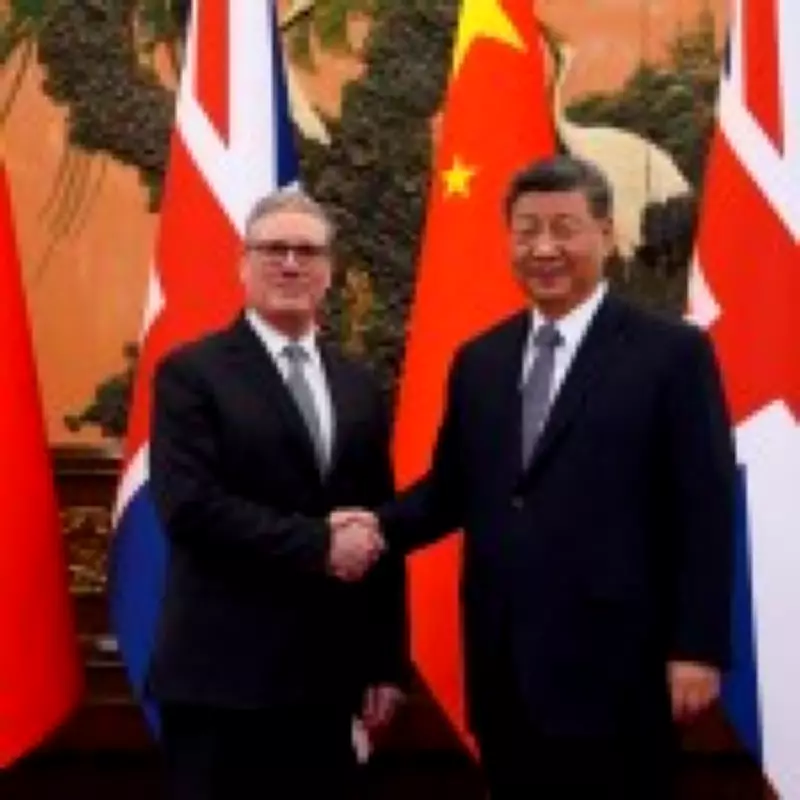
In a move that combined sporting passion with international diplomacy, Prime Minister Keir Starmer offered a unique and light-hearted gift to Chinese President Xi Jinping ahead of their high-stakes meeting in Beijing. The present was a football used in last weekend's Premier League clash between Manchester United and Arsenal at the Emirates Stadium, a gesture rich with symbolic meaning.
The Significance of the Sporting Gift
This was not just any match ball. The game saw Manchester United secure a dramatic 1-0 victory over Arsenal, thanks to an 87th-minute goal from Matheus Cunha. This result dealt a significant blow to Arsenal's title aspirations, making the football a poignant token of humility from Starmer, who is known to be a devoted Arsenal supporter.
The choice of gift cleverly nods to President Xi's reported obsession with Manchester United, despite his unlikely image as a fan of English football. Historical context adds depth to this narrative: during Xi's 2015 visit to the UK, plans for a tour of Old Trafford were controversially scrapped in favour of a visit to the Etihad Stadium, home of Manchester City, United's fierce rivals. This decision was reportedly influenced by Sir Richard Leese, then leader of Manchester Council and an avid City fan, as noted by ESPN.
Diplomatic Context and Broader Implications
Starmer's trip to China comes amid mounting pressure to secure major deals and navigate complex geopolitical tensions. Critics, including Conservative leader Kemi Badenoch, have questioned the wisdom of showcasing friendship with China at a time when espionage concerns dominate headlines. Recent months have seen a focus on issues such as the collapsed China 'spy' case, MI5 warnings about parliamentary recruiters, the trial of British citizen Jimmy Lai, and approval for a controversial embassy.
In response, Starmer has positioned himself as a 'British pragmatist', aiming to forge connections with the world's second-largest economy to boost the UK. During the meeting, he expressed a desire for a 'more sophisticated' relationship with Beijing, with Xi acknowledging the 'twists and turns' of recent years.
Outcomes and Discussions from the Visit
Upon concluding his trip, Starmer reported 'really good progress' on several fronts, including whisky tariffs, visa-free travel arrangements, and efforts to address illegal migration—particularly focusing on China's role in manufacturing parts for engines used on small boats. He also confirmed that his team raised sensitive human rights issues, such as the case of jailed pro-democracy campaigner Jimmy Lai in Hong Kong and concerns over the treatment of the Uighur minority.
Starmer emphasised the rationale behind this engagement, stating: 'Part of the rationale for engagement is to make sure that we can both seize the opportunities that are available, which is what we’ve done, but also have a mature discussion about issues that we disagree on.' This approach underscores a balancing act between economic cooperation and ethical diplomacy.
The football gift, while seemingly trivial, encapsulates this nuanced strategy—using shared cultural interests to foster dialogue while addressing deeper political and economic challenges. It highlights how modern diplomacy often intertwines personal gestures with broader policy objectives, aiming to build rapport in an increasingly complex global landscape.