A close ally of Vladimir Putin has sparked controversy by sharing a bizarre AI-generated image of Donald Trump in an attempt to bolster support for a disputed ceasefire plan for Ukraine.
The Unusual Diplomatic Strategy
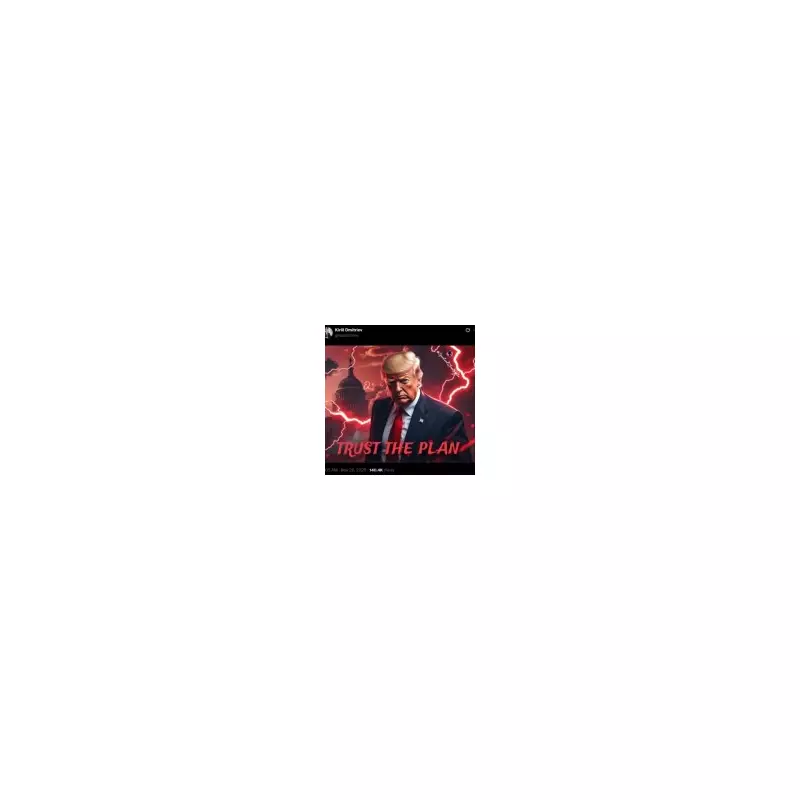
Kirill Dmitriev, head of Russia's state investment fund (RDIF), posted the artificial intelligence creation on social media platform X earlier this week. The image depicts Trump with furrowed brows standing before the White House, which is overshadowed by grey clouds and dramatic red sparks. The foreground bears the ominous text: 'Trust the plan'.
Dmitriev, who lacks formal diplomatic experience but maintains close relationships with both Putin and Trump's son-in-law Jared Kushner, has positioned himself as Russia's unofficial negotiator. This follows the deterioration of relations between the American and Russian presidents earlier this year.
QAnon Connections and International Reaction
Perhaps the most telling detail in the image is the presence of a 'Q+' mark, a clear reference to the far-right QAnon conspiracy movement that emerged in 2017 and whose followers often view Trump as a heroic figure.
The Russian official shared the AI creation in response to US Secretary of State Marco Rubio, who had criticised what he called 'fake news reports claiming a rift inside the Trump administration over how to end the war in Ukraine.' Dmitriev accompanied his post with the message: 'Truth and peace will prevail.'
Behind the Controversial Peace Plan
The incident comes amid growing scepticism about the 28-point peace deal first unveiled in November. Multiple sources have confirmed to Reuters that the plan to end the conflict drew heavily from a Russian-authored paper sent to the Trump administration in October.
According to these sources, the Russians shared their conditions for ending the war following a meeting between Trump and Ukrainian President Volodymyr Zelensky in mid-October. The document contained language previously put forward by the Kremlin at negotiating tables, including concessions that Ukraine had previously rejected - notably ceding significant eastern territory.
This marks the first confirmation that the Russian document served as key input for the 28-point peace proposal. Neither the US State Department nor Russian officials have commented on these revelations.
Evolving Negotiations and Ukrainian Resistance
Metro previously reported that the original deal included elements Ukraine had described as 'red lines', including troop withdrawals from parts of the Donetsk region still under Ukrainian control and reductions in military capacity.
Following criticism from European leaders who blasted the initial proposal as capitulation to Putin's demands, the plan has undergone significant changes. A new 19-point peace plan emerged this week after two days of talks between US and Ukrainian officials in Geneva that concluded on Sunday.
The negotiations were led on Ukraine's side by Zelensky's chief of staff Andriy Yermak and diplomat Umerov. While Ukraine's presidency office described the talks as 'constructive', they disclosed few details, noting that final decisions would be made by the presidents of Ukraine and the United States.
Ukraine's first deputy foreign minister Sergiy Kyslytsya, who attended the Geneva meetings, provided a more candid assessment to The Financial Times, describing the discussions as 'intense' and revealing they nearly collapsed before beginning. He noted that 'very few things are left from the original version' of the peace plan.
The diplomatic manoeuvring continues as international observers question whether the modified agreement can provide a sustainable resolution to the conflict, while the use of AI imagery in diplomatic communications adds an unprecedented dimension to the peace process.