Rubio's Munich Address: A Soothing Tone Masks a MAGA Trap for Europe
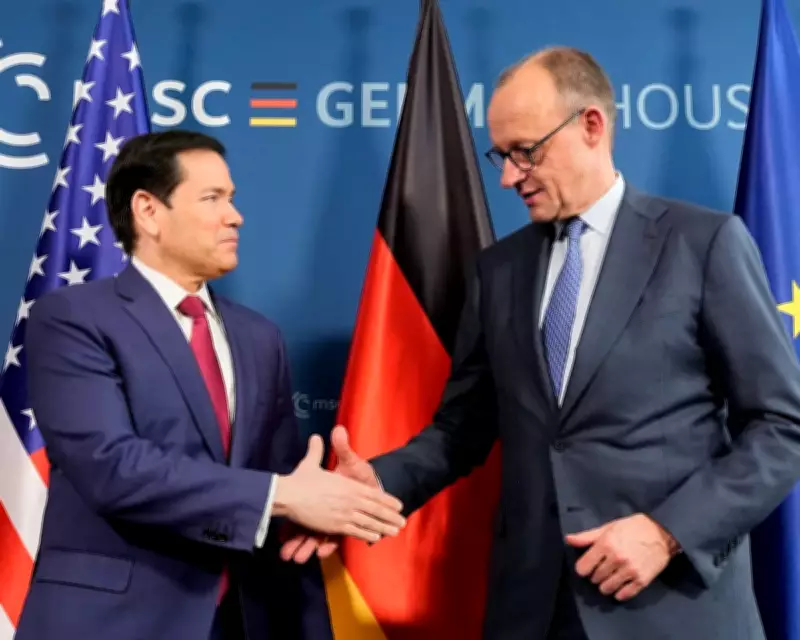
At the Munich Security Conference on February 13, 2026, US Secretary of State Marco Rubio and German Chancellor Friedrich Merz presented a facade of transatlantic unity, but beneath the surface, tensions simmered dangerously. After the shock of last year's event, where JD Vance launched a frontal assault on Europe's liberal democracies, Rubio's seemingly conciliatory speech was greeted with relief by many attendees, including veteran German diplomat Wolfgang Ischinger, who called it "reassuring." The secretary of state even received a standing ovation, yet this gesture likely reflected more anxiety than genuine admiration.
The Contrast Between Vance's Attack and Rubio's Subtlety
A year earlier, Vance had baffled European leaders by accusing Europe of succumbing to woke liberalism and losing sight of shared cultural bonds, while endorsing far-right nationalists like Germany's AfD. In response, Chancellor Merz used his opening address this year to issue a blunt warning against American unilateralist values, declaring that "the culture war of the MAGA movement is not ours." With Europeans desperate for reassurance, Rubio offered warm words, celebrating shared heritage, history, and Christianity, and claiming the US was determined to spearhead a Western civilisational renaissance rather than manage decline.
Beneath the Surface: A Shared MAGA Message
Despite the different tones, Rubio's speech and Vance's attack were two sides of the same coin. While Vance's approach was crude and outrageous, Rubio's was more subtle and coherent, yet both promoted ethno-political values of culture, tradition, and religion, overlooking the historical baggage of nationalism, racism, fascism, and colonialism. In Europe, there is a belief in turning the page from this past, embracing civic and Enlightenment values like democracy, human rights, and multilateralism. However, for MAGA standard-bearers, nationalism is to be celebrated, and the rules-based order is dismissed as "foolish" in Rubio's characterization.
The Imperial Vision and Its Implications
Rubio outlined a vision of empire, where the Americas and Europe are bound by ancestry and religion, "connected spiritually," as he put it. This perspective calls for proud nationalist forces to jointly battle globalism, cancel culture, and the "civilisational erasure" threatened by mass migration. In this "Western century," raw power would be exercised by the strong—the US—against the weak, including small and medium-sized European countries. Within this empire, institutions like NATO would exist, but the US intention is clear: allies pay up, yet America still calls the shots, ready to cooperate or even collude with other empires like Russia and China, often at the expense of its colonial subjects.
European Response and the Path Forward
Rubio's sophisticated message is arguably more dangerous than Vance's because it lowers the transatlantic temperature, potentially lulling Europe into a false sense of calm. As French Europe Minister Benjamin Haddad noted, the European temptation may be to press the snooze button once again. However, leaders like Merz, Emmanuel Macron, Keir Starmer, Pedro Sánchez, and European Commission chief Ursula von der Leyen emphasized the need for European independence, mutual assistance under EU treaty article 42.7, and a Europeanized NATO. Russia's war on Ukraine, nearing its fourth anniversary, adds urgency, as does the reminder from Danish Prime Minister Mette Frederiksen about the ongoing US threat to Greenland.
The Role of NATO and European Security
While European resolve and collective action are likely to continue, much energy will focus on working within existing transatlantic frameworks, particularly NATO. The UK and Italy taking over NATO commands from the US signals a step toward establishing a European "pillar" within the alliance. Diplomats predict that NATO will evolve, with the US representing an estimated fifth or less of its military capacity, down from nearly half today. However, if the US pursues an imperial vision where its strategic interests diverge from Europe's—such as no longer viewing Vladimir Putin's Russia as a national security threat—Europeans must question whether pinning security hopes solely on a Europeanized NATO is sufficient.
A European pillar within NATO offers the most effective route to security as the US scales back responsibility for the continent's defence, more achievable than turning the EU into a military alliance. Yet, it cannot guarantee safety if the US continues on its current trajectory. If Europeans left Munich comforted by false reassurance, they risk walking straight into the trap that MAGA America has laid, jeopardizing the very values that define the continent's identity and future.