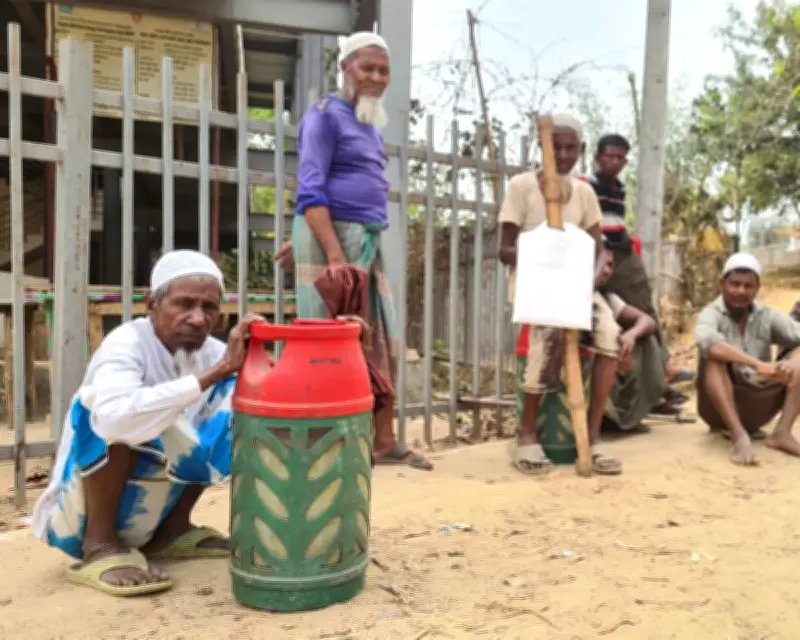
Rohingya Refugees Face Return to Toxic Cooking Methods as LPG Funding Dries Up
In the sprawling Rohingya refugee camps of Cox's Bazar, Bangladesh, a critical lifeline is fraying. Funding for liquefied petroleum gas (LPG), which has provided safe cooking fuel for years, is being slashed, threatening to force hundreds of thousands back to dangerous alternatives like plastic bags, donated clothes, and scavenged firewood.
The Desperate Past Before LPG Arrived
Before LPG distribution began across the camps in 2018, Rohingya families faced impossible choices. With no organized cooking fuel supply, refugees resorted to burning whatever they could find. Plastic bags, donated clothing, and wood cut from nearby forests became their primary fuel sources. This practice created toxic smoke that endangered respiratory health and required children to spend their days collecting firewood instead of attending school.
The environmental impact was devastating. The nearby Teknaf forest suffered significant decimation as refugees cut trees for fuel, creating tensions with local communities who depended on the same resources. The situation represented a humanitarian crisis within a crisis, compounding the trauma of ethnic cleansing that forced over 750,000 Rohingya to flee Myanmar.
A Fragile Solution Now Under Threat
When the UN High Commissioner for Refugees and International Organization for Migration began providing LPG across the camps, many problems subsided. Children returned to classrooms, deforestation slowed, and toxic indoor air pollution decreased. The camps became greener and refugees more hopeful about their daily survival.
Now that progress is unraveling. As international aid funding tightens globally, support for cooking fuel has faltered. In 2024, the United States contributed just under $145 million to the Rohingya Joint Response Plan. For 2025, that funding was cut by almost a third to $100.7 million, leaving the overall plan only 46% funded compared to 68% previously.
The Immediate Consequences of Funding Cuts
Last July, a UNHCR spokesperson warned that without immediate funding injections, LPG supplies would run out. While nations like China and South Korea have provided temporary assistance, these solutions are incomplete. The Chinese plan lasts only until October and excludes over 80,000 households. The Korean assistance reaches just 17 of the 33 total camps.
"All help is welcome, but all Rohingya need fuel," says Ajas Khan, a Rohingya refugee and founder of the Rohingya Green Nature Society. "Without further support, my people will be forced to find firewood, plastic, or other waste to heat their meals."
Why Alternative Solutions Fall Short
While electricity or biogas could theoretically replace LPG, practical limitations make these alternatives unworkable in the camp context. A 2025 study from the International Centre for Diarrhoeal Disease Research in Bangladesh and Stanford University concludes that limited land and infrastructure make electric and biogas systems difficult to implement.
Micro-grids for electricity and small-scale biogas cooking solutions would reduce fossil fuel reliance but remain costly and untested in humanitarian settings. LPG distribution, while not pollution-free, creates far fewer emissions than the widespread deforestation and toxic burning that occur when refugees cook with debris and waste.
The Human Cost Beyond Dollars
The financial importance of investing in Rohingya refugees extends far beyond immediate budget savings. Funding cuts disrupt fragile natural and social environments, dramatically increasing the cost of restoring stability later. For a population prohibited from work or higher education in Bangladesh, these cuts threaten the most basic needs.
Joe Phillips, a country director at development charity Amideast, warns: "Shocks are always going to hit people on the ground hard, but as donor funding dries up... when there are shocks, the shocks are going to be worse." For Rohingya refugees, whether funding remains available will determine how severely future emergencies impact their survival.
A Simple Solution with Profound Impact
Restoring LPG distribution represents a straightforward intervention with life-changing consequences. Before recent cuts, the program demonstrated that safe cooking fuel could protect both refugee health and local ecosystems while keeping children in school.
As Ajas Khan reflects on his own journey from refugee to advocate, he emphasizes: "The same support that once allowed me to begin my work can ensure that the next generation does not have to choose between gathering firewood and attending school." For Rohingya refugees facing an uncertain future, cooking gas remains not just a convenience, but a fundamental requirement for dignity, health, and hope.