Pope Leo has made a historic visit to Beirut, delivering a powerful plea for peace and unity to a nation on edge. The pontiff's first foreign trip comes barely a week after Israeli warplanes conducted airstrikes on the Lebanese capital, sharply underscoring the region's fragile state.
A Pontiff's Plea in a Time of Turmoil
The American-born Pope arrived with a core mission: to reinforce the critical need for Christian-Muslim coexistence. His message is aimed at a country where political tensions are at a severe high, exacerbated by years of economic collapse, political deadlock, and the devastating 2020 port explosion that killed over 200 people.
Thousands of Lebanese faithful defied rainy weather to welcome the Bishop of Rome. Crowds lined the streets, waving Lebanese and Vatican flags, and showering his covered popemobile with flower petals and rice as his motorcade travelled towards Annaya.
Historic Gestures and Urgent Meetings
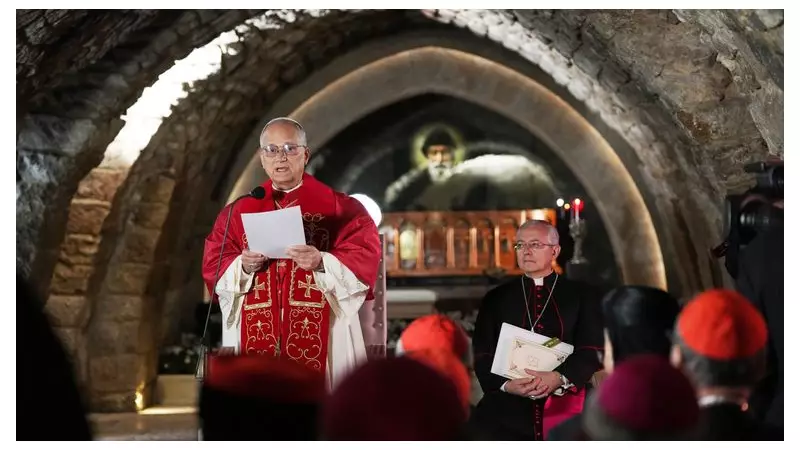
In a significant spiritual gesture, Pope Leo became the first pontiff to pray at the tomb of St. Charbel Makhlouf, a revered 19th-century hermit associated with miraculous healings. His schedule for Monday 1 December 2025 also included poignant plans to pray at the site of the 2020 Beirut port blast.
The Pope's diplomatic efforts were in full swing, with meetings scheduled with Lebanon's diverse religious leaders. His central urging to them, and to the country's Christians—who form the largest Christian community in the Middle East—is not to flee the nation despite the profound instability and the spillover effects from the war in Gaza.
A Regional Cry for Stability
The visit follows Pope Leo's first stop in Turkey, where he prayed alongside an imam in Istanbul's Blue Mosque, setting a tone of interfaith dialogue. In Lebanon, his message resonated deeply with communities feeling the strain of conflict, including recent Israeli strikes which Prime Minister Benjamin Netanyahu claimed targeted a Hezbollah chief of staff.
"We have really been waiting for the pope's visit because it is raising our hope now," said Reverend Toni Elias, a Maronite priest from a Christian town near the Israeli border. "He has come to confirm for us that what we are living through, it will not always be like this. And we believe that he brings with him the message of peace, which we really need."
The Pope's journey represents a bold spiritual and diplomatic intervention, aiming to shore up hope in a nation where it is in desperately short supply, while calling for perseverance in peace efforts amidst a "highly complex regional situation."