Historic First Overseas Journey for American Pontiff
Pope Leo touched down in Turkey's capital Ankara on Thursday afternoon, marking his inaugural foreign visit since assuming the papacy in May 2025. The newly elected pontiff, the first American to hold the position, arrived with a clear mission to promote global peace during what he described as a "crucial time" for international relations.
The Pope's aircraft landed at Ankara's Esenboga Airport at 14:28 local time on Thursday 27th November 2025, where he received an official welcome ceremony featuring a military guard of honour. He was greeted by a delegation led by Turkey's Culture and Tourism Minister, beginning what promises to be a significant diplomatic engagement.
Symbolic Choice of Destination
Turkey holds particular significance for Pope Leo's first overseas destination, chosen to commemorate the 1,700th anniversary of the landmark early Church council that produced the Nicene Creed. This foundational document continues to outline the core beliefs of most Christians worldwide today.
Speaking to journalists aboard his flight from Rome, the pontiff articulated his vision for the visit: "We hope to announce, transmit, proclaim how important peace is throughout the world. And to invite all people to come together, to search for greater unity, greater harmony."
Diplomatic Engagements and Cultural Respect
Following his arrival, Pope Leo embarked on a carefully planned itinerary that began with a visit to Anitkabir, the mausoleum of modern Turkey's founder Mustafa Kemal Ataturk. This gesture demonstrated respect for the nation's secular heritage and historical significance.
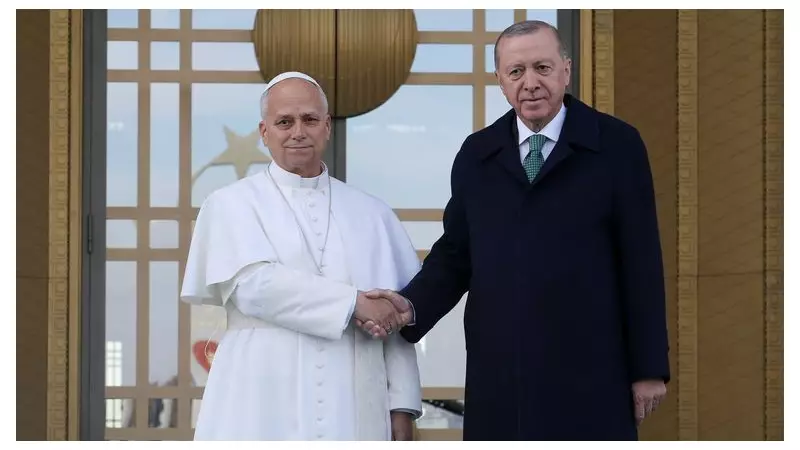
The pontiff then travelled to the presidential palace in a Mercedes limousine accompanied by a horse-mounted escort, where he met with Turkish President Recep Tayyip Erdogan, officials, and senior church members. During their discussions, Pope Leo praised Turkey's historical role as a bridge between east and west and as a crossroads for diverse religions and cultures.
"May Turkey be a source of stability and rapprochement between peoples, in services of a just and lasting peace," he stated, adding that "today, more than ever, we need people who will promote dialogue and practice it with firm will and patient resolve."
Timely Diplomatic Context
The visit comes at a particularly sensitive moment in international affairs, with ongoing efforts to end the war in Ukraine and reduce tensions across the Middle East. Ankara has positioned itself as a key mediator, having hosted multiple rounds of low-level talks between Russia and Ukraine.
Turkey has also offered to participate in the stabilisation force in Gaza to help maintain the fragile ceasefire, making the Pope's discussions with Turkish leadership especially relevant to current peace initiatives.
Continuing Journey and Future Engagements
Following his three-day itinerary in Turkey, Pope Leo is scheduled to travel to Lebanon on Sunday, where peace is expected to remain a central theme of his visit. Lebanon, which boasts the highest percentage of Christians in the Middle East, has experienced significant spillover effects from the Gaza conflict.
In a notable departure from his predecessor's plans, Pope Francis had intended to visit both Turkey and Lebanon but was unable to do so due to deteriorating health. The 70-year-old Pope Leo, elected by the world's Catholic cardinals in May to succeed the late Pope Francis, brings a fresh perspective to Vatican diplomacy.
Another significant departure from traditional practice sees Pope Leo expected to deliver his speeches in Turkey in English, rather than the customary Italian or Latin. This choice may reflect his background and the predominantly Sunni Muslim demographic of Turkey's 85 million population.
Background and Significance
Before his unexpected election, Pope Leo was relatively unknown on the global stage, having spent decades as a missionary in Peru before becoming a Vatican official only in 2023. His selection of Turkey and Lebanon for his first foreign trip underscores the importance he places on interfaith dialogue and Middle Eastern stability.
Foreign travel has become an essential component of the modern papacy, with popes frequently attracting international attention through massive public events, foreign policy addresses, and diplomatic engagements. Pope Leo's journey continues this tradition while establishing his own approach to global leadership.
Notably, the Pope's itinerary in Lebanon will not include visits to the country's southern region, which has been heavily affected by last year's conflict between Israel and Hezbollah and has experienced intensified Israeli strikes in recent weeks.