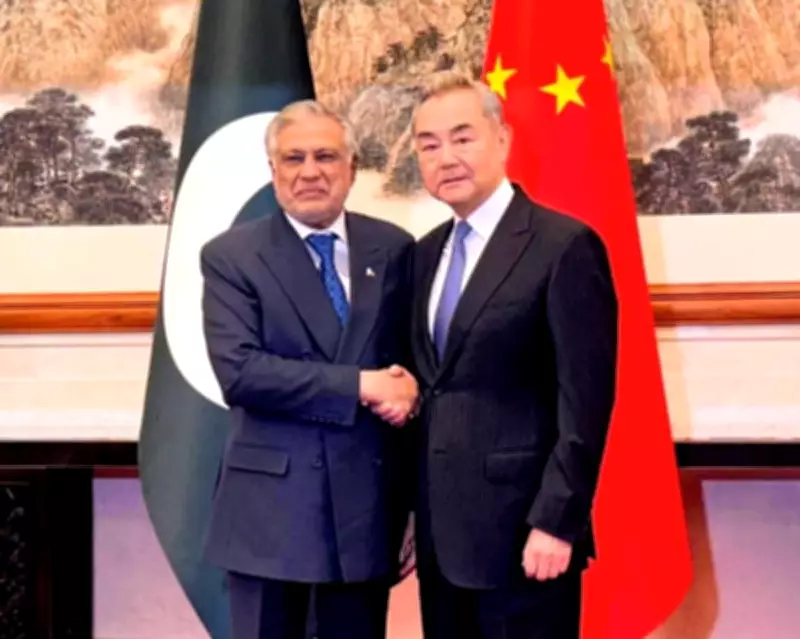
In a significant diplomatic move, Pakistan and China have jointly proposed a comprehensive five-part peace plan aimed at resolving the escalating Middle East crisis. The initiative follows a high-level meeting in Beijing between Pakistan's Foreign Minister Ishaq Dar and his Chinese counterpart, Wang Yi, where both nations pledged to strengthen cooperation and make new efforts toward advocating for peace.
High-Stakes Diplomacy in Beijing
The one-day meeting on Tuesday marked a pivotal moment as Pakistan intensifies its campaign to position itself as a peacemaker between the United States and Iran, despite the ongoing war showing little sign of abating. According to an official statement from China's foreign ministry, the visit was specifically designed to enhance collaboration between the two allies on the conflict in Iran and to champion peaceful resolutions.
China has historically maintained a cautious distance from Middle Eastern and Gulf conflicts, despite its substantial economic ties with Tehran, including being the largest purchaser of Iranian oil. While Beijing condemned initial U.S. and Israeli strikes on Iran, it has since adopted a largely neutral stance, focusing on ceasefire appeals and direct negotiations with Tehran to ensure the safe passage of its oil tankers through the strategic Strait of Hormuz.
The Five-Point Peace Proposal
Following their discussions, Dar and Wang issued a joint statement outlining a five-part initiative for peace. Key elements include an immediate ceasefire, protection of vital waterways like the blockaded Strait of Hormuz, and a firm endorsement that dialogue and diplomacy represent the only viable path to conflict resolution. However, analysts note that substantive progress in bringing major war participants to the negotiating table remains elusive.
This diplomatic push comes amid conflicting reports from global leaders. Former U.S. President Donald Trump recently claimed negotiations with Iran were progressing "extremely well," while Tehran has flatly denied any direct talks are occurring. The discrepancy underscores the complex and volatile nature of the crisis.
Pakistan's Ambitious Peacemaker Role
In recent weeks, Pakistan has aggressively positioned itself at the forefront of ceasefire efforts, advocating for Islamabad to host peace talks. Leveraging its relationships with both sides, Prime Minister Shehbaz Sharif and Army Chief Syed Asim Munir have engaged in communications with U.S. and Iranian leaders, including President Masoud Pezeshkian, serving as intermediaries for messages between the warring nations.
Just days before the Beijing meeting, Islamabad hosted a regional summit with foreign ministers from Saudi Arabia, Turkey, and Egypt, seeking a collective solution to the conflict. Yet the absence of both the U.S. and Iran from these negotiations significantly undermined their diplomatic impact, highlighting the challenges of multilateral peacemaking.
Strategic Motivations and Regional Stakes
Analysts suggest Pakistan's fervent embrace of the mediator role stems from years of being sidelined by Washington under previous administrations, coupled with a concerted push by its government and military to establish the country as a regional diplomatic heavyweight. Rafiullah Kakar, a prominent Pakistani columnist and political analyst, explained, "Islamabad seeks to reinforce its standing as a consequential middle power within the broader Muslim world and to signal continued geopolitical importance to external partners, particularly Washington and the Gulf states."
Beyond geopolitical ambitions, Pakistan has substantial domestic and economic interests in resolving the conflict. The nation shares a 560-mile land border with Iran, raising fears that violence could spill over into the restive Balochistan region, already grappling with a violent insurgency. Additionally, Pakistan hosts the world's largest population of Shia Muslims outside Iran, and prolonged conflict risks exacerbating sectarian tensions—evidenced by deadly protests following U.S. and Israeli bombings in Tehran.
Economically, Pakistan is suffering from the blockade on fuel and gas through the Strait of Hormuz, and a freshly signed defense pact with Saudi Arabia could potentially drag a reluctant Islamabad into the war if Gulf states adopt an offensive stance against Iran's missile and drone attacks.
Balancing Act on a Global Stage
Kakar emphasized that Pakistan's drive to de-escalate the Iran conflict reflects a delicate balancing act between geopolitical and domestic concerns. "Pakistan remains economically dependent on the Gulf monarchies, particularly Saudi Arabia, and seeks to preserve stable relations with the United States—yet it also shares a long and sensitive border with Iran," he noted. "Serious instability in Iran would have direct implications for Pakistan's security. Escalation risks placing Islamabad in a very difficult position."
As the Middle East crisis continues to unfold, the joint Pakistan-China peace plan represents a bold diplomatic endeavor, though its success hinges on the willingness of key stakeholders to engage in meaningful dialogue. With both nations advocating for immediate ceasefire and protected waterways, the international community watches closely to see if this five-point initiative can pave the way for lasting peace in a region plagued by conflict.