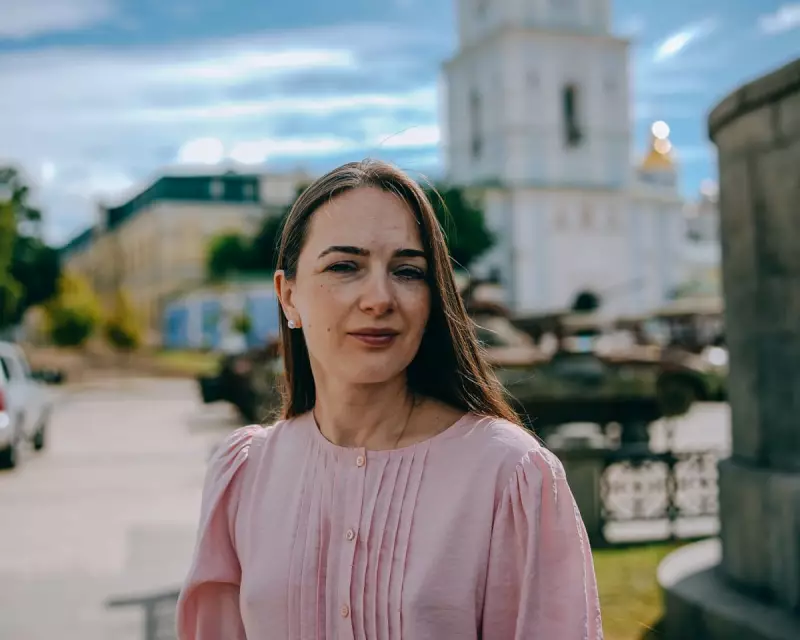
Ukrainian Nobel Peace Prize winner Oleksandra Matviichuk has issued a powerful demand that any potential peace agreement between the United States and Russia must include concrete mechanisms to punish Moscow for its war crimes in Ukraine.
The Call for Justice in Peace Negotiations
In an exclusive interview, Matviichuk, who leads the Center for Civil Liberties, emphasised that any peace deal lacking proper accountability for Russian atrocities would be fundamentally flawed. She stressed that justice for victims must form the cornerstone of any sustainable resolution to the conflict.
The prominent human rights advocate expressed particular concern about recent diplomatic movements, noting that Ukraine must have a decisive voice in any negotiations concerning its future. Matviichuk's organisation has documented over 128,000 war crimes incidents since Russia's full-scale invasion began in February 2022, creating what she describes as a systematic pattern of violence against civilians.
Documenting Atrocities and Building Cases
Under Matviichuk's leadership, the Center for Civil Liberties has coordinated one of the most extensive war crimes documentation efforts in modern history. Their work has identified 1,400 suspected war criminals and compiled evidence of horrific abuses including torture, sexual violence, and indiscriminate attacks on civilian infrastructure.
"We're not just collecting evidence for some future tribunal that might happen in decades," Matviichuk stated. "We're building cases now, identifying perpetrators, and creating a comprehensive picture of the crimes committed against our people."
The human rights lawyer highlighted several key locations where particularly severe atrocities occurred, including Bucha, Mariupol, Irpin, and Izyum. In these areas, Russian forces left behind mass graves and overwhelming evidence of systematic war crimes against civilian populations.
The International Community's Responsibility
Matviichuk appealed directly to Western leaders, particularly in the United States, to recognise that peace without justice ultimately undermines global security. She warned that allowing Russia to escape accountability would set a dangerous precedent for other authoritarian regimes considering similar aggression.
"The international community faces a critical choice," Matviichuk explained. "Will we uphold the principles of international law, or will we allow might to make right? This isn't just about Ukraine's security—it's about the security of every nation that believes in a rules-based international order."
The Nobel laureate specifically called for the establishment of a special international tribunal to address the crime of aggression, complementing the work of the International Criminal Court. She argued that without addressing the fundamental crime of unprovoked invasion, any peace agreement would merely provide a temporary pause rather than a genuine resolution.
As diplomatic efforts continue behind closed doors, Matviichuk's powerful voice represents the determined stance of many Ukrainians who insist that true peace cannot be built on a foundation of impunity for grave international crimes.