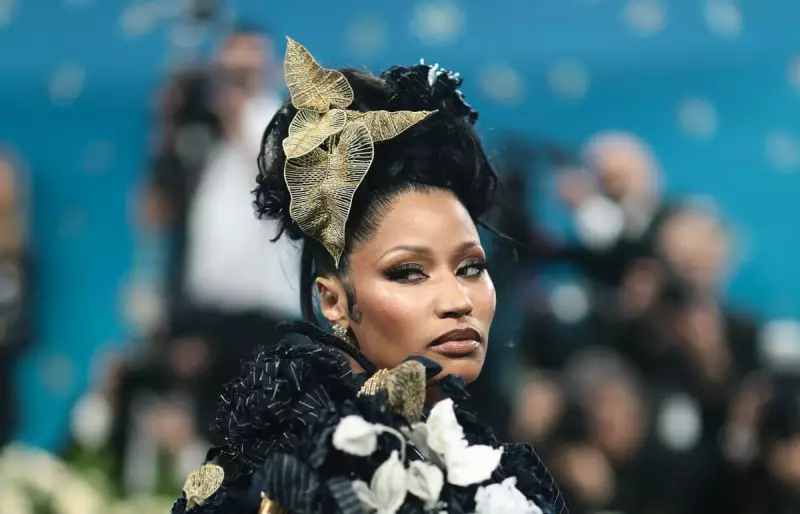
International music superstar Nicki Minaj is set to take on a significant diplomatic role, having been enlisted to highlight the plight of persecuted Christians in Nigeria at the United Nations. The high-profile address, scheduled for Tuesday, was arranged through collaboration with the White House, signalling a unique fusion of pop culture and international politics.
A Surprising Political Alliance
The partnership was first revealed by a Time journalist on social media platform X, noting that the collaboration was orchestrated by Alex Bruesewitz, an adviser to former President Donald Trump. The plan was swiftly confirmed by the US ambassador to the UN, Michael Waltz, who praised Minaj not only as "arguably the greatest female recording artist" but also as a "principled individual who refuses to remain silent in the face of injustice."
Ambassador Waltz expressed his gratitude that Minaj is leveraging her massive platform to bring attention to the atrocities in Nigeria. He stated he looks forward to standing with her to discuss the steps the Trump administration is taking to end the persecution.
Nicki Minaj confirmed her involvement, expressing deep gratitude for the "opportunity of this magnitude." In a public post, she addressed her devoted fanbase, the Barbz, declaring, "The Barbz & I will never stand down in the face of injustice. We’ve been given our influence by God. There must be a bigger purpose."
Context: Trump's Condemnation and Military Threats
This unprecedented move follows closely on the heels of Minaj's public endorsement of a post by President Donald Trump on his Truth Social platform. In that post, Trump condemned the Nigerian government for its failure to prevent attacks on its Christian population.
Trump's comments came after sustained pressure from conservative Christian groups urging him to designate Nigeria as a "country of particular concern" due to alleged religious persecution. Notably, his statements did not address violence perpetrated against Muslims, who have also been targeted by extremist groups like Boko Haram.
The US president's rhetoric escalated dramatically, with him threatening a potential US military intervention. Trump described Nigeria as a "disgraced country" and promised that any American action would be "fast, vicious and sweet, just like the terrorist thugs attack our cherished Christians."
Nigeria's Response and Complex Reality
The Nigerian government, led by President Bola Ahmed Tinubu, has forcefully pushed back against these accusations. Tinubu reaffirmed that Nigeria is a democracy with constitutional guarantees of religious liberty.
The situation on the ground, however, is complex. While Nigeria is officially a secular state, its population is almost evenly split between Muslims (53%) and Christians (45%). Analysts point out that while violence against Christians has drawn international attention, the root causes are often multifaceted.
Many conflicts are driven not solely by religion but by a combination of:
- Long-standing ethnic rivalries
- Disputes over land and water resources
- Widespread criminal activity
A surge in kidnappings of priests and pastors is often viewed by experts as being motivated more by criminal profit than religious discrimination, as these figures are seen as high-value targets whose communities can pay ransoms quickly.
This collaboration between a global music icon and the highest levels of US government marks a significant moment, ensuring that the issue of religious violence in Nigeria will command the world's attention at the UN headquarters in New York.