The Dutch government has confirmed it is pressing ahead with plans to prohibit imports from illegal Israeli settlements in the occupied West Bank, even as it pauses broader sanctions against Israel following last month's Gaza ceasefire.
West Bank Settlement Expansion Continues
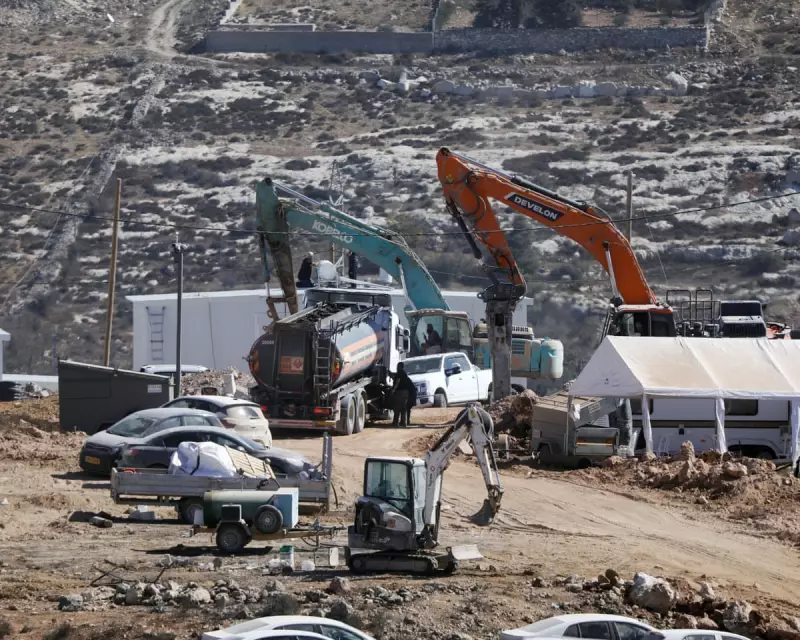
This partial ban initiative comes as Israeli workers continue constructing new settlement outposts in the southern West Bank, where extensive land levelling has prepared the ground for further construction. Foreign Minister David van Weel emphasised the measure responds directly to ongoing settlement expansion and escalating Israeli violence against Palestinians that threatens the viability of a future Palestinian state.
Van Weel stated during his regional visit: "Now we deem it is not a time to increase sanctions on Israel because we want to see the peace plan implemented and we want to also encourage Israel to play a positive part in this." However, he added that authorities remain aware of West Bank developments that could undermine the two-state solution.
European Response to Settlement Violence
The diplomatic move follows a dramatic increase in violence across the occupied territories. More than 200 Palestinians have been killed this year in the West Bank, including 40 children, by Israeli soldiers and settlers. October witnessed an average of eight daily Israeli attacks on people, property and agriculture - the highest number recorded since the United Nations began keeping statistics nearly two decades ago.
Five European Union member states have now announced plans to impose sanctions on trade with Israeli settlements. Spain and Slovenia have already banned exports from settlements, while Ireland and Belgium are developing similar legislation. Belgium and Spain have additionally reduced consular services available to settlement residents.
The Netherlands faces legislative challenges in implementing the ban, as trade policy primarily falls under EU jurisdiction. Van Weel acknowledged the complexity, noting: "It's not easy to make a carve out. We cannot just stop [all imports from illegal settlements] immediately because there is currently no legal basis for that."
Broader European Pressure Mounts
In June, nine EU member states requested the European Commission examine methods to reduce trade with Israeli settlements, following the International Court of Justice ruling that Israel's occupation is illegal and must end. The court advised that other states have an obligation not to assist Israel or recognise the occupation as lawful.
While settlement exports constitute a minor fraction of EU-Israel trade, the sanctions carry significant political weight as a statement of commitment to Palestinian statehood. The European Union represents Israel's largest trading partner, accounting for one-third of its worldwide goods trade, though member states have historically struggled to unite in leveraging this economic influence effectively.
This year marked a potential shift in European approach, with the Netherlands - traditionally among Israel's staunchest European allies - initiating an unprecedented review of the EU's association agreement with Israel in May. The review concluded Israel had violated human rights obligations under the agreement, leading to September proposals for suspending free trade and sanctioning two far-right Israeli ministers.
These broader measures were temporarily shelved following the Trump-brokered ceasefire but remain under consideration. Hundreds of senior EU diplomats have joined campaigns urging more decisive action against Israeli violations of international law in both Gaza and the West Bank.
Former EU envoy to occupied Palestine Sven Kühn von Burgsdorff advocates for comprehensive measures, stating: "Taking away the preferential trade arrangements for Israel proper under the association agreement, [imposing sanctions on] the far-right ministers and suspending Israel's access to Horizon Europe... together with a total ban on trade with settlements would send an important political message to Israel. Business as usual is over."