A landmark legal case accusing Myanmar's military of genocide against the Rohingya minority has opened at the United Nations' highest court, offering a glimmer of hope for survivors seeking justice after years of brutal violence.
Survivors Demand Justice at The Hague
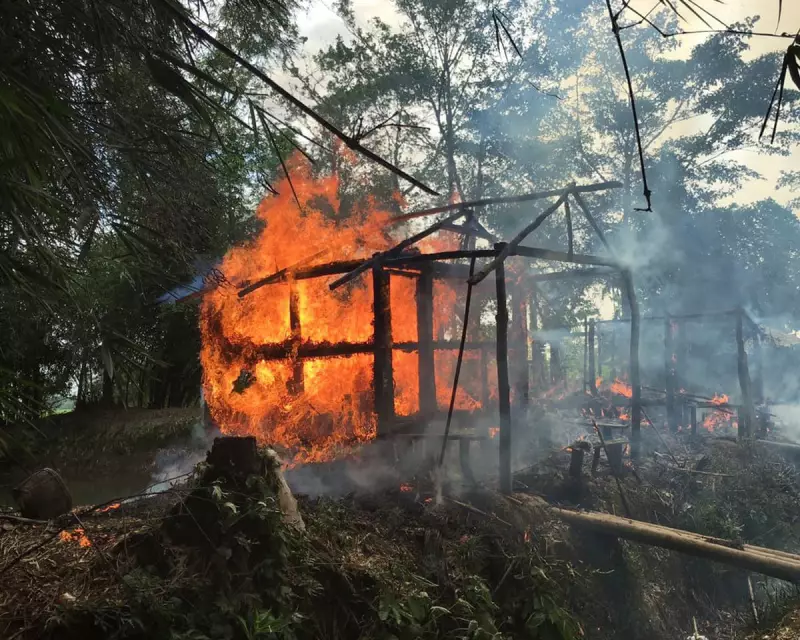
Among those watching the proceedings at the International Court of Justice (ICJ) in The Hague is Monaira*, a Rohingya woman who was forced to flee her home in 2017. She describes witnessing horrific atrocities during the military's so-called clearance operations. Her brother was taken by soldiers, shot dead, and his home set ablaze. "Children were thrown into the fire in front of my eyes," she said, recounting her own experience of rape by military personnel.
"Finally, I feel like our voices are being heard," Monaira stated, having travelled from the vast Cox's Bazar refugee camp in Bangladesh to attend the hearings. More than 700,000 Rohingya were driven into Bangladesh during the military campaigns in 2016 and 2017, which targeted the Muslim minority group in Rakhine state.
A Precedent-Setting Legal Battle
The case, filed by The Gambia in 2019, represents the first genocide proceeding of this scale at the ICJ in over a decade. It is likely to establish a crucial precedent for how future allegations of genocide are legally assessed, including the recent case brought by South Africa against Israel.
The Gambia's legal team will present its arguments from Monday 13th to Thursday 16th January 2026. It accuses Myanmar's military of systematic operations involving mass murder, rape, and the burning of villages, with the intent to destroy the Rohingya "as a group in whole or in part". Myanmar, which denies the genocide charges, is scheduled to present its defence from 16th to 20th January.
Tun Khin, President of the Burmese Rohingya Organisation UK, emphasised the case's significance: "It's the first time the Burmese military are in court having to defend themselves... It's a big step forward on the long road to justice and accountability."
Long Road to Accountability
This ICJ case is a civil proceeding to determine whether Myanmar breached the 1948 Genocide Convention, not a criminal trial of individuals. In a separate process, the International Criminal Court (ICC) has been investigating alleged crimes against the Rohingya, and in 2024 its prosecutor requested an arrest warrant for Myanmar's military commander-in-chief, Min Aung Hlaing, for crimes against humanity.
In 2020, the ICJ imposed provisional measures on Myanmar, ordering it to prevent genocidal acts and preserve evidence. However, human rights groups report the junta has continued its campaign of violence.
Shayna Bauchner, an Asia researcher at Human Rights Watch, stressed that the military's "vicious cycles of abuse and impunity" must end. Antonia Mulvey of Legal Action Worldwide noted a judgment could come within six to twelve months, providing a vital legal finding that would stand regardless of Myanmar's current political turmoil.
"Let us not forget that situations can change overnight," Mulvey said. "The court order will remain, offering long-awaited recognition of what Rohingya people have endured."
*Name has been changed to protect identity.