Maduro's Manhattan Court Appearance in Narco-Terrorism Case
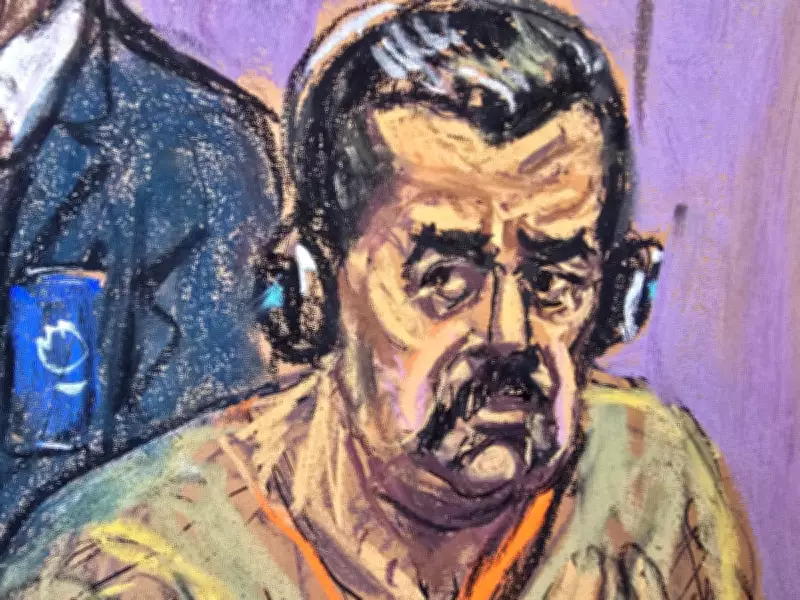
Former Venezuelan president Nicolás Maduro and his wife, Cilia Flores, appeared in a Manhattan federal courtroom on Thursday, facing serious narco-terrorism charges that could result in life imprisonment. The couple, captured by US special forces in Caracas on January 3, wore khaki jail scrubs during the hearing, with Maduro displaying a surprisingly relaxed demeanor despite the gravity of the situation.
A Stark Contrast in Courtroom Atmosphere
Maduro entered the courtroom with shackles around his ankles but maintained a smile as he shook hands with defense attorneys. Observers noted he had slimmed down since his last court appearance. Flores wore a grey long-sleeve shirt under her prison uniform, while Maduro sported a neon T-shirt. Both wore black-framed glasses throughout the proceedings, though Maduro appeared to use his primarily as readers.
The visual mundanity of the couple's appearance contrasted sharply with their dramatic fall from power, having transitioned involuntarily from Venezuela's presidential palace to sparse Brooklyn jail cells. This development represents a significant escalation in US-Venezuela relations and highlights the intersection of domestic law enforcement with aggressive foreign policy initiatives.
Rival Protests Outside the Courthouse
Before proceedings began, demonstrators for and against Maduro's capture gathered outside the courthouse, separated by metal barricades. Pro-Maduro protesters held signs reading "Free President Maduro" while a man with an amplifier declared the proceedings "a judicial farce."
Meanwhile, dozens of Maduro opponents sang Venezuela's national anthem, temporarily drowning out the pro-Maduro camp. Many wore Venezuelan flags around their shoulders or donned caps with Venezuela's logo, expressing hope for justice in their homeland.
"I'm a Venezuelan. I was raised and born in Venezuela, and I'm representing my community that wants justice for our country," said Adriana Malave, a protester. "They have so many people that still need to be arrested in our country, and they are still in the government."
Geopolitical Implications and Legal Complexities
The arrest followed months of US pressure against Maduro, including attacks on alleged "narco boats" that resulted in over 100 deaths and seizures of oil tankers in accordance with US sanctions. With Maduro removed from power, the US has begun rebuilding ties to Venezuela's oil industry and establishing connections with the new government rather than the exiled opposition.
In an unexpected development, Judge Alvin Hellerstein noted that recent global events could influence the case. The US-Israel bombing campaign against Iran has disrupted global oil markets, increasing demand for petroleum from other regions including Venezuela.
"We are doing business with Venezuela," Hellerstein stated during arguments about whether Venezuelan government funds could finance Maduro's defense. "The oil interest in Venezuela has become vital particularly because of the shortages arising from the Strait of Hormuz."
Conclusion of the Hearing
While Judge Hellerstein made no immediate decision regarding the funding debate, Maduro remained seemingly upbeat as the hearing concluded. He smiled while whispering to his lawyers and organizing papers into an envelope before being escorted out by US marshals, bidding his legal team farewell with a casual "hasta mañana" (see you tomorrow).
The case continues to unfold as a complex intersection of criminal justice, international relations, and energy politics, with significant implications for both Venezuela's future and US foreign policy in the region.