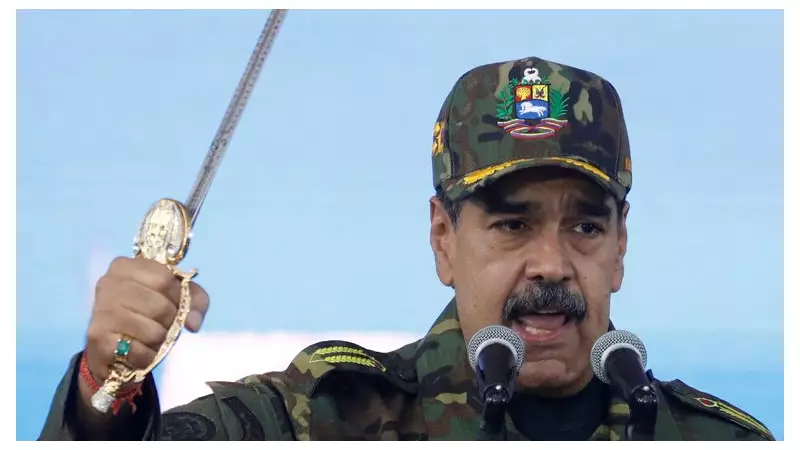
Venezuelan President Nicolas Maduro has dramatically brandished a sword before crowds of supporters, vowing to resist any attempt by the United States to overthrow his government. The defiant display in Caracas comes amidst escalating tensions with the administration of US President Donald Trump.
A Defiant Display in Caracas
Addressing supporters during a march on Tuesday, the 63-year-old leader, dressed in camouflage fatigues, declared that "failure is not an option" in the face of what he termed imperialist aggression. He urged the nation to be ready to defend "every inch of this blessed land from imperialist threat or aggression, no matter where it comes from." The scene was one of fervent support, with Maduro being swamped by followers.
The backdrop to this theatrical display is a significant military escalation. Since September, US military forces have conducted a series of strikes on vessels suspected of drug trafficking in international waters, resulting in at least 80 fatalities. Washington has asserted that several of these boats originated from Venezuela, a claim Maduro's government vehemently denies, describing the US deployment as a direct assault on Venezuelan sovereignty.
International Condemnation and US Motives
The situation has drawn international concern, with Cuba accusing the US of seeking a violent overthrow of Maduro's government. Cuban Foreign Minister Bruno Rodriguez labelled the American military presence in the region as "exaggerated and aggressive." He issued a stark warning, stating that ousting Venezuela's leader would be extremely dangerous and a violation of international law.
"We appeal to the people of the United States to stop this madness," Rodriguez said. "The US government could cause an incalculable number of deaths and create a scenario of violence and instability in the hemisphere that would be unimaginable."
Officials within Maduro's administration argue that Washington's actions are economically motivated. Venezuelan minister Delcy Rodriguez was explicit in her accusations, stating, "They want Venezuela's oil and gas reserves. For nothing, without paying. They want Venezuela's gold. They want Venezuela's diamonds, iron, bauxite. They want Venezuela's natural resources."
Disputed Leadership and Human Rights Concerns
The core of the dispute lies in the legitimacy of Maduro's presidency. Donald Trump, like his predecessor Joe Biden, does not recognise Nicolas Maduro as Venezuela's legitimate leader. Maduro is currently serving his third term after being declared the winner of last year's presidential election. However, this outcome is widely contested, with evidence suggesting the opposition defeated him by a significant two-to-one margin.
Further complicating the diplomatic standoff are the persistent accusations of human rights violations levelled against Maduro and senior officials, who have been repeatedly accused of targeting real and perceived government opponents.
In a significant move earlier this week, the US designated Venezuela's Cartel de los Soles (Cartel of the Suns) as a foreign terrorist organisation for its role in importing illegal drugs. The Trump administration has claimed Maduro is part of this group, a charge Venezuelan officials dismiss as a "ridiculous fabrication."
Despite the bellicose rhetoric, President Trump hinted at a potential for dialogue while travelling to Florida for Thanksgiving. "If we can save lives, if we can do things the easy way, that's fine," the US president told reporters. "And if we have to do it the hard way, then that's fine too." This ambiguous statement leaves the door open for multiple outcomes, even as reports suggest the US is planning to launch a new phase of Venezuela-related operations in the coming days.