Macron Delivers Blunt Critique of Trump's Foreign Policy Statements
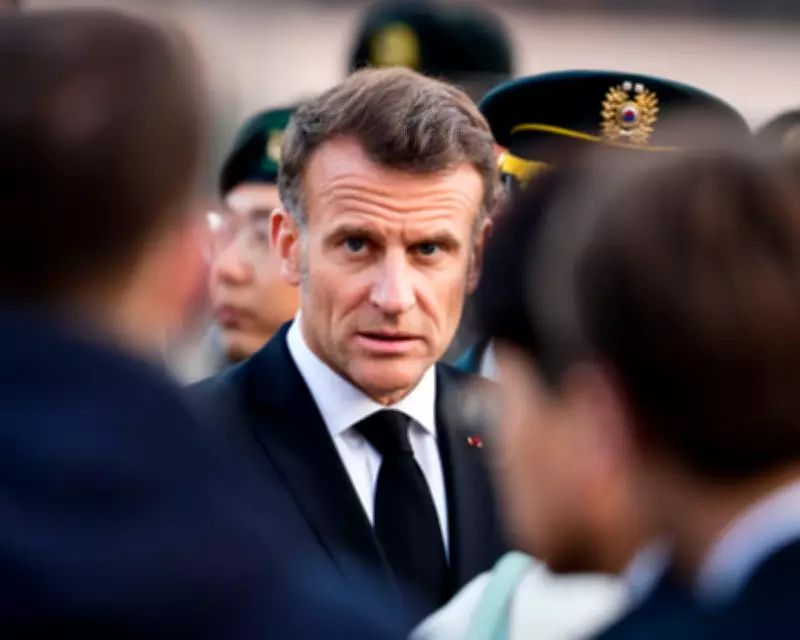
French President Emmanuel Macron has launched a pointed criticism of former US President Donald Trump's contradictory pronouncements regarding NATO and the ongoing conflict with Iran. Speaking during a state visit to South Korea on Thursday, Macron emphasized the need for consistency and seriousness in international diplomacy.
'There Is Too Much Talk'
"There is too much talk ... and it's all over the place," Macron declared, addressing Trump's fluctuating positions. "We all need stability, calm, a return to peace – this isn't a show!" The French leader stressed that when political leaders want to be taken seriously, they should avoid contradicting themselves daily.
"You have to be serious," Macron continued. "When you want to be serious, you don't go around saying the opposite every day of what you just said the day before. And perhaps you shouldn't talk every day."
Defending NATO's Integrity
Macron mounted a vigorous defense of the North Atlantic Treaty Organization, accusing Trump of undermining the transatlantic defense alliance through repeated remarks questioning America's commitment. "I believe organizations and alliances like NATO are defined by what is left unsaid – that is, the trust that underpins them," he explained. "If you cast doubt on your commitment every day, you erode its very substance."
The French president's comments follow a week of mixed messages from Trump and other Washington officials regarding both the progress of the Iran war and America's NATO membership. Trump has suggested variously that the conflict was nearly won, that allies should join US military operations, and that they should act independently to secure oil resources in the Strait of Hormuz.
Washington's Contradictory Signals
At a private White House lunch this week, Trump claimed NATO had "treated us very badly" and would do so again if needed. In separate remarks to Reuters, he confirmed he was "absolutely without question" considering withdrawal from the alliance. However, he told the Daily Telegraph that a US exit was "beyond consideration," while simultaneously labeling NATO a "paper tiger" and criticizing member states as "cowards" for their reluctance to support the month-old Iran war.
US Secretary of State Marco Rubio suggested this week that America would "re-examine" whether NATO still served US interests, while Defense Secretary Pete Hegseth declined to confirm whether the US would defend NATO allies if attacked.
European Responses and Diplomatic Efforts
NATO Secretary General Mark Rutte is scheduled to visit Washington next week in an attempt to repair strained relations. Other European leaders have rallied to defend the alliance, with UK Prime Minister Keir Starmer calling it "the single most effective military alliance the world has ever seen."
Polish Prime Minister Donald Tusk noted on Thursday that Trump's repeated withdrawal threats, combined with Europe's potential energy crisis and other factors, resembled a "dream plan" for Russian President Vladimir Putin. EU diplomats, however, characterized Trump's NATO attacks as "nothing very new" and largely reflective of "the difficulty of the situation he's landed himself in."
Legislative and Strategic Considerations
Congress passed legislation in 2023 preventing any president from unilaterally withdrawing from NATO without congressional approval. While NATO's mutual defense clause requires all members to respond to an attack on one, it does not mandate support for unilateral offensives.
Many European leaders face domestic political pressure over the unpopular Iran war, which has triggered energy price surges and rising inflation since Iran effectively closed the Strait of Hormuz – a vital waterway carrying approximately one-fifth of global oil shipments.
Navigating the Strait Crisis
Approximately forty countries participated in online talks on Thursday exploring ways to restore freedom of navigation through the Strait of Hormuz. The UK-convened discussions focused on diplomatic and economic tools rather than military solutions.
France emphasized that any resolution process must be multi-phased and could only begin once hostilities diminished. "It can only be done in consultation with Iran," Macron stated, dismissing military operations to free the strait as "unrealistic."
Nuclear Concerns and Regional Warnings
Macron also addressed the nuclear dimension of the Iran conflict, asserting that "a targeted military action, even for a few weeks, will not allow us to resolve the nuclear issue in the long term." He warned that without a framework for diplomatic and technical negotiations, "the situation can deteriorate again in a few months."
Iran's armed forces responded to Trump's threats with a warning of "more crushing, broader and more destructive" attacks against the US and Israel. Military spokesperson Ebrahim Zolfaqari declared the war would continue until the "permanent regret and surrender" of Iran's enemies.
Despite Trump's claim that the US was "very close" to achieving its objectives and would intensify attacks unless Tehran agreed to a negotiated settlement, Iranian officials confirmed through state media that while messages had been received through intermediaries including Pakistan, "there is no direct negotiation with the US."