
Kremlin Watchers Speculate as Lavrov Vanishs from View
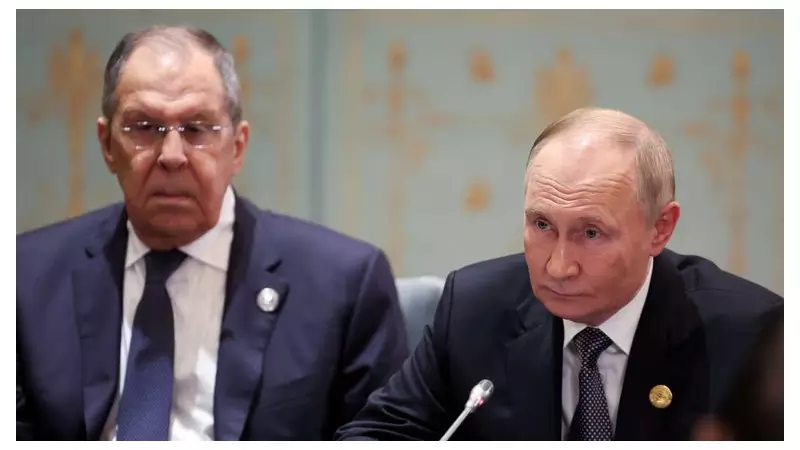
The intricate art of Kremlinology, once focused on analysing parades in Red Square, has found a new subject for scrutiny: the conspicuous absence of Sergei Lavrov from pivotal state events. The veteran foreign minister, a fixture by Vladimir Putin's side for decades, was notably missing from a landmark meeting of Russia's Security Council held on Wednesday. This gathering, where President Putin instructed officials to draft proposals for potential nuclear weapons tests, was a significant moment—precisely the kind one would expect a trusted lieutenant to attend.
Lavrov was the only permanent member of the Security Council not present. The Russian business daily Kommersant reported his absence was "coordinated," a term that has done little to quell the growing whispers within diplomatic circles.
A Pattern of Absence Emerges
The intrigue deepened with the revelation that Lavrov would also be bypassed for leading the Russian delegation at the upcoming G20 summit, a role he has fulfilled in recent years. Instead, a more junior official is slated to take his place. This dual absence from both a critical domestic security meeting and a major international forum has forced a single, pressing question to the fore: Has Moscow's top diplomat been sidelined?
The speculation has become so pronounced that the Kremlin was compelled to issue a denial, though this has done little to reassure observers. The roots of this perceived rift appear to trace back to last month, when a planned summit between Donald Trump and Vladimir Putin in Budapest was called off. This cancellation followed a phone call between Lavrov and the US Secretary of State, Marco Rubio.
According to the Financial Times, it was Lavrov's uncompromising stance during that conversation that prompted the White House to put the high-level meeting on ice. Diplomatic sources at the time suggested that Lavrov had either made a significant misstep or deliberately deviated from the Kremlin's script. Whether by accident or design, his actions seemingly torpedoed the summit and set back a potential US-Russia rapprochement.
The High Cost of Undermining Putin
This outcome would have angered President Putin, who is known to be keen on engaging with Washington on issues ranging from Ukraine to nuclear arms control. More critically, however, the incident made the Russian president appear weak, as if he could not control his own foreign minister. Vladimir Putin is not a leader who tolerates being undermined.
His management style echoes the golden rule of football legend Sir Alex Ferguson: never allow a player to become bigger than the club. In the Kremlin, loyalty is paramount. If Lavrov has indeed been sidelined, it would mark a seismic shift in Russian politics. The 75-year-old has been the face of Russian diplomacy for over two decades and has effectively served as Putin's right-hand man for most of his rule.
Known for his abrasive style and acerbic put-downs, Lavrov has been a vociferous cheerleader for Russia's invasion of Ukraine. His tenure has defined Moscow's stance on the world stage. His potential fall from grace signals that in Putin's Russia, even the most seasoned officials are not immune to a sudden and final curtain call.




