Kyiv Under Fire as Peace Negotiations Intensify
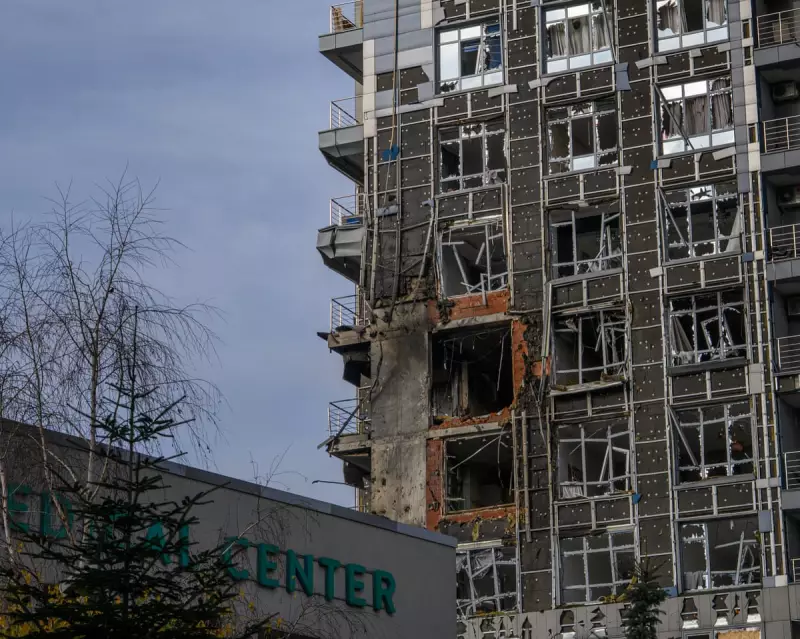
A residential building in Kyiv has been severely damaged following a Russian missile strike, casting a shadow over ongoing peace talks brokered by United States officials. The attack occurred as diplomatic efforts continue in Abu Dhabi, where American, Russian and Ukrainian representatives are attempting to negotiate an end to the conflict.
According to Ukrainian President Volodymyr Zelenskyy, Russian forces launched 22 missiles and 464 drones at targets across Ukraine overnight, with the capital Kyiv bearing the brunt of the assault. Mayor Vitali Klitschko confirmed that seven people lost their lives in the attack on the city.
Abu Dhabi Peace Talks Show Cautious Progress
While violence escalates on the ground, diplomatic efforts are advancing in the United Arab Emirates. US Army Secretary Dan Driscoll met with a Russian delegation on Monday night, with discussions continuing throughout Tuesday. A spokesperson for Driscoll told Reuters that "the talks are going well and we remain optimistic" about the prospects for a peace agreement.
The negotiations represent the latest attempt by the Trump administration to broker a settlement to the conflict. Ukraine's military intelligence chief, Kyrylo Budanov, was expected to participate in the talks, though it remained unclear whether he would engage directly with Russian representatives or conduct separate bilateral discussions with American officials.
The Kremlin maintained its characteristic opacity regarding the proceedings. Vladimir Putin's spokesperson, Dmitry Peskov, told Russian state media: "I have nothing to say. We are following the media reports."
European Concerns and Ukrainian Dilemmas
European leaders are watching the negotiations with increasing apprehension as Washington takes the lead in diplomatic efforts. French President Emmanuel Macron voiced significant concerns, cautioning against any peace deal that would represent a "capitulation" for Ukraine.
"What was put on the table gives us an idea of what would be acceptable for the Russians. Does that mean that it is what must be accepted by the Ukrainians and the Europeans? The answer is no," Macron stated emphatically.
Finland's President Alexander Stubb, who has emerged as one of Donald Trump's primary European interlocutors, described the coming days as decisive in peace efforts. Following conversations with both Zelenskyy and NATO Secretary General Mark Rutte, Stubb emphasised that "the future of Ukraine is for Ukraine to decide, and European security is for Europe to decide."
The original US peace proposal, consisting of 28 points, faced strong criticism for containing several pro-Russian elements. The plan would have required Ukraine to cede territory currently occupied by Russian forces, accept limitations on the size of its military, and grant amnesty for war crimes to all conflict participants.
President Zelenskyy described Ukraine's position as particularly challenging, noting that the country faces "one of the most difficult moments in its history" and must choose between "losing our dignity or losing a key ally."
Diplomatic Pressure and Revised Approaches
The peace process has seen significant diplomatic turbulence in recent days. Secretary Driscoll, a university friend of US Vice-President JD Vance, travelled to Kyiv to brief Zelenskyy on the original plan and reportedly demanded that Ukraine sign the agreement within days. The aggressive timeline and the plan's contents surprised both Ukrainian and European officials.
Following what one attendee described as a "nightmare meeting" with NATO ambassadors in Kyiv, during which European diplomats expressed shock at both the content and tone of the American presentation, Washington softened its approach. US officials subsequently described the 28-point plan as merely an opening position for discussion rather than a final agreement.
Russian Foreign Minister Sergei Lavrov maintained that any amended peace plan must reflect the "spirit and letter" of discussions between Donald Trump and Vladimir Putin during their Alaska summit in August.
Despite the ongoing diplomatic efforts, President Zelenskyy emphasised that military pressure on Russia must continue. "What matters most now is that all partners move toward diplomacy together, through joint efforts. Pressure on Russia must deliver results," he stated, underscoring that the Kremlin should not believe it can achieve victory through military means while negotiations proceed.
As the Abu Dhabi talks continue, the stark contrast between diplomatic efforts and the reality of ongoing violence highlights the immense challenges facing all parties in reaching a sustainable peace agreement that preserves Ukrainian sovereignty while addressing Russian security concerns.