Frosty Reception at G20 as Japan-China Relations Sour
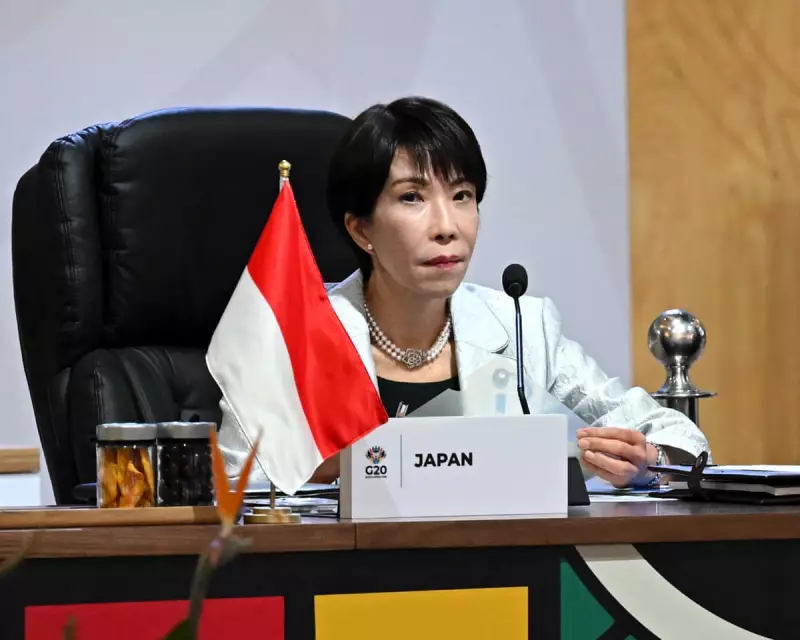
Japanese Prime Minister Sanae Takaichi arrived at the G20 summit in Johannesburg, South Africa, with carefully chosen attire intended to give her the upper hand in negotiations. However, her preparations proved unnecessary for what would have been her most crucial engagement - talks with Chinese Premier Li Qiang aimed at defusing escalating tensions between the northeast Asian neighbours.
No Meeting of Minds as Diplomatic Freeze Continues
The anticipated discussion never materialised. During Saturday's group photoshoot, Takaichi and Li Qiang maintained noticeable distance, setting a distinctly chilly tone that persisted throughout the summit. This occurred despite earlier speculation that at least a brief handshake and exchange of courtesies might be possible between the two leaders.
The diplomatic deep freeze follows comments made by Takaichi two weeks earlier that infuriated Beijing. The conservative prime minister, known for her hawkish views on China, suggested that Japanese military intervention would be justified should China attempt to invade Taiwan. She specifically referenced Japan's right to collective self-defence if a Taiwan Strait emergency created what she termed a survival-threatening situation for Japan.
Beijing's Retaliation and Sharpened Rhetoric
China's response has been swift and multi-faceted. Chinese officials have:
- Issued travel warnings advising citizens against visiting Japan
- Reimposed bans on Japanese seafood originally introduced after Fukushima water releases
- Cancelled cultural exchanges including film releases and musical performances
- Sharpened diplomatic rhetoric significantly
Chinese Foreign Minister Wang Yi described Takaichi's Taiwan remarks as shocking and accused Japan of crossing a red line. The dispute has even reached the United Nations, where China's ambassador Fu Cong accused Japan of threatening an armed intervention and committing a grave violation of international law.
Public Backing Despite Diplomatic Isolation
Despite the diplomatic fallout and questions from opposition MPs about her judgment, Takaichi's firm stance appears to be resonating with the Japanese public. A recent Kyodo news agency poll showed her administration's approval rating rising to 69.9%, representing a 5.5 percentage point increase from the previous survey.
Perhaps more significantly, almost 49% of respondents supported Japan's right to engage in collective self-defence in the event of a Taiwan crisis, compared to 44.2% against. This public backing comes as Tokyo has advised Japanese nationals in China to take extra safety precautions, indicating concerns about potential retaliation.
The current tensions recall the bitter 2012 dispute over the uninhabited Senkaku/Diaoyu islands, though both sides have so far limited economic measures despite their substantial trade relationship. However, analysts warn the situation could escalate further with potential restrictions on rare earth metal exports or increased maritime activity around the contested islands.