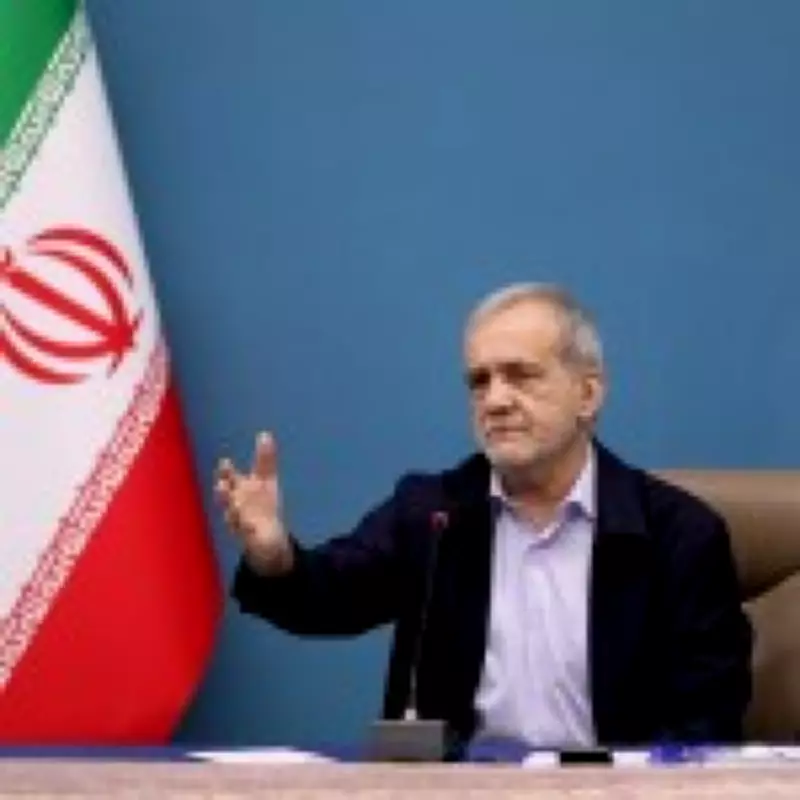
Iranian President Publishes Open Letter Questioning US Foreign Policy Direction
Iranian President Masoud Pezeshkian has issued a comprehensive open letter addressed directly to the American people, raising pointed questions about whether former President Donald Trump's administration genuinely prioritizes American interests in its Middle Eastern policies. The lengthy diplomatic communication, published on April 1, 2026, presents Iran as a historically peaceful civilization while criticizing what it describes as disproportionate US military presence and actions in the region.
Historical Context and Accusations
In his detailed statement, President Pezeshkian frames Iran as a "helpless" victim surrounded by hostile forces, asserting that despite possessing military capabilities, Iran has never initiated warfare in its modern history. The letter notably omits discussion of Iran's nuclear ambitions while emphasizing the country's defensive posture.
The Iranian leader makes several significant claims:
- Iran maintains no inherent hostility toward American citizens or neighboring populations
- The United States has concentrated substantial military assets around Iranian territory
- Recent American military actions demonstrate the threatening nature of this presence
- Iran's military developments constitute legitimate self-defense measures
Specific Allegations Against US Policy
President Pezeshkian's communication presents a detailed historical narrative, beginning with the 1953 coup that overthrew Iran's democratically elected government. The letter traces subsequent developments including US support for Saddam Hussein during the Iran-Iraq War, comprehensive economic sanctions, and what it describes as unprovoked military aggression during diplomatic negotiations.
The Iranian president poses several provocative questions to American readers:
- Which American interests are genuinely served by current policies toward Iran?
- Was there ever an objective Iranian threat justifying such aggressive approaches?
- Do attacks on civilian infrastructure serve any purpose beyond damaging US global standing?
- Is the United States effectively acting as Israel's proxy in regional conflicts?
Counter-Narrative and Domestic Achievements
The letter presents an alternative perspective on Iran's domestic development, highlighting educational and technological advances achieved despite international pressure. According to President Pezeshkian, literacy rates have tripled since the Islamic Revolution, higher education has expanded dramatically, and significant infrastructure improvements have occurred.
The communication challenges American perceptions by pointing to accomplished Iranian immigrants contributing to Western academic and technological institutions as evidence contradicting what it calls "fabricated narratives" about Iranian society.
Broader Implications and Final Appeal
President Pezeshkian concludes with a warning about the costs of continued confrontation, suggesting that current policies primarily serve what he characterizes as Israeli interests at American expense. The letter questions whether fighting "to the last American soldier" aligns with genuine American priorities.
The diplomatic communication represents a direct appeal to American public opinion, bypassing traditional government-to-government channels to present Iran's perspective on regional tensions and historical grievances. It frames current conflicts as potentially serving external interests rather than genuine American security concerns.