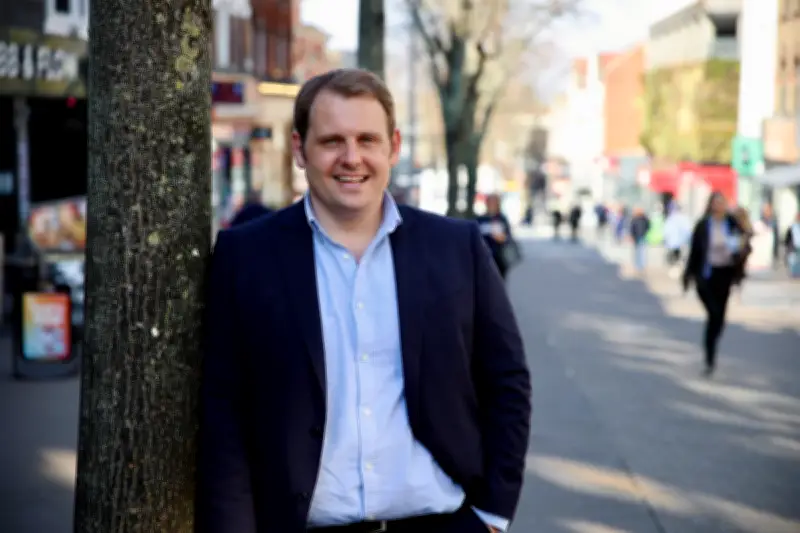
MP Luke Taylor has called for a broader interpretation of national security, arguing that the current debate focuses too narrowly on defence and misses critical domestic and international dimensions. In a statement, the Liberal Democrat MP for Sutton and Cheam said that while military strength is essential, true security also depends on social stability, housing, international development, and energy independence.
Security debate misses the point
Taylor referenced recent events, including incidents at RAF Fairford and the Sky documentary Wargame, which have brought national security to the forefront of public attention. However, he argued that the recent exchange between Andy Burnham and Kemi Badenoch over whether national security should precede social security was misguided. According to Taylor, the two are inseparable: "One cannot really exist without the other."
The MP acknowledged the need for strong national defences, including properly funding the armed forces, supporting Ukraine and NATO allies, and deterring Russian aggression. To this end, he and his Liberal Democrat colleagues have proposed £20 billion of Defence Bonds to accelerate military investment, alongside raising core defence spending to 3 per cent of GDP by 2030 and strengthening European defence cooperation.
Domestic security and housing
Taylor emphasised that a country can be well defended against external threats yet remain deeply insecure at home. He stressed that people need to feel safe on their streets, secure in their homes, and confident that essential services will continue. He highlighted his efforts to push for proper community policing, a public-health approach to knife crime, stronger action on stalking and tool theft, and more resources for the Metropolitan Police to tackle gangs.
Housing, he argued, is also a component of security. A good home provides stability and the confidence to build a life. In Sutton, Taylor has backed the Council's delivery of new social housing, including 92 homes at Beech Tree Place. He has also argued in Parliament for greener, safer, and more affordable homes, as well as an end to the broken leasehold system.
International and energy security
Taylor noted that internal security depends on external factors. He called for Britain to restore its commitment to international development, pointing out that the old aid target of 0.7 per cent of national income was a small investment that helped tackle instability abroad, particularly in East Africa, a region from which many small boat arrivals originate.
On energy, Taylor argued that dependence on internationally traded fossil fuels leaves households vulnerable to price spikes caused by geopolitical shocks, such as war or disruption in the Strait of Hormuz. He asserted that Net Zero is not the enemy of energy security but a route to it, advocating for more home-grown renewable and nuclear power, alongside EVs, heat pumps, and the necessary grid infrastructure. He also called for prioritising wind and tidal power in the North Sea over allowing private companies to extract more oil and gas, which he said would barely reduce wholesale energy costs in the short term and increase insecurity in the face of long-term climate change.
Looking ahead
Taylor committed to continuing to push for a holistic approach to security over the coming year, addressing a range of threats in the modern world. He stated that people in Sutton, Croydon, London, and the whole nation deserve this from their MPs.