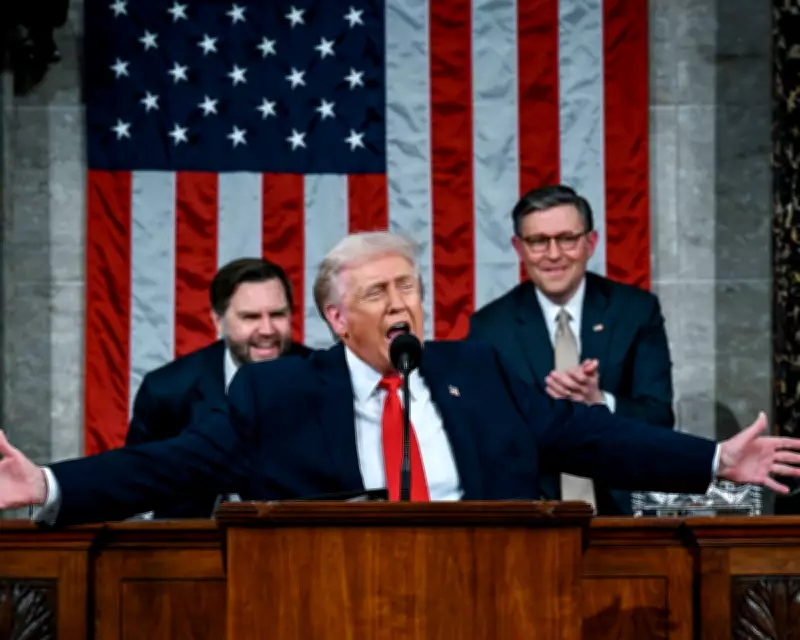
Good morning and welcome to our live coverage of US politics. In a sharp escalation of diplomatic tensions, Iran has accused the United States of propagating "big lies" regarding its missile capabilities, directly responding to allegations made by former President Donald Trump during his recent State of the Union address.
Trump's Allegations and Iran's Rebuttal
During his lengthy speech to Congress, Trump asserted that Iran has already developed missiles capable of threatening Europe and US overseas bases, and is actively working on weapons that could soon reach American soil. He labeled Iran as "the world's number one sponsor of terror" and claimed that at least 32,000 protesters were killed during recent unrest in the country, though these figures have been widely disputed.
In a swift and forceful response, Iranian foreign ministry spokesman Esmaeil Baqaei took to social media platform X to reject these claims. Without naming Trump directly, Baqaei stated, "Whatever they're alleging in regards to Iran's nuclear programme, Iran's ballistic missiles, and the number of casualties during January's unrest, is simply the repetition of 'big lies'." This rebuttal underscores the deepening rift between the two nations as they navigate complex geopolitical waters.
Nuclear Talks and Diplomatic Tensions
The timing of these exchanges is particularly significant, coming just one day before Iran and the US are scheduled to hold a third round of Oman-mediated nuclear talks in Geneva. Trump emphasized a preference for diplomatic solutions, yet expressed frustration, noting that the US has not heard Iran utter "those secret words – we will never have a nuclear weapon."
Iran has consistently denied any ambitions to develop nuclear weapons, maintaining that its uranium enrichment activities are a sovereign right. However, historical evidence suggests the country has tested materials and components directly linked to nuclear weapons development, adding layers of complexity to the ongoing negotiations.
Military Buildup and Strategic Implications
Trump's speech did little to clarify the rationale behind the substantial US military buildup in the Middle East, which represents the largest concentration of American forces in the region since the 2003 invasion of Iraq. Reports indicate that Trump has been considering military strikes against Iran in recent weeks, yet he devoted only about three minutes to discussing Tehran in his nearly two-hour address.
This juxtaposition of diplomatic overtures and military posturing highlights the volatile nature of US-Iran relations. As both sides prepare for crucial talks, the world watches closely, aware that any misstep could have far-reaching consequences for global security and stability.
The ongoing dialogue in Geneva will be a critical test of whether diplomacy can prevail over escalating rhetoric and military threats. With tensions running high, the outcome of these negotiations could shape the future of nuclear non-proliferation efforts and regional peace in the Middle East.