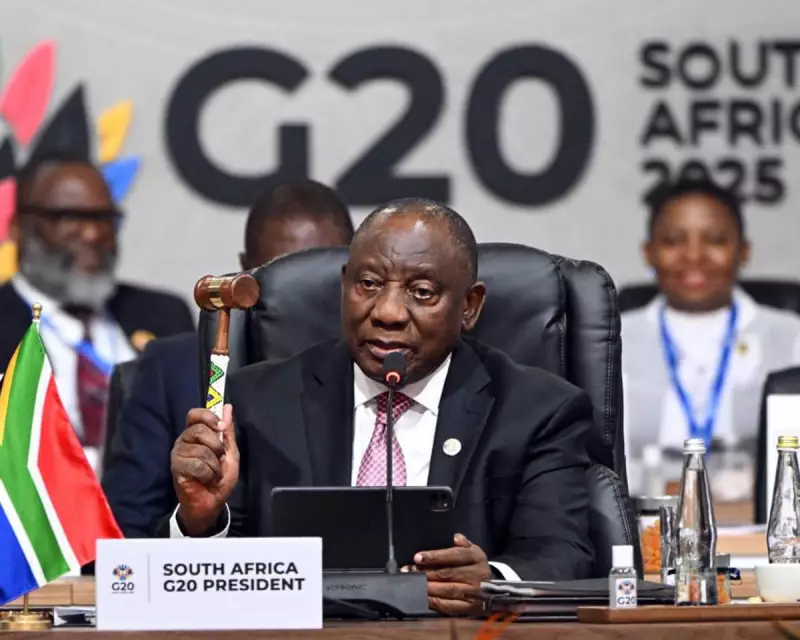
South African President Cyril Ramaphosa brought the G20 summit in Johannesburg to a formal close with the decisive bang of a gavel, marking the conclusion of a gathering overshadowed by diplomatic tensions with the United States.
Diplomatic Standoff Over Handover Protocol
The closing ceremony followed South Africa's rejection of a controversial US proposal that would have seen Ramaphosa hand over the G20 presidency to a relatively junior embassy official. The United States, which hosts next year's summit in Florida, had suggested the protocol-breaking transfer, but South African officials firmly declined, stating it would breach established diplomatic norms.
White House spokesperson Anna Kelly escalated the dispute by accusing Ramaphosa of "refusing to facilitate a smooth transition of the G20 presidency." She further claimed that South Africa had "weaponised their G20 presidency to undermine the G20's founding principles" by pushing through a leaders' declaration despite US objections.
US Boycott and Contentious Claims
The two-day event was notably marred by a complete US boycott, with American officials repeatedly levelling accusations that South Africa discriminates against white minority Afrikaners - claims that have been widely discredited by international observers. The absence of American representation created a palpable gap in the gathering of the world's largest economies.
In his closing address, Ramaphosa made only a single reference to the absent nation, stating: "This gavel of this G20 summit formally closes this summit and now moves on to the next president of the G20, which is the United States, where we shall see each other again next year."
South Africa had offered a compromise solution, proposing to arrange for an equivalent junior diplomat to formally transfer the G20 presidency to the US at the foreign ministry level. Foreign Minister Ronald Lamola told reporters: "From us, the ball has moved. We are done. It's up to them. If they want to come, we are available."
Broader Summit Outcomes and Absences
Despite the diplomatic friction, the G20 managed to issue a declaration on Saturday emphasising the need to tackle climate change and achieve "gender equality." The communique stated: "We will work for a just, comprehensive and lasting peace in Sudan, the Democratic Republic of Congo, the Occupied Palestinian Territory, Ukraine, as well as ending other conflicts and wars around the globe."
The summit saw several other notable absences beyond the US boycott. Russia's Vladimir Putin, who faces an international arrest warrant, China's Xi Jinping, and Mexico's Claudia Sheinbaum were all missing from the proceedings. Argentina's president Javier Milei also skipped the summit, with his country refusing to endorse the final declaration.
Looking ahead, the 2026 summit is scheduled to take place at the Trump National Doral Miami golf resort, owned by the Trump Organisation. The G20, founded in 1999 following the Asian financial crisis, comprises 19 nations and the European Union, with the African Union joining in 2023.