
The families of British citizens held in foreign prisons have demanded greater government assistance, including the appointment of a special envoy to coordinate support during detention periods.
Emotional accounts from affected families
Relatives of Nazanin Zaghari-Ratcliffe, Jagtar Singh Johal, and Craig and Lindsay Foreman shared their distressing experiences of campaigning for their loved ones' release. They described communications with the Foreign, Commonwealth and Development Office (FCDO) as slow, confusing, and frequently ineffective.
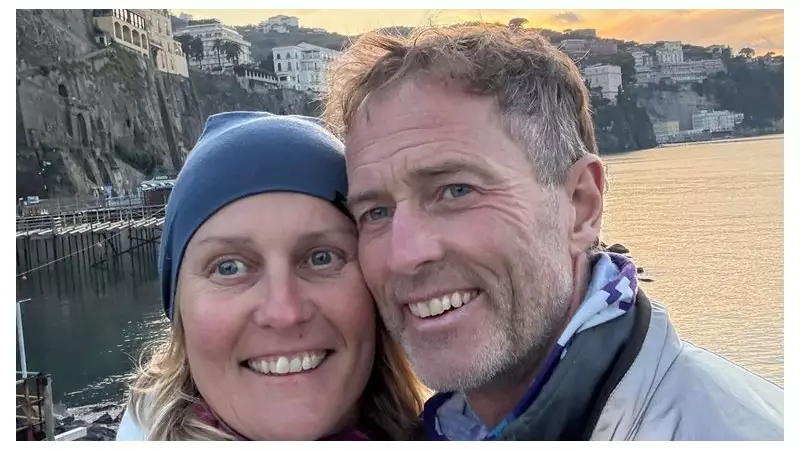
Joe Bennett, whose parents Lindsay and Craig Foreman face espionage charges in Iran, revealed that UK government officials initially advised against contacting other affected families. He ignored this guidance and reached out to Richard Ratcliffe, whose wife Nazanin spent six years detained in Iran.
"You're completely alienated at the beginning," Bennett told Sky News during a London conference organised by the APPG, which focuses on arbitrary detention of British nationals overseas.
Government advice described as 'scare tactics'
Bennett explained that connecting with other families provided crucial emotional support. "To have the support of the others gives you a sense that you're not alone in this," he said.
He strongly criticised the FCDO's initial advice: "For the FCDO to say 'don't speak to them', it can put your parents at risk, made no sense to me. It was kind of scare tactics. This is how they tend to try and deal with things - it's all hush, hush, keep it quiet, don't say anything."
The situation has become increasingly urgent for Bennett, who recently learned his mother has begun a hunger strike. "You could tell she was really down," he described of their phone conversation. "Her voice was cracking and then she got into tears."
Broken promises and considering alternative help
Bennett revealed the hunger strike resulted from unfulfilled promises made to his parents, including regular visitation rights between them. He urged his mother to prioritise her health while expressing frustration at the UK government's limited action beyond basic welfare and consular assistance.
"It's these broken promises on both sides," Bennett stated, adding that he's now considering approaching third countries like Qatar or Oman for mediation due to Foreign Office inaction.
"There's been a lot of success stories with the Qataris and Oman are seen as a mediator for the UK," he noted. "For me it's about exploring all options, and that's the other thing that annoys me, that I'm having to do that contact and outreach. The government should be exploring those options."
Eight-year detention in India
Gurpreet Singh Johal, whose brother Jagtar has been detained in India for eight years, expressed feeling like he's battling both the Indian and British governments. Jagtar, a Sikh activist who claims to have been tortured, was arrested in Punjab shortly after his 2017 wedding.
Although acquitted earlier this year of financing a terror group, he still faces federal charges from Indian authorities.
"I thought the British government would help us," Gurpreet said. "I didn't realise I'd be up against the Indian government and the UK government. Right now, I don't even know if the (UK) government is on my side in terms of bringing Jagtar back."
Calls for policy changes
Richard Ratcliffe, whose wife Nazanin was detained in Iran for six years on espionage charges, emphasised that the core issue involves systemic problems rather than individual officials.
"It is not the people, but the policy," he asserted, calling for legislation to establish a proper policy framework for handling such cases.
The families' appeals come as they continue navigating complex international legal systems while seeking their relatives' safe return to the United Kingdom.




