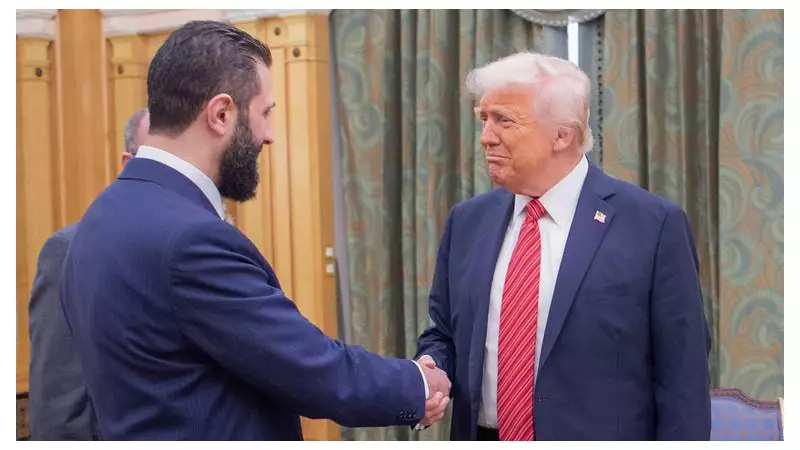
In a diplomatic move that would have been unthinkable just years ago, Syrian President Ahmed al Sharaa has arrived in Washington for a landmark series of meetings, culminating in a face-to-face discussion with former US President Donald Trump at the White House.
From Battlefield Commander to Statesman
Mr Sharaa's journey to this point is a remarkable story of transformation. He became leader of Syria after the fall of the Bashar al Assad regime in December last year. Before his political ascent, he was known by the nom de guerre Abu Mohammed al Jolani and served as the leader of the Nusra Front during Syria's brutal civil war. This group was a designated terror organisation and the Syrian branch of al Qaeda.
At that time, the US State Department had a $10 million reward for information leading to his capture. The idea of him setting foot on US soil and meeting an American president was considered an impossibility.
Why the Diplomatic U-Turn?
After 14 years of conflict that began during the Arab Spring, Syria remains in a state of disarray. The United States now views Mr Sharaa, as the head of the transitional government, as having the greatest chance of holding the country together and preventing it from descending back into civil war or becoming a failed state.
This new US strategy represents a significant gamble. By endorsing Mr Sharaa, Washington hopes he will shed his extremist past and emerge as a unifying leader for all Syrians. This engagement also serves a broader geopolitical purpose: holding him close makes it less likely that Iran and Russia will regain a strong strategic foothold in the country.
The High-Stakes Meeting and Lingering Questions
The meeting with Donald Trump is particularly significant. While the two men previously met in Riyadh in May, their discussions in Washington are expected to cover crucial topics including:
- Lifting sanctions, which is vital for Syria's post-war reconstruction.
- How Syria can assist in the ongoing fight against Islamic State.
- A potential pathway to the normalisation of relations with Israel.
This visit is the first-ever official visit by a Syrian head of state since the country gained independence in 1946. However, significant questions remain about Mr Sharaa's ability to be a leader for everyone. He has rejected his extremist background, attributing his past actions to the circumstances of the civil war. Yet, since he took power, there have been sectarian clashes, such as the fighting in Sweida in July between Druze armed groups and Bedouin tribal fighters, highlighting the country's enduring fragility.
Nonetheless, Mr Sharaa is widely viewed as the best chance for stabilising Syria and, by extension, a crucial part of the Middle East. The optics of the US engaging with a former militant are complex, but if successful, this risky strategy could fundamentally reshape Syria's role in the region, transforming it from a US enemy into a strong regional ally.