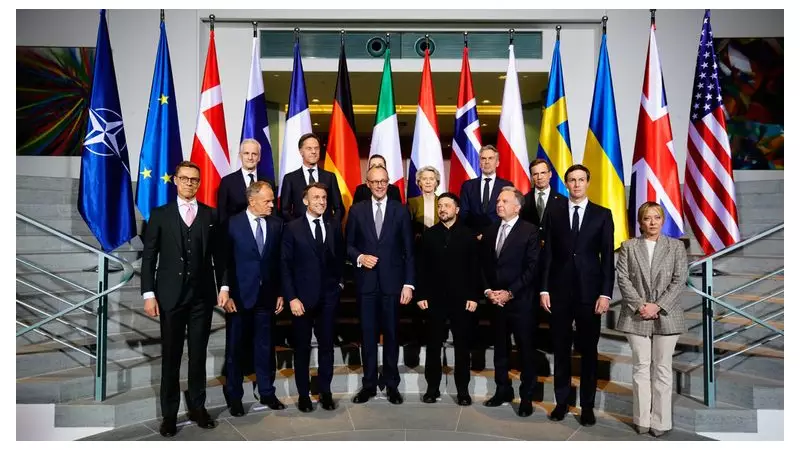
European leaders have united in calling for the creation of a 'multinational force' to guarantee Ukraine's security following any future peace agreement with Russia. The proposal emerged from a high-level meeting in Berlin on Monday, 15 December 2025, where officials struck an optimistic note about progress towards ending Europe's deadliest conflict since World War Two.
Breakthrough in Berlin: US Pledges and Ceasefire Hopes
The mood in the German capital was notably positive after two days of intensive diplomacy. A key driver was a new commitment from the United States to provide Ukraine with unspecified but significant security guarantees. German Chancellor Friedrich Merz hailed the American move as "truly remarkable" and a "very important advancement."
Adding to the momentum, US President Donald Trump stated his belief that the parties are "closer now than we have ever been" to agreeing on a ceasefire. This sentiment followed separate talks between Ukrainian and US envoys, Steve Witkoff and Jared Kushner, and a concurrent meeting of European leaders.
The Blueprint for a Secure Ukraine
In a joint statement issued on behalf of leaders from Germany, Denmark, Finland, France, Italy, the Netherlands, Norway, Poland, Sweden, the UK, and the EU institutions, the framework for lasting security was outlined. The proposed multinational force would be composed of nations from a 'Coalition of the Willing' and be supported by the United States.
The leaders outlined several core pillars for Ukraine's future:
- Strong support for Ukraine's accession to the European Union.
- An agreement that Ukraine should maintain armed forces at a level of 800,000 personnel.
- The multinational force would assist in regenerating Ukraine's military, securing its skies, and ensuring safer seas, potentially operating inside Ukrainian territory.
A senior US official revealed that approximately 90% of issues between the warring parties had been resolved. They also expressed belief that Russia would be open to Ukraine joining the EU and to the security guarantees under discussion.
Painful Negotiations and Military Claims
Despite the overall positive tone, Ukrainian President Volodymyr Zelenskyy underscored the difficulty of the negotiations, particularly regarding territorial concessions. He told reporters the talks were "painful" and "very difficult," acknowledging that "frankly speaking, we still have different positions."
Amid the diplomacy, Ukraine's security officials claimed a significant military strike, stating they had destroyed a $400m (£299m) Russian submarine in the Black Sea. Russia's Black Sea Fleet command swiftly denied the claim, asserting that no vessels or crews at the Novorossiysk base were harmed.
The Berlin summit concluded with European leaders pledging to work alongside Presidents Trump and Zelenskyy to achieve a "lasting peace, which preserves Ukrainian sovereignty and European security," noting a "strong convergence" between the US, Ukraine, and Europe.