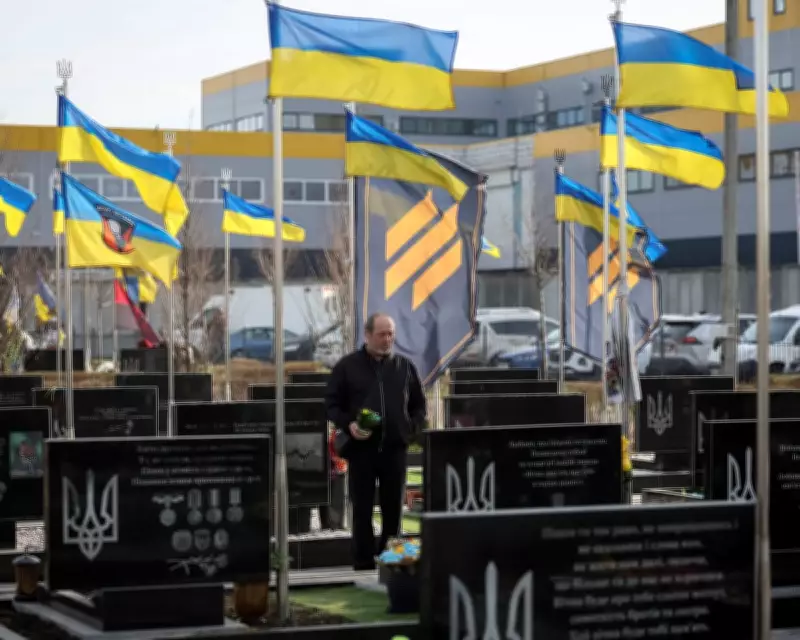
EU Ministers Commemorate Bucha Liberation and Advocate for War Crimes Accountability
Several European Union ministers are scheduled to arrive in Bucha, Ukraine, today to observe the fourth anniversary of the town's liberation and the horrific massacre that emerged as an early emblem of Russian aggression against Ukraine. This solemn occasion represents a rare instance in recent weeks where EU attention shifts back to Ukraine, amidst escalating concerns over the fallout from the conflict in Iran.
Delegation Led by EU's Top Diplomat Focuses on Justice
The delegation, headed by the EU's chief diplomat, Kaja Kallas, will engage in discussions aimed at ensuring accountability for war crimes perpetrated during the ongoing conflict. Central to these talks is the establishment of a special tribunal, which currently requires additional political support and funding to become operational.
In a social media statement, Ukraine's Foreign Minister, Andrii Sybiha, emphasized the unprecedented scale of Russian atrocities on European soil since World War II. He asserted, "The crime of aggression is the root cause of them all. There must be accountability and there will be no amnesty for Russian criminals, including the highest political and military leadership of the Russian Federation." Sybiha drew parallels to the Nuremberg trials, arguing that a new tribunal is essential to prevent such atrocities from recurring in the future.
Stalled EU Initiatives and Broader Regional Concerns
However, progress on other critical EU matters remains unlikely. The EU's proposed €90 billion loan to Hungary and the 20th sanctions package against Russia continue to be obstructed by Hungary, with no immediate resolution anticipated.
In a separate development, EU energy ministers are convening a call later today to assess the impact of the Middle East crisis on energy prices. Some member states are advocating for unilateral measures to mitigate economic repercussions, highlighting the broader regional tensions influencing EU policy.
Additionally, political attention is directed toward Denmark, where coalition negotiations persist following last week's parliamentary election, which resulted in a political deadlock. As of Tuesday, 31 March 2026, these multifaceted issues underscore the complex geopolitical landscape facing Europe.