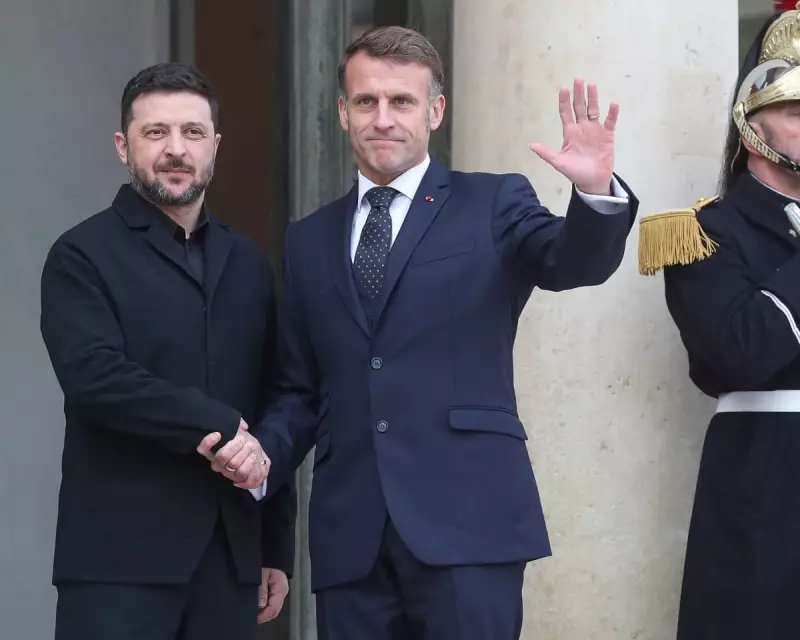
The European Union's foreign policy chief has voiced serious concerns that forthcoming discussions between the United States and Russia could place intense pressure on Ukraine to make significant concessions in the ongoing conflict. The warning comes as French President Emmanuel Macron met with his Ukrainian counterpart, Volodymyr Zelenskyy, in Paris on Monday, part of a continued diplomatic push by Kyiv to secure unwavering European support.
Kallas Warns of Pressure on the 'Victim' of War
Kaja Kallas expressed her fear that talks scheduled for Tuesday between Russian President Vladimir Putin and Steve Witkoff, a special envoy for former US President Donald Trump, would result in demands being placed solely on Ukraine. "I am afraid that all the pressure will be put on the victim," Kallas stated. She emphasised that for any genuine peace, the international community must not lose sight of the fact that "it's actually Russia who has started this war [and is] targeting civilians."
European leaders have been alarmed by a proposed US peace plan, perceived as heavily favouring Moscow. The plan, as reported, originally included provisions to grant Russia territories in eastern Ukraine it does not fully control, while compelling Kyiv to limit the size of its military and abandon its long-held ambition to join the NATO alliance.
Diplomatic Moves Across Europe
The diplomatic landscape remains highly active. While Witkoff—a property developer turned envoy—prepares for his meeting in Moscow after leading a US delegation in talks with Ukraine over the weekend, President Zelenskyy continues his tour of European capitals.
Following his meeting with President Macron, Zelenskyy travelled to Ireland on Tuesday to rally further political and material support. These visits underscore Ukraine's strategy to solidify backing from Western allies amidst the complex backdrop of potential US-Russia negotiations.
Other Global Developments
In a separate but significant development, reports indicate that Donald Trump recently issued an ultimatum to Venezuela's authoritarian leader, Nicolás Maduro, during a phone call on 21 November. Trump allegedly demanded Maduro relinquish power immediately, a demand the Venezuelan president refused. Maduro reportedly countered with requests for a "global amnesty" for himself and his allies, and to retain control of the country's armed forces.
This pressure campaign coincides with a major US naval deployment off Venezuela's coast and a series of deadly airstrikes on alleged drug-smuggling boats, actions criticised by the UN as extrajudicial executions.
Meanwhile, Sri Lanka is grappling with the aftermath of Cyclone Ditwah, described by President Anura Kumara Dissanayake as the "largest and most challenging natural disaster" in the nation's history. The disaster has affected over 1.1 million people, with widespread flooding devastating villages and parts of the capital, Colombo.
In other news, a suspect in a high-profile US shooting was kept under tight prison supervision to avoid an "Epstein-style situation," Spanish police arrested three alleged members of a neo-Nazi terrorist group, and a whistleblower has alleged a cover-up of concerns over extrajudicial killings by British SAS units in Afghanistan.