
European Leaders Demand Inclusion in Ukraine Peace Process
Senior European diplomats have issued a strong collective statement insisting that Europe must be involved in any negotiations aimed at brokering peace between Ukraine and Russia. This declaration comes following media reports revealing the existence of a draft US-Russian peace plan that appears to favour Kremlin interests.
No Concessions from Moscow, Says EU's Top Diplomat
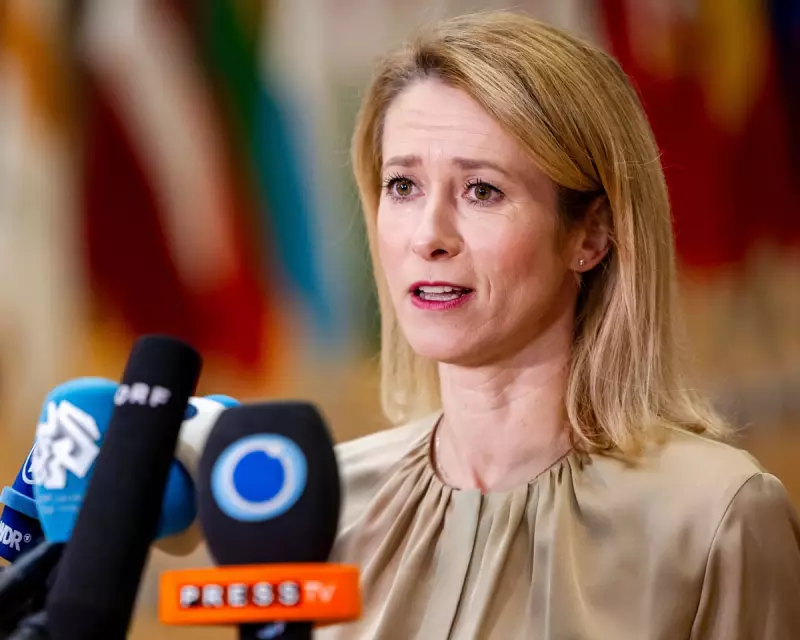
The European Union's foreign policy chief, Kaja Kallas, addressed reporters in Brussels, acknowledging any genuine efforts to end the conflict while emphasising crucial conditions. "We welcome all the meaningful efforts to end this war, but like we have said before, it has to be just and lasting," she stated. Kallas pointedly added that Vladimir Putin could end the war immediately by ceasing attacks on civilians, but noted that "we haven't seen any concessions on the Russian side."
Her sentiments were echoed by Germany's foreign minister, Johann Wadephul, who asserted that all negotiations must involve Ukraine and that Europe's participation is non-negotiable. "All negotiations about a ceasefire, regarding the further peaceful development of Ukraine, can only be discussed and negotiated with Ukraine," Wadephul declared. "And Europe will have to be included."
Peace Cannot Mean Capitulation
The controversial draft peace plan, which surfaced in media reports, would reportedly compel Ukraine to surrender significant territory and grant Russia unprecedented control over its political and military sovereignty. Jean-Noël Barrot, the French foreign minister, responded firmly to these developments, stating that peace cannot equate to capitulation.
"The principle of peace must start with a ceasefire on the line of contact which will allow engagement in discussions on the questions of territories and security guarantees," Barrot explained. "That is what we have always said, that is what Ukraine has always said... But what we see today is that Russia and Vladimir Putin are an obstacle to peace."
Poland's foreign minister, Radek Sikorski, emphasised Europe's critical stake in the outcome, noting that Europe is the main supporter of Ukraine and its security is directly threatened. "We commend peace efforts. But Europe is the main player, the main supporter of Ukraine, and it is, of course, Europe's security that's at stake. So we expect to be consulted," Sikorski stated.
Financial Battles and Legal Threats
The diplomatic discussions occurred alongside significant financial developments concerning Russian assets frozen in Europe. Russia's parliament, the Duma, voted unanimously to authorise legal action against Belgium and Euroclear if the EU proceeds with plans to use frozen Russian assets to support Ukraine.
The EU proposal aims to generate a €140 billion (£123bn) loan for Ukraine using profits from these frozen assets, addressing what European Commission President Ursula von der Leyen described as a €136 billion shortfall Ukraine faces in 2026-27. However, Belgium has expressed concerns about legal risks, particularly regarding what happens if Russia refuses to pay reparations or initiates lawsuits.
Euroclear, the Brussels-based securities depository holding approximately two-thirds of Russia's sovereign wealth frozen in the West, has previously warned that any action resembling confiscation would be illegal and likely provoke legal action from Moscow.
Meanwhile, Hungary's foreign minister, Péter Szijjártó, voiced opposition to EU support for Ukraine, employing rhetoric that references corruption allegations within the Ukrainian government to justify Budapest's consistently anti-Ukraine stance.




