The Diplomatic Dilemma in the Trump Era
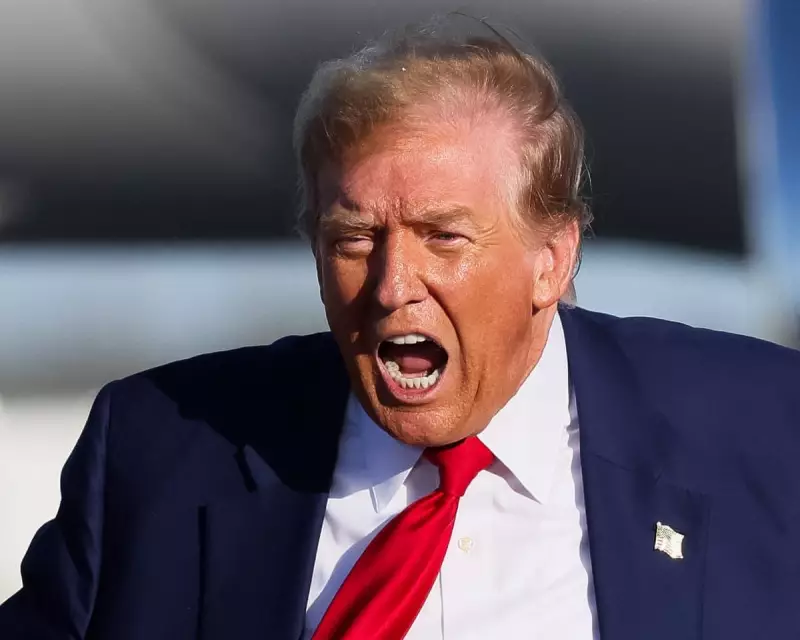
In today's hyper-connected political landscape, Western diplomats find themselves engaged in a relentless battle against an overwhelming tide of information. The challenge stems from the unprecedented communication style of former President Donald Trump, whose constant stream of social media posts and marathon press conferences has created a new normal for international relations.
The Unprecedented Volume of Presidential Communication
How does one effectively monitor and interpret a political figure who, in a single year, issued more than 6,000 social media posts and conducted over 433 public press events? The White House Stenographer's Office documented a staggering 2.4 million transcribed words from Trump during his presidency – a volume four times greater than Tolstoy's epic novel War and Peace. This deluge of content presents a formidable obstacle for diplomatic professionals tasked with separating meaningful policy signals from background noise.
Adapting Diplomatic Operations
Foreign ministries worldwide have been compelled to upgrade their media monitoring capabilities significantly. They must now account for Trump's tendency to announce explosive policy changes or launch unexpected verbal attacks against allies at virtually any hour. The unpredictable nature of these communications means diplomatic teams must maintain constant vigilance across multiple time zones.
Research reveals specific patterns in Trump's posting habits, with Thursday midnight, Tuesday 11am, Saturday 5pm, and Monday 11pm emerging as peak activity periods. These timing patterns often disadvantage Western diplomats operating in different time zones, forcing them to monitor communications during unconventional hours.
The Human Cost of Constant Monitoring
One diplomat described the daily reality of this challenge, noting that the most common morning question among colleagues is: "What has he said this time?" The psychological toll is substantial, as professionals must immerse themselves in content that frequently mixes market-moving announcements with personal boasts and conspiracy theories.
A particularly extreme example occurred on December 1st, when Trump posted 156 times in a single night. These communications blended significant policy statements with extraordinary claims, including suggestions about robotic replacements for political figures. For European diplomats, these late-night posts present special difficulties, often arriving as they commute to work.
Developing New Diplomatic Skills
Diplomats based in the United Kingdom report that interpreting Trump's remarks has become a specialized skill requiring particular expertise. One professional explained the challenge of maintaining focus during rambling press conferences that might begin with childhood anecdotes before suddenly pivoting to significant policy announcements.
"You start to switch off – you don't want to live inside this man's head – and then you realise you missed something important," the diplomat noted, highlighting the constant tension between psychological self-preservation and professional duty.
Strategic Adaptation and Information Sources
Dame Karen Pierce, Britain's former ambassador to Washington, revealed that her successful engagement strategy involved frequent appearances on Fox News, recognizing it as Trump's primary information source. This insight has led some embassies to assign specific diplomats to monitor how Fox News reports geopolitical developments, understanding this coverage significantly influences presidential perspectives.
One diplomat observed: "We believe he does not read traditional materials, but if there is a Maga commentator on Fox, that will be where he is getting his information." This understanding has reshaped how diplomatic services approach information gathering and analysis.
Navigating Misinformation and Alternative Facts
The Trump era has transformed fact-checking from a niche activity to a growth industry, though diplomats recognize they cannot simply dismiss presidential statements, even when factually questionable. These communications form part of a broader strategic arsenal that can influence international relations regardless of their factual accuracy.
During a Davos speech, for instance, Trump made claims about Chinese energy policies that contradicted established data from organizations like Ember, which reported China's substantial investment in renewable energy. Yet diplomats must analyze such statements for their strategic intent rather than their factual accuracy.
The Enduring Value of Diplomatic Interpretation
Despite these challenges, diplomatic professionals have discovered that Trump's unconventional communication style has paradoxically increased their value. As one diplomat noted, the further political figures stray from conventional reality, the more essential becomes the diplomat's skill in interpretation and contextual analysis.
The constant monitoring extends beyond social media to include lengthy press conferences that might feature unexpected photographic presentations or meandering monologues touching on multiple unrelated topics. Within these communications, diplomats must identify subtle clues about policy directions, international relationships, and strategic intentions.
This new diplomatic reality requires unprecedented adaptability, with professionals developing innovative strategies to manage information overload while maintaining essential international relationships in an increasingly complex political environment.