Cuba Pledges to Defend Against 'Terrorist Aggression' Following Deadly Boat Attack
Cuba has vowed to defend itself against any "terrorist and mercenary aggression," a day after border guards reported killing four exiles on a Florida-registered speedboat that opened fire on a patrol. The incident occurred off the northern coast of Cuba, near the tourist beach of Varadero, and has the potential to heighten tensions between Washington and Havana.
President's Firm Response to the Assault
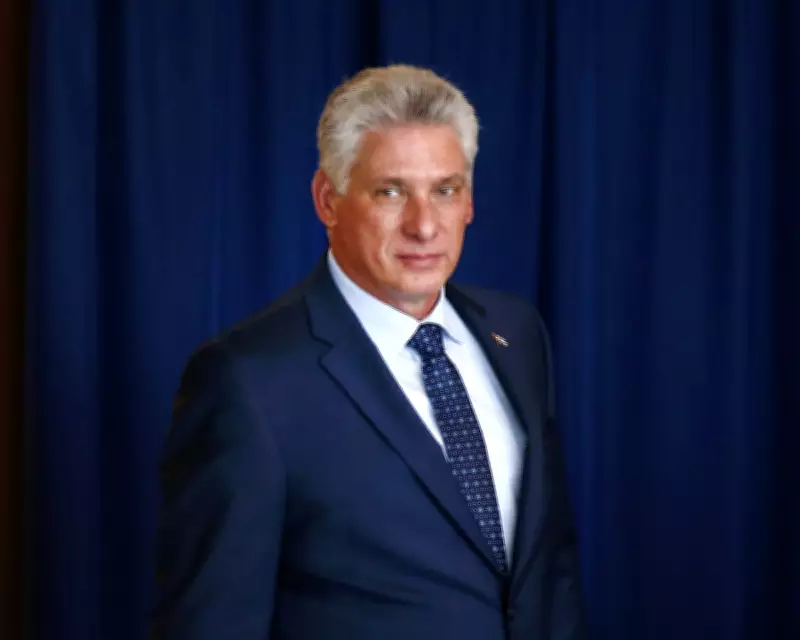
Cuban President Miguel Díaz-Canel wrote on social media platform X that the Caribbean country will "defend itself with determination and firmness" after the attack, which also left six other people on the boat injured. He preceded his comments by stating, "Cuba does not attack nor threaten," in an apparent effort to calm the situation. Despite the aggressive rhetoric, talks between the two nations are understood to be ongoing, with both governments appearing keen to avoid further escalation.
Details of the Incident and Investigation
The assault happened among a network of keys east of Varadero, according to Cuba's Ministry of the Interior. The boat, a small centre-console speedboat believed to have come from the Florida Keys, was allegedly carrying arms, including assault rifles, handguns, and Molotov cocktails. Cuban authorities said the occupants fired on border guards when intercepted, injuring the Cuban commander and one guard. The ministry reported that it had already detained one further member of the group who had flown to the island to meet the boat and had "confessed."
Background of the Exiles and Potential Motives
The boat's occupants were identified as Cuban residents in the US, all with criminal records in Cuba, accused of intending to "carry out an infiltration for the purposes of terrorism." One of the deceased, Michel Ortega Casanova, had spoken of wanting to liberate the island, according to an associate. Wilfredo Beyra, head of the Cuban Republican party in Tampa, stated, "His goal was to go and fight against a criminal and murderous narco-tyrannical [government], to see if that would spark the people to rise up." This incident echoes a long history of exiles attempting to spark uprisings against Cuba's communist government.
Reactions from the US and Exile Community
US Secretary of State Marco Rubio, who was attending the Caricom session in St Kitts and Nevis, said the US government had nothing to do with the incident and told reporters, "We're still gathering facts." Meanwhile, the Miami Herald reported that US officials had met with Raúl Guillermo Rodríguez Castro, the grandson of former Cuban president Raúl Castro, on the sidelines of the Caricom meeting. Although he holds no official role, he remains influential in Cuba's power structure.
In the exile community, reactions have been mixed. Some have declared two days of mourning, while others question the logic of the attack. Michael Bustamante, chair of Cuban and Cuban-American studies at the University of Miami, noted, "There is a feeling that at the moment the US is clamping down and putting the Cuban government in the corner, this could actually give the Cuban government a lifeline." He also pointed out the historical irony, referencing the Granma boat that carried Fidel and Raúl Castro to Cuba in 1956, which now sits in Havana's Museum of the Revolution.
Broader Implications and Ongoing Tensions
This incident occurs against a backdrop of strained relations between the US and Cuba, exacerbated by the Trump administration's oil blockade and US actions against Venezuela, a key Cuban ally. Experts have raised concerns about the boat's suitability for such a mission, noting it was a 24ft Pro-Line typically used for coastal fishing, making the 90-mile journey from Florida ambitious. The survivors are reportedly being held at a hospital in Santa Clara, under heavy guard by interior ministry troops.
As investigations continue, the potential for this event to influence US-Cuba diplomacy remains significant, with both sides navigating a delicate balance between defense and dialogue.