UK Foreign Secretary Urges Lebanon Inclusion in Ceasefire Agreement
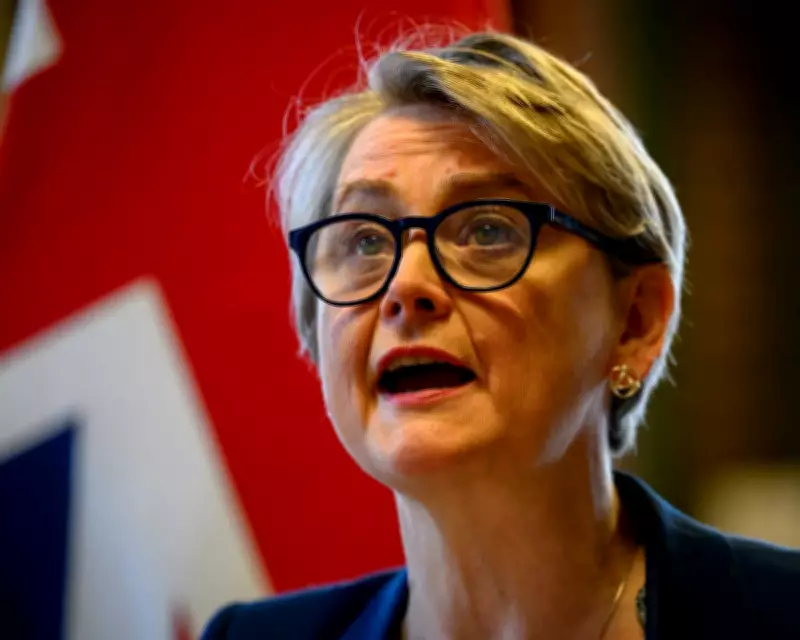
British Foreign Secretary Yvette Cooper has declared that Lebanon must be included in the ceasefire agreement between the United States and Iran, as a fragile two-week pause in hostilities hangs in the balance. Cooper made these remarks during an address to City leaders at the Mansion House in London, emphasizing the critical need to prevent a return to conflict following the ceasefire announced by US President Donald Trump earlier this week.
Israeli Strikes Continue Despite Ceasefire Announcement
Despite the announced ceasefire, Israel has intensified its bombing campaign in Lebanon, resulting in at least 254 fatalities. This escalation prompted Iran to once again halt the passage of oil tankers through the strategically vital Strait of Hormuz. Before her speech, Cooper told BBC Radio 4's Today programme that the continued Israeli strikes on Lebanon were "completely wrong." She stated, "We want to see an end to hostilities in Lebanon. What Israel was doing yesterday with this escalation of strikes was completely wrong... this escalation is damaging, it's wrong, it's going the wrong direction. We want the ceasefire extended to cover Lebanon."
Cooper confirmed that the United Kingdom's position on Lebanon has been formally raised with both the United States and directly with Israeli authorities. However, any optimism that Israel would immediately cease its operations in Lebanon was quickly diminished when US Vice-President JD Vance clarified that Lebanon was not part of the ceasefire agreement with Iran. Speaking from Budapest, Vance explained, "I think this comes from a legitimate misunderstanding. I think the Iranians thought that the ceasefire included Lebanon, and it just didn't. We never made that promise, we never indicated that was going to be the case."
Global Economic Impact of Strait of Hormuz Closure
In her speech at the Lady Mayor's Easter Banquet, Cooper underscored the severe global economic repercussions of the Strait of Hormuz closure. Iran blocked this crucial maritime passage in response to US and Israeli military actions that commenced in late February. Since then, global prices for fuel and fertilizer have surged dramatically, placing immense pressure on household budgets worldwide. Cooper highlighted, "More than 3,000 miles away from here – yet the deliberate blocking of this critical artery of the global economy is affecting mortgage rates, petrol and food prices, here at home. Every country on every continent has felt the effects."
Cooper elaborated on the strategic importance of the strait, noting, "Fertiliser for Africa, liquid natural gas for Asia, jet fuel for the world; the trading route for Qatar, UAE, Bahrain, Kuwait, Iraq, Saudi Arabia and Oman, all hijacked by Iran so they can hold the global economy hostage. No country can close these routes – it goes against the fundamental principles of the law of the sea." She called for immediate action to resume international shipping by supporting the International Maritime Organization's proposals to assist trapped vessels and approximately 20,000 stranded seafarers.
Key Demands for Regional Stability
Cooper outlined several essential conditions for achieving lasting peace in the region:
- Lebanon must be explicitly included in the ceasefire agreement.
- There must be no return to armed conflict following the current pause.
- Iran must cease all threats against its neighboring countries.
- The Strait of Hormuz must be fully and unconditionally reopened to maritime traffic.
She emphasized, "We know more than ever that freedom of navigation is the underpinning of global trade. It matters for every sea, ocean and strait. Every country has a stake in this. Every industry is affected by it." Cooper stressed that the reopening of the strait should be a central component not only of the current ceasefire but also of any long-term regional stability framework.
UK Prime Minister Engages Gulf Allies
Meanwhile, UK Prime Minister Keir Starmer has arrived in the United Arab Emirates as part of his diplomatic tour of Gulf nations. Starmer's visit focuses on discussions with regional allies about maintaining the current pause in hostilities and identifying necessary steps to restore confidence for resuming shipping operations through the Strait of Hormuz. The Prime Minister has already held talks with Saudi Crown Prince Mohammed Bin Salman in Jeddah and is scheduled to meet with UAE President Sheikh Mohamed bin Zayed Al Nahyan to coordinate international efforts toward a sustainable resolution.