
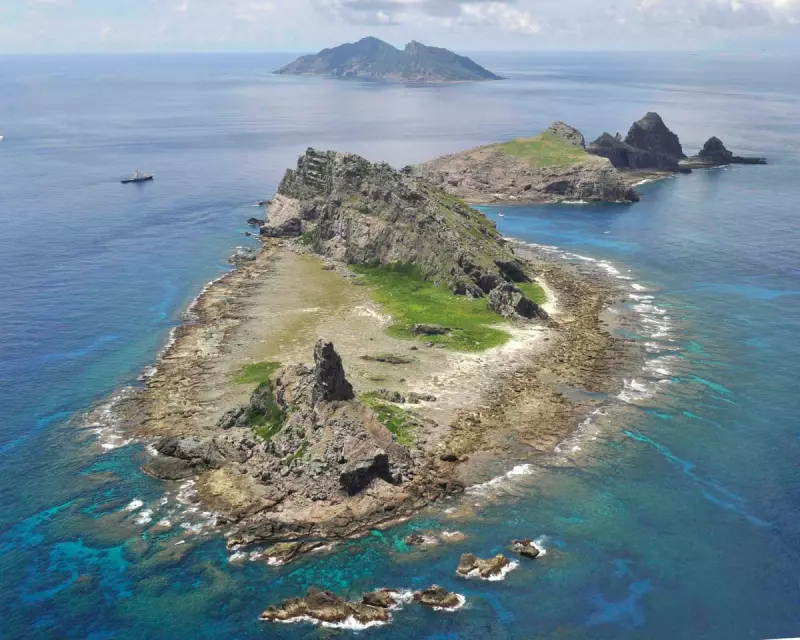
Tensions have escalated significantly in the East China Sea as China deployed coast guard vessels through waters surrounding the disputed Senkaku Islands, known as Diaoyu in China, following controversial remarks from Japan's prime minister about Taiwan.
Military Activity Intensifies
On Sunday, the Chinese coast guard confirmed its ships conducted what it described as a "rights enforcement patrol" within territorial waters around the Japanese-administered islands. The formation, including vessel 1307, performed what Beijing claims are lawful operations to uphold its maritime interests.
Simultaneously, Taiwan's defence ministry reported detecting 30 Chinese military aircraft, seven navy ships, and one official vessel operating around the island during the previous 24 hours. Military maps revealed up to three drones flying between Taiwan and Japan's outlying islands, particularly near Yonaguni island located just 110 kilometres from Taiwan.
Diplomatic Fallout Over Taiwan Comments
The heightened military activity follows Japanese Prime Minister Sanae Takaichi's parliamentary statement that Japan might respond militarily if China attacks Taiwan. This departure from Tokyo's traditional policy of strategic ambiguity prompted immediate backlash from Beijing, which summoned the Japanese ambassador for the first time in over two years.
China's defence ministry declared that any Japanese intervention regarding Taiwan would be "doomed to fail", while state media accused Takaichi of staging a "dangerously provocative" political stunt. The situation deteriorated further when China's consul general in Osaka remarked that "the dirty head that sticks itself out must be cut off", triggering a formal protest from Tokyo.
Economic and Educational Consequences
In additional escalations, China's government issued travel and study advisories against Japan. Chinese citizens were cautioned to "carefully reconsider" studying in Japan due to what Beijing described as an unstable security environment.
This advisory could significantly impact Japanese universities, which hosted over 123,000 Chinese students last year - the largest foreign student demographic. Three Chinese airlines simultaneously announced that tickets to Japan could be refunded or changed without penalty.
Taiwan's defence ministry characterised China's actions as part of an ongoing "joint combat patrol" intended to harass the island's airspace and waters. While such patrols occur regularly, the timing and scale of recent activities reflect heightened regional tensions.
The Taiwanese government maintains that only its people can decide their future, rejecting Beijing's claims of inevitable reunification. Meanwhile, China continues to assert its territorial claims while increasing both military and non-military pressure campaigns in the region.




