Trump Unveils 'Board of Peace' at Davos with Bold Global Claims
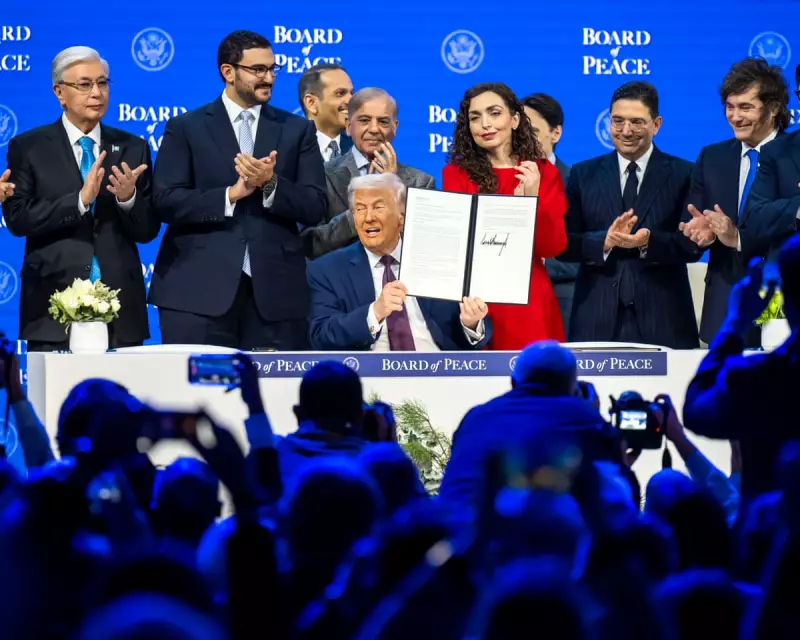
In a significant diplomatic move, former US President Donald Trump presided over the launch of his "board of peace" initiative at the World Economic Forum in Davos, Switzerland, on 22 January 2026. During a signing ceremony, Trump asserted that the world has become "richer, safer and much more peaceful than it was just one year ago," positioning the new organisation as potentially "one of the most consequential bodies ever created in the history of the world."
Broadening Geopolitical Ambitions and UN Tensions
Originally conceived as part of Trump's plan for a ceasefire in Gaza, the board has since evolved to encompass a much wider geopolitical role. When questioned by reporters on whether this fledgling body might supplant the United Nations, Trump responded ambiguously with "It might," fueling international apprehensions. Leaders from 19 nations, including Argentina, Kosovo, Morocco, Hungary, Indonesia, and Jordan, have already signed the founding charter, with expectations for further expansions.
Controversial Invitations and Diplomatic Rejections
The board's composition has stirred controversy, particularly with Trump's invitation to Russian President Vladimir Putin, whose military continues its assault on Ukraine. Putin has indicated that Moscow is consulting with "strategic partners" before committing. This move has unsettled several dignitaries, such as British Foreign Secretary Yvette Cooper, who confirmed the UK will not join the initiative at present. Other nations abstaining include France, Germany, and Norway.
In a notable development, Trump publicly withdrew Canada's invitation via a Truth Social post addressed to Prime Minister Mark Carney, stating the board was retracting its offer to join "the most prestigious Board of Leaders ever assembled."
Concurrent Global Diplomatic Drama
The Davos forum also witnessed other geopolitical tensions. Ukrainian President Volodymyr Zelenskyy criticised European leaders for being in "Greenland mode," accusing them of awaiting Trump's leadership rather than taking independent action on crises like Ukraine. Meanwhile, Greenland's Prime Minister Jens-Frederik Nielsen emphasised that sovereignty is non-negotiable following Trump's claims of US access to the Arctic island.
Additionally, the US House rejected a resolution to bar Trump from deploying troops to Venezuela, and reports emerged of secret assurances from Venezuelan officials regarding cooperation with the Trump administration prior to Nicolás Maduro's capture.
Broader Implications and Domestic Context
Amid these international manoeuvres, domestic US politics saw related developments. Democratic lawmakers condemned Immigration and Customs Enforcement over detainments, while Trump filed a lawsuit against JPMorgan Chase for alleged banking service denials. The National Institutes of Health announced it would cease funding research using fetal tissue from elective abortions, reflecting ongoing policy shifts under Trump's influence.
As the "board of peace" takes shape, its potential to reshape global diplomacy remains a focal point of debate, balancing Trump's vision of enhanced peacekeeping against fears of undermining established international institutions like the UN.