Ukrainian President Volodymyr Zelenskyy has declared that military commanders on the ground will make the final decision about a potential withdrawal from the fiercely contested city of Pokrovsk, acknowledging the devastating human cost of holding the strategic eastern position.
Frontline Visits and Critical Decisions
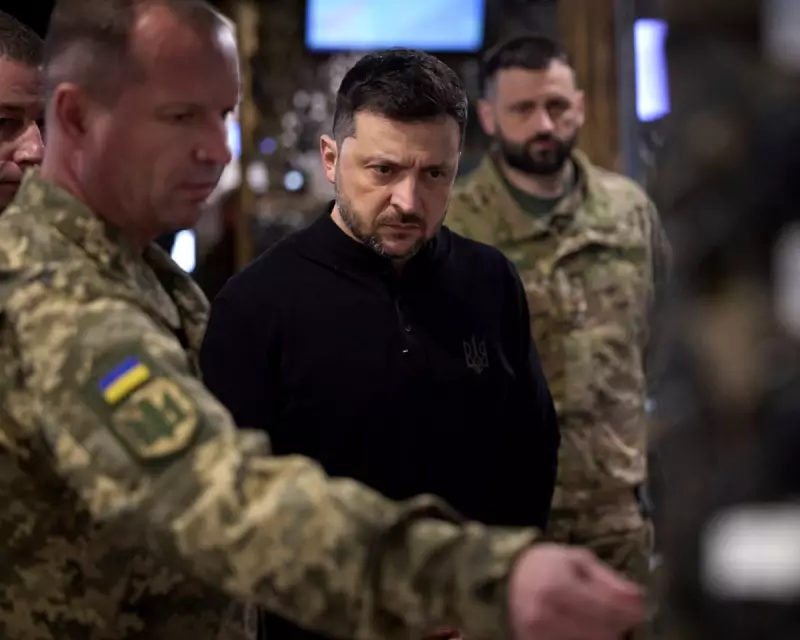
During a visit to a command bunker in the Zaporizhzhia region on Thursday, President Zelenskyy addressed the "very difficult" situation in the Donetsk oblast. He emphasised that while he is not opposed to a tactical withdrawal, the ultimate call rests with those directly overseeing the battle. "No one is forcing them to die for the sake of ruins," Zelenskyy stated in an interview. "I will support our soldiers, especially the commanders who are there, in how they can control the situation, or it's too expensive for us. The most important thing for us is our soldiers."
This statement came as Ukraine's top commander, General Oleksandr Syrskyi, personally visited units defending Pokrovsk to coordinate operations. General Syrskyi sought to dispel concerns, asserting, "There is no question of Russian control over the city of Pokrovsk or of the operational encirclement of Ukraine's defence forces in the area." His key objectives included regaining control of certain areas and protecting vital supply lines.

Ukraine's Strategic Strikes and Russia's Retaliation
In a significant demonstration of domestic military capability, Ukraine deployed its Flamingo cruise missile in coordinated strikes on Thursday. The Ukrainian military general staff reported hitting "several dozen objects" in Russian-occupied territories and within Russia itself.
The Ukrainian-made FP-5 missile, nicknamed 'Flamingo' due to an initial pink paint job, represents a major strategic asset. Experts confirm it can travel an impressive 3,000km (1,864 miles) and deliver a substantial 1,150kg (2,535lb) warhead with high accuracy, landing within 14 metres of its target. This makes it one of the world's largest such missiles and a partial alternative to the advanced Tomahawk missiles that the US has not supplied.
Targets successfully struck included:
- A marine oil terminal in occupied Crimea.
- A helicopter parking lot and UAV storage area.
- Training areas at the Kirovsk airfield.
- An air defence radar station near Yevpatoria.
- An oil depot and forward command posts in the Zaporizhzhia region.
In response, Russian forces launched a "massive" drone and missile attack on Kyiv early Friday. Mayor Vitali Klitschko reported that falling debris struck a five-storey apartment building in the Dniprovskyi district, while a high-rise dwelling in the Podil district caught fire. The air force confirmed that both drones and missiles were deployed against the capital.
Broader Conflict and International Support
The battle for Pokrovsk has been intensified by the involvement of Russia's specialised Rubicon unit, which uses drones to hunt Ukrainian drone operators. According to the Institute for the Study of War, Russian forces will likely collapse the pocket around Pokrovsk and Myrnohrad, though the strategic significance depends on the circumstances of any Ukrainian withdrawal.
Meanwhile, President Zelenskyy also highlighted the dire situation near the village of Orikhiv in Zaporizhzhia, describing it as "one of the most difficult." He stressed that thwarting Russian advances there is crucial to defending the regional capital, Zaporizhzhia, a key objective for the enemy.
On the international stage, European Commission President Ursula von der Leyen announced the EU is releasing a €6 billion loan to Ukraine and promised further financial support to cover the country's needs for the next two years. In a speech to the European Parliament, she dismissed Vladimir Putin's belief that he can outlast Western support, calling it a "clear miscalculation."
As the war reached its 1,360th day, the Ukrainian Defence Forces continue their systematic campaign to degrade the logistical and operational capabilities of the Russian occupation army, with the extent of damage from the latest strikes still being clarified.