The Trump administration has pivoted to a strategy of intense economic pressure against Venezuela, ordering the US military to enforce a stringent two-month 'quarantine' on the country's oil exports. This move signals a preference for financial coercion over immediate military action in the effort to oust President Nicolás Maduro.
A Strategic Shift to Economic Warfare
According to a senior US official who spoke anonymously to Reuters on Wednesday, 25 December 2025, the focus is now squarely on leveraging sanctions to cripple the Venezuelan economy. The official stated that while military options remain on the table, the immediate goal is to use economic pressure to force the outcome desired by Washington. The belief within the administration is that Venezuela will face severe economic turmoil by late January unless it makes significant concessions to the United States.
This directive follows an order from President Donald Trump last month for a 'blockade' of oil tankers entering and leaving the South American nation. The official's use of the term 'quarantine' appears to be a deliberate softening of the president's earlier, more bellicose language. However, Mr Trump has previously asserted that US forces will remain deployed until Venezuela returns "all of the oil, land, and other assets that they previously stole from us."
Massive Military Buildup in the Caribbean
The economic pressure is backed by a formidable show of force. Over recent months, the US has assembled a vast military presence in the Caribbean, including over 15,000 troops, an aircraft carrier, 11 additional warships, and more than a dozen advanced F-35 fighter jets. President Trump justifies this deployment as a necessary measure to combat 'narco-terrorists' and drug smuggling cartels he claims are targeting the United States.
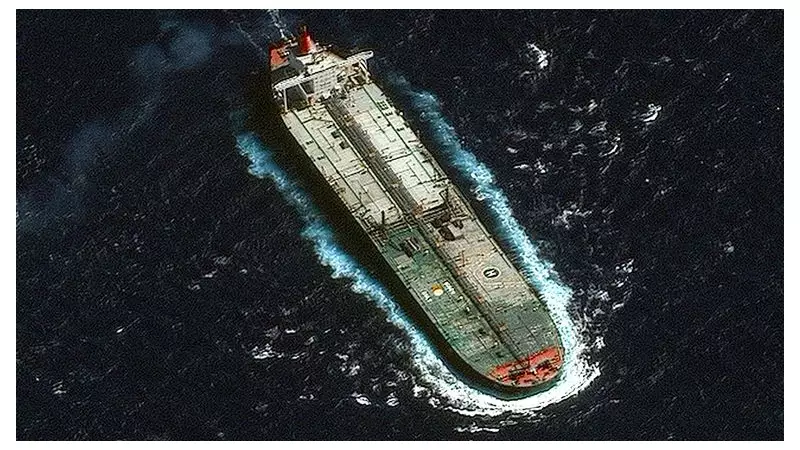
The enforcement of the oil quarantine is already underway. A US official confirmed that so far in December, the US Coast Guard has intercepted two tankers in the Caribbean Sea, both carrying full loads of Venezuelan crude oil. Authorities are reportedly in 'active pursuit' of a third vessel. One of the seized ships was identified as the crude oil tanker 'Skipper'.
Diplomatic Clash at the United Nations
The escalating situation prompted Venezuela to call an emergency meeting of the UN Security Council. US Ambassador Mike Waltz defended the actions, arguing that sanctioned oil tankers "operate as the primary economic lifeline for Maduro and his illegitimate regime." The US, along with dozens of other nations, does not recognise Mr Maduro's 2018 re-election and backs opposition leader Juan Guaidó as interim president.
Venezuela's UN Ambassador, Samuel Moncada, launched a fierce counter-accusation. He charged the United States with acting "outside international law" and its own domestic statutes. Ambassador Moncada posed a pointed question: "What right does the United States government have to appropriate, to date, almost four million barrels of Venezuelan oil?" He characterised the US actions as a military siege designed to degrade Venezuela's economy and military, sow internal chaos, and pave the way for external aggression.
For his part, President Maduro alleges that Mr Trump's ultimate aim is to orchestrate a coup to seize control of Venezuela's vast oil reserves, the largest in the world. The US president has repeatedly pressured Mr Maduro to flee the country, reiterating as recently as Monday that it would be wise for the Venezuelan leader, whom he accuses of heading the 'Cartel de los Soles', to leave.