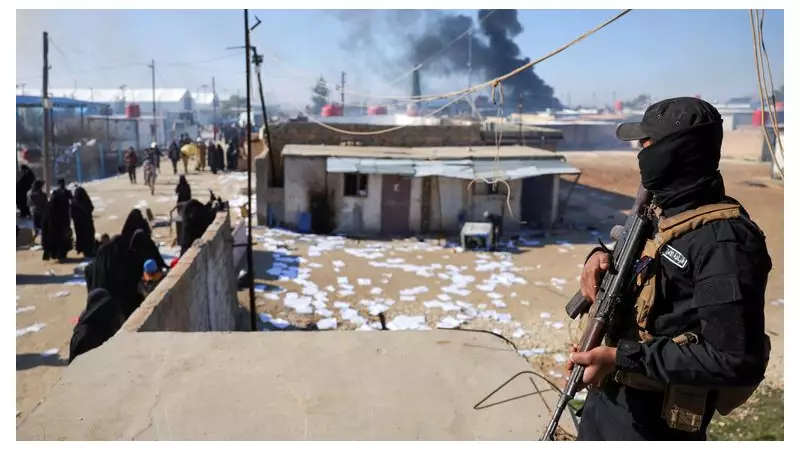
In a significant development in the Middle East, United States troops have initiated the transfer of 150 Islamic State prisoners from Syria to Iraq. This move is part of a broader strategy that could see up to 7,000 detainees relocated across the border in the coming months.
Security Concerns Prompt Prisoner Relocation
The decision to transfer these prisoners comes amid growing uncertainty over security in northeastern Syria. The withdrawal of Syrian Democratic Forces (SDF) troops has raised serious questions about the safety of approximately a dozen prisons and detention camps they previously guarded, many of which hold IS members.
American military officials confirmed on Tuesday that around 200 low-level IS fighters managed to escape from Syria's Shaddadi prison, though government forces have since recaptured many of them. This incident highlighted the fragile security situation in the region.
Coordinated Effort with Iraqi Government
The US military stated that the 150 prisoners were moved from a detention facility in Hasakah, Syria, to a secure location in Iraq. Admiral Brad Cooper, head of US forces in the Middle East, emphasized that this scheme was developed in close coordination with the Iraqi government.
"We are closely coordinating with regional partners, including the Iraqi government, and we sincerely appreciate their role in ensuring the enduring defeat of ISIS," Admiral Cooper stated in an official release.
Changing Dynamics in Syrian Conflict
The prisoner transfers occur against a backdrop of shifting alliances and power dynamics in Syria. The new Syrian government under President Ahmed al Sharaa has been attempting to reassert control over the entire country, leading to clashes with the SDF, a Kurdish-led militia that previously controlled much of the northeast.
On Tuesday, the Syrian government announced a ceasefire with the SDF after seizing significant portions of its territory. The government has given the SDF four days to agree to integrate into the Syrian state—a deal that the United States has urged the militia to accept.
US Policy Shift in Syria
The SDF long enjoyed American backing as a crucial bulwark against Islamic State forces in Syria. However, this support appears to be diminishing with the emergence of the new Syrian government. US envoy to Syria Tom Barrack noted that the SDF's role in leading the charge against ISIS "has largely expired, as Damascus is now both willing and positioned to take over security responsibilities."
Barrack added that recent developments demonstrate the US is actively facilitating this transition rather than prolonging a separate SDF role. This represents a significant shift in American policy toward the Syrian conflict.
Scale of Detention Operations
The prisoner transfer program addresses a substantial detention challenge. More than 10,000 IS members are currently being held in Syrian prisons, along with thousands of women and children with ties to the militant group. The planned relocation of up to 7,000 detainees to Iraqi-controlled facilities represents a major logistical operation with significant security implications.
Admiral Cooper revealed that he spoke with Syrian President Ahmed al Sharaa on Monday, communicating his "expectations for Syrian forces as well as all other forces to avoid any actions that could interfere" with security operations and prisoner transfers.
Historical Context and Future Implications
The new Syrian government was established after the dictatorial regime of Bashar al Assad was ousted by rebels thirteen months ago. As Damascus seeks to consolidate control, the handling of IS prisoners represents both a security challenge and an opportunity for the government to demonstrate its capability to manage complex security situations.
The successful transfer of these initial 150 prisoners suggests that coordination between American, Iraqi, and Syrian forces is progressing, though the ultimate fate of thousands more detainees remains uncertain. The situation continues to evolve rapidly, with implications for regional stability and counter-terrorism efforts across the Middle East.