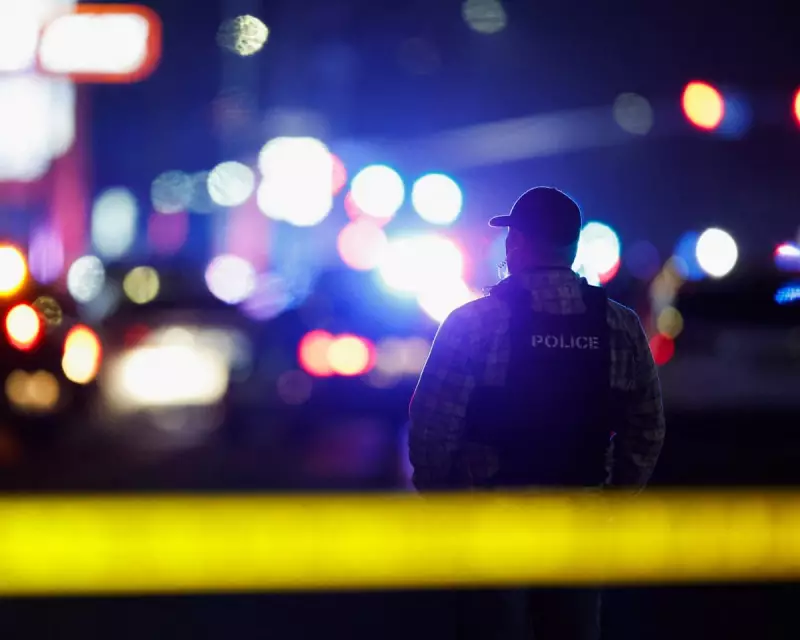
A recent shooting at a family gathering in Stockton, California, which left four people dead, has been recorded as the 17th mass killing in the United States so far this year. This figure represents the lowest annual tally since 2006, according to a major national database.
A Statistical Return to the Mean
Experts analysing the data caution that the decline does not necessarily signal a lasting trend towards greater safety. The database, maintained by the Associated Press and USA Today in partnership with Northeastern University, defines a mass killing as an incident where four or more people are slain within a 24-hour period, excluding the perpetrator.
James Alan Fox, a criminologist at Northeastern University who manages the database, described the drop as a likely "regression to the mean." He suggested it indicates a return to more average levels following an unusual spike in such events during 2018 and 2019. "What goes up must come down," Fox stated, quoting Isaac Newton. He added pessimistically, "Will 2026 see a decline? I wouldn't bet on it. What goes down must also go back up."
The data shows mass killings have fallen by approximately 24% in 2025 compared to 2024, which itself saw a roughly 20% decrease from 2023.
Volatile Numbers and Complex Causes
James Densley, a professor at Metropolitan State University in Minnesota, emphasised the inherent volatility in the statistics due to the relative rarity of these events. "Because there's only a few dozen mass killings in a year, a small change could look like a wave or a collapse," Densley explained, noting that 2025 appears positive historically but the underlying problem is not solved.
Several potential factors for the recent drop were noted, including an overall decline in homicide and violent crime rates from their pandemic peaks. Improvements in emergency response to mass casualty incidents may also be a contributing element.
Eric Madfis, a criminal justice professor at the University of Washington, Tacoma, stressed the complexity of analysing crime trends. "It's multicausal. It's never going to be just one thing," he said, pointing out that gun violence deaths, while down, remain exceedingly high by global standards. He also highlighted that increased state funding for school threat assessments—now mandated in 22 states—may have prevented some school-based incidents, though this year's database records no mass killings in educational settings.
The Broader Picture of Gun Violence
While the focus often falls on extreme events, experts urge a wider perspective. Firearms were involved in about 82% of this year's mass killings. Since the database began in 2006, 3,234 people have died in such events, with 81% being shooting victims.
Emma Fridel, an assistant professor of criminology at Florida State University, warned against "missing the forest for the trees." She highlighted the staggering annual death toll from firearms, encompassing both homicides and suicides. "The number one cause of death for children is guns," Fridel stated, arguing that mass killings should be viewed as one part of a much larger public health crisis.
On a policy note, Christopher Carita, a former detective and training specialist with the gun safety organisation 97Percent, cited the 2022 Safer Communities Act as a potential positive step, as it allocated millions for violence prevention programmes.
Ultimately, while the 2025 data offers a moment of statistical relief, the consensus among criminologists is one of caution, not celebration, emphasising that the fundamental challenges of gun violence in America persist.