US Extends Energy Lifeline to Hungary Amid Russia Sanctions
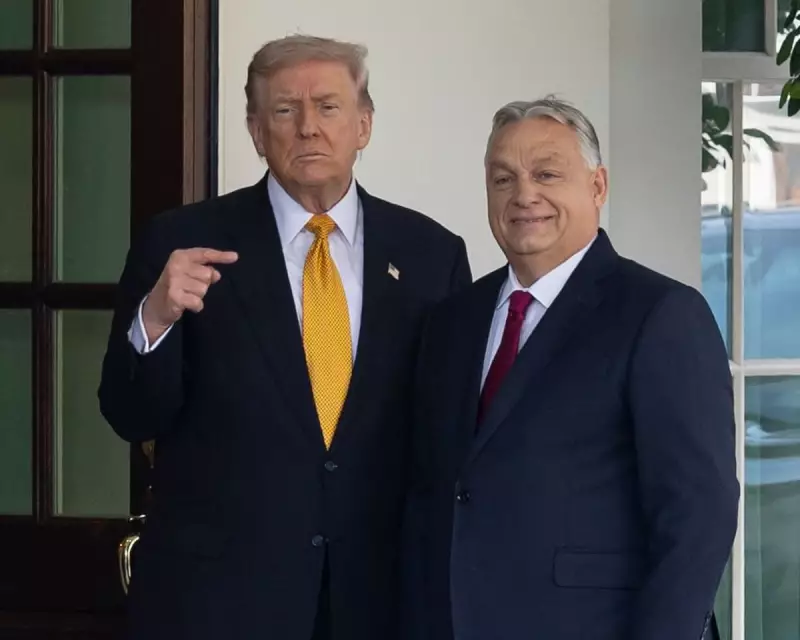
The United States has granted Hungary a significant one-year exemption from US sanctions concerning Russian oil and gas imports, creating a notable exception within Washington's broader strategy to pressure Moscow over its ongoing conflict with Ukraine. This development follows a cordial meeting between Hungarian Prime Minister Viktor Orbán and US President Donald Trump at the White House on Friday, where the two longstanding allies discussed the critical energy situation facing the Central European nation.
A Strategic Exemption and Major LNG Deal
The White House official confirmation came with an important caveat: in exchange for the sanctions relief, Hungary has committed to purchasing US liquefied natural gas through contracts valued at approximately $600 million. This arrangement underscores a pragmatic approach to energy diplomacy, balancing punitive measures against Russia with recognition of individual nations' energy dependencies.
The exemption addresses sanctions imposed by the Trump administration last month targeting Russian energy giants Lukoil and Rosneft, which carried potential secondary sanctions against entities in third countries continuing to purchase Russian hydrocarbons. For Hungary, the stakes couldn't be higher—International Monetary Fund figures reveal the country relied on Russia for 74% of its gas and 86% of its oil in 2024.

Geographical Realities and Economic Vulnerabilities
President Trump displayed understanding toward Hungary's predicament during the bilateral discussion, noting the country's geographical limitations. "We're looking at it, because it's very different for him to get the oil and gas from other areas," Trump stated. "As you know, they don't have... the advantage of having sea. It's a great country, it's a big country, but they don't have sea. They don't have the ports."
The economic vulnerability is substantial. Analyses from ratings agency S&P highlight that Hungary possesses one of Europe's most energy-intensive economies, with domestic refineries specifically configured to process Russian Urals crude oil. The IMF has warned that a complete EU-wide cutoff of Russian natural gas could trigger output losses in Hungary exceeding 4% of GDP.
Broader Political Alignment and Ukraine Discussion
The meeting extended beyond energy matters, covering Russia's war with Ukraine and broader geopolitical alignment. When questioned about Ukraine's prospects, Orbán offered the tempered assessment that a "miracle can happen." Trump noted that Russia "simply does not want to stop fighting yet," though he expressed belief that this position would eventually change.
The Hungarian leader, facing re-election in 2026, cultivated his strong personal rapport with Trump, predicting a "golden age" in US-Hungarian relations while criticising the previous Biden administration. Trump returned the favour with explicit electoral support: "He has not made a mistake on immigration. So he's respected by everybody... I like and respect him... and that's why he's going to be very successful in his upcoming election."
This political solidarity persists despite the EU's top court ruling last year that Hungary must pay a €200 million fine plus €1 million daily penalties for non-compliance with EU asylum policy—a matter Orbán referenced but indicated Hungary would handle independently.
The sanctions exemption represents a tangible manifestation of Hungary's improved standing with the US under the Trump administration, following last month's full restoration of Hungary's status in the US visa waiver program. Meanwhile, Hungary continues to resist European Commission plans to phase out all Russian gas and LNG imports by 2027, deepening its rift with Brussels over relations with Moscow.