US F-15E Fighter Jet Downed Over Iran, One Crew Member Rescued
In a dramatic escalation of the Middle East conflict, a US F-15E Strike Eagle fighter jet has been shot down over Iran, marking the first such incident since the war began nearly five weeks ago. US officials confirmed that one crew member was successfully rescued, while the other remains missing, prompting a frantic search and rescue operation amid heightened tensions.
Iranian State Media Releases Images of Wreckage
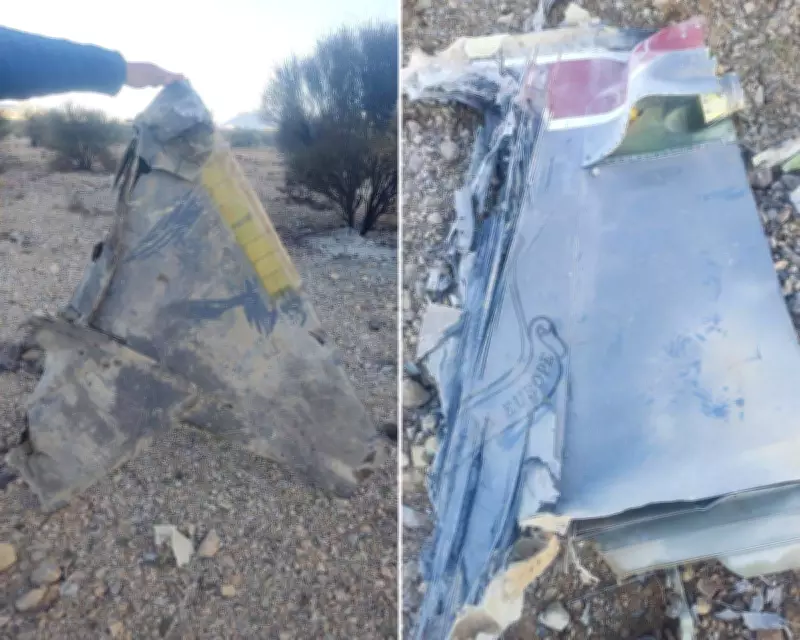
Iranian state media published images showing a tail fin and other debris, initially claiming that an advanced US F-35 had been hit by a new air defense system over central Iran. However, aviation experts quickly identified the wreckage as belonging to an F-15E from the US Air Force's 494th squadron, based at RAF Lakenheath in the UK. Markings on the debris matched those typically found on Strike Eagles stationed in the UK, though the exact time and location of the incident could not be immediately verified.
US officials later confirmed off the record that an F-15E had been brought down, with the Pentagon scrambling to locate the crew before Iranian forces could intervene. There has been no official comment from the US military regarding the downing, adding to the uncertainty surrounding the event.
Political Fallout and Rescue Efforts
The incident comes just days after former US President Donald Trump delivered a bellicose national address, declaring that the US had "beaten and completely decimated Iran" and that the conflict was "nearing completion." Trump asserted, "We have all the cards. They have none," highlighting the ongoing political rhetoric fueling the crisis.
White House Press Secretary Karoline Leavitt stated that Trump had been briefed on the situation but offered no additional details. In a brief interview with NBC News, Trump declined to discuss the search and rescue mission but emphasized that the incident would not affect negotiations with Iran, bluntly stating, "No, not at all. No, it's war. We're in war."
Meanwhile, Iran's semi-official Fars news agency reported that Tehran had rejected a US proposal for a 48-hour ceasefire, citing an unnamed source, further complicating diplomatic efforts.
High-Risk Rescue Operation and Geolocation Clues
Details of the rescue mission are scarce, but it is believed to have been a high-risk operation, with rescue aircraft potentially exposed to ground fire. Footage filmed in Iran showed a US C-130 Hercules and an HH-60 Pave Hawk helicopter flying low in southwestern Iran, refueling during their operation. This footage, along with geolocated data, indicated activity near Behbahan in Khuzestan province, approximately 30 miles from the Gulf coast.
An Iranian businessman offered a reward of $60,000 for anyone capturing the crew members alive, and a local TV presenter in Kohgiluyeh and Boyer-Ahmad province urged residents to hand over any "enemy pilot" to police, promising a reward. These developments provided clues to the incident's location and the intense efforts to locate the missing crew.
Conflicting Reports and Additional Incidents
Iran's Tasnim news agency reported that the pilot of the downed jet had been taken into custody, contradicting earlier claims that the pilot had likely died. However, no verification of this revised statement has emerged. Additionally, a social media account linked to Iran's Revolutionary Guards posted a picture of an ejector seat in a desert landscape, consistent with the ACES II type used in F-15Es. Aviation expert Justin Bronk noted that if genuine, this suggests at least one crew member ejected safely.
In a separate incident, The New York Times reported that a second US Air Force combat plane, an A-10 Warthog attack aircraft, crashed in the Persian Gulf region on Friday. The lone pilot was safely rescued, and Iranian state media claimed its air defense system had targeted an "enemy" A-10 near the Strait of Hormuz.
Broader Context and International Concerns
This downing marks the first loss of a US fighter jet over Iran during the five-week conflict, though three F-15Es were previously shot down in a friendly fire incident by Kuwaiti air defenses on March 1. The total cost to the US Air Force, including lost and damaged aircraft such as 16 uncrewed Reaper drones, is estimated at over $3 billion. An F-15E cost $31 million when delivered in the late 1990s, with newer models priced closer to $100 million.
Amid these developments, powerful blasts rocked northern Tehran as Israel launched new strikes on the Iranian capital and Beirut. The Associated Press reported that Israel had suspended airstrikes in areas relevant to the rescue operation in Iran, indicating some coordination amid the chaos.
Late on Thursday, Trump reiterated threats to bomb Iran's infrastructure, claiming credit for an attack on a suspension bridge between Tehran and Karaj that killed eight and injured 95. He posted on social media, "Our Military, the greatest and most powerful (by far!) anywhere in the World, hasn't even started destroying what's left in Iran. Bridges next, then Electric Power Plants!" Fresh footage showed the $400 million bridge severed in three places, increasing repair costs.
Over 100 international law experts signed a joint statement on the Just Security website, warning that statements by Trump and other US officials, along with the conduct of US forces, "raise serious concerns about violations of international human rights law and international humanitarian law, including potential war crimes." They highlighted particular concern over threats to Iran's energy infrastructure, noting that such attacks could constitute war crimes under international law.
In related events, a power and desalination plant in Kuwait was damaged in an attack, with Iran blaming Israel. The Mina al-Ahmadi refinery in Kuwait was closed after a drone strike from Iran, and the UK announced it would send a counter-drone team to assist in defense. Israeli media reported that the US had advised against killing Iran's new supreme leader, Mojtaba Khamenei, to preserve a potential negotiating partner for peace talks.
Despite these diplomatic hints, Iran's regime has shown little desire to cease hostilities. Sirens sounded repeatedly in Israel as missile attacks from Iran and Lebanon continued, though casualty numbers remained low, with 12 people treated for injuries in the past 24 hours. Israel also conducted fresh strikes on south Beirut after issuing an evacuation order, as the region grapples with escalating violence and uncertainty.