US Air Force Colonel Bravo, a weapons system operator on an F-15E fighter jet, survived a harrowing 50-hour ordeal in Iran after being shot down, climbing a 7,000ft ridge with a broken back, arm, and shoulder before being rescued by American special forces. His story aired on CBS's 60 Minutes on Sunday, a segment that critics have labeled Pentagon propaganda to boost public support for President Donald Trump's unpopular war.
Rescue operation details emerge
The rescue operation, which took place in April, involved thousands of military personnel, including the elite Army Delta Force, Navy Seal Team Six, and a CIA decoy operation to distract and deceive Iranians chasing a bounty for the airmen's capture, according to the 60 Minutes segment. Bravo, identified only by his codename, appeared on camera with Pete Hegseth, the president's defense secretary; Dan Caine, chair of the joint chiefs of staff; and Brad Cooper, head of US Central Command. The co-pilot, codenamed Alpha, declined to participate despite reported pressure from the Trump administration.
Bravo told interviewer Norah O'Donnell that his aircraft was struck by an Iranian shoulder-fired missile, and he realized his parachute was damaged after ejecting. "When I looked up and saw no parachute, that was the most terrifying thing I've ever seen," he said. "So I paused, right then. And I prayed: 'Lord, your will be done. But if I'm getting through this, I need help.'" Unable to fully untangle his chute, he hit the ground hard, estimated to be traveling between 70 and 100 mph. In addition to broken bones, he sustained a sprained ankle and serious wounds to his head and face.

Survival and extraction
Bravo managed to hike and climb the 7,000ft ridge with only a pistol, a communication device, and a tracking beacon. Declassified video broadcast by 60 Minutes showed a "risky" daytime raid to rescue Alpha, who landed about 5 miles away. More than 20 helicopters took part, with two shown under fire. "It was a gun fight all the way in and all the way out," Hegseth told O'Donnell. "But they got Alpha back. And then we began to, immediately, I mean you're celebrating that Alpha's back, but you realize the job's only half done."
Alpha was retrieved about six hours after being shot down, while Bravo's ordeal lasted about 50 hours. After finding concealment, he sent a message: "God is good," as a recognition of what he had been through. Cooper said the rescue plan was accelerated once it was clear Bravo had survived. US bombers and drones hit Iran's Islamic Revolutionary Guard Corps forces nearby, and two large search and rescue planes with special forces troops and small helicopters landed on a makeshift desert airstrip several miles from his hiding spot. Bravo's first glimpse of US soldiers was "one of the greatest moments of my life," with about 1,500 Iranian personnel within a 10-mile radius, Cooper said.
Criticism and political context
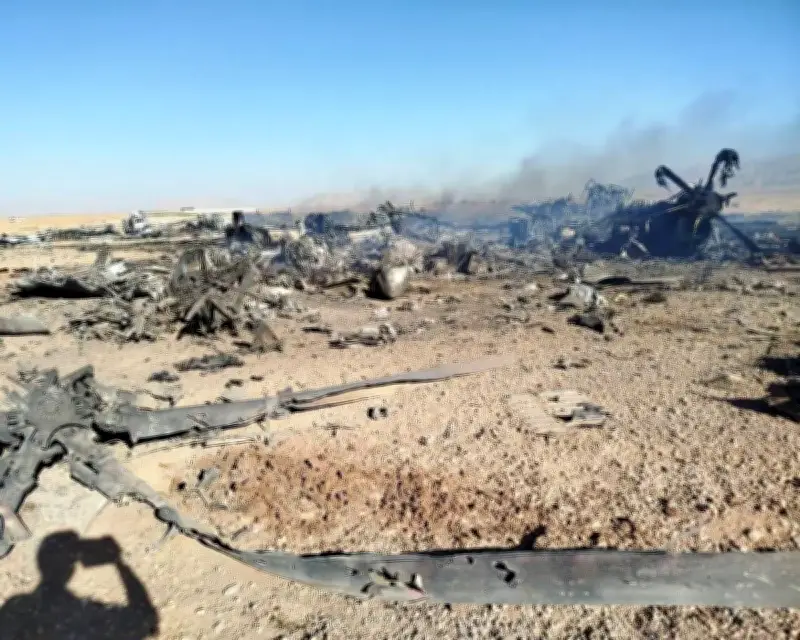
The extraction saw one rescue plane become lodged in desert sand, was abandoned, and then bombed to avoid capture. Cooper said more than 90 Americans were involved on the ground, supported by several hundred more in the air, and up to 5,000 people overall. "What you need to know is we would have sent more to go get the back-seater," he said. CNN reported that getting the airmen to appear on television was a priority for Hegseth, eager to present a success story in a war that has killed 18 US troops, wounded more than 800, and sent oil and gasoline prices soaring.
Pentagon spokesperson Sean Parnell called CNN's story "a complete lie," stating the decision to participate was "each pilot's alone, because it is their story." He added that the Pentagon took care to protect operational security. CNN also reported that Bari Weiss, CBS News's editor-in-chief, pressured Hegseth for exclusive access. A backlash to the segment was reported by the Daily Beast, with commentator Justin Baragona posting that a CBS staffer told him: "Norah [was] absolutely willing to play the part of dimwit reporter used as a propaganda tool."