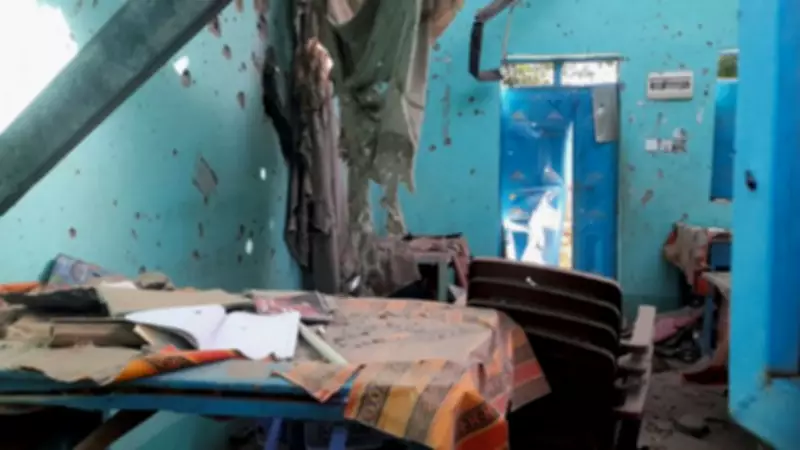
UN Reveals Over 6,000 Deaths in Three-Day Assault on Sudanese City of Al Fashir
The United Nations has disclosed that more than 6,000 individuals lost their lives over a span of three days when the paramilitary Rapid Support Forces (RSF) captured the strategic city of Al Fashir in Sudan last October. This offensive, which included widespread atrocities, has been classified by the UN Human Rights Office as constituting war crimes and potential crimes against humanity.
Atrocities and Human Rights Violations Documented
According to a comprehensive 29-page report from the UN Human Rights Office, the RSF and their allied Arab militias, known as Janjaweed, overran Al Fashir on 26 October 2025. This city was the Sudanese army's last remaining stronghold in the Darfur region. The report meticulously documents the killing of at least 4,400 people within the city between 25 and 27 October, with an additional 1,600 fatalities occurring as civilians attempted to flee the RSF's violent rampage.
The atrocities detailed in the report are extensive and harrowing, encompassing mass killings, summary executions, sexual violence such as rape and gang rape, abductions for ransom, torture, ill-treatment, detention, and disappearances. In numerous instances, these attacks were driven by ethnic motivations, exacerbating the humanitarian crisis.
Pattern of Violence and International Response
UN High Commissioner for Human Rights Volker Turk emphasized that the rights violations during the final push for Al Fashir highlight how "persistent impunity fuels continued cycles of violence." The RSF's conduct in Al Fashir mirrors a broader pattern observed in other areas throughout its conflict with the Sudanese army, which began in April 2023 due to a power struggle in Khartoum.
This conflict has escalated into the world's largest humanitarian crisis, with certain regions of Sudan facing famine conditions. The International Criminal Court is actively investigating the atrocities as war crimes and crimes against humanity. Additionally, the United Arab Emirates has faced accusations of supporting the RSF, allegations that the UAE's foreign ministry has firmly denied.
Online Documentation and Global Impact
Disturbingly, the RSF is known for documenting its own war crimes, with videos circulating online since the conflict's inception. These recordings show fighters engaging in heinous acts, including lynching women, assaulting emergency responders, and celebrating over deceased bodies. The widespread dissemination of such content underscores the brutal nature of the conflict and its profound impact on global perceptions.
As the war persists, the international community continues to monitor the situation closely, with calls for accountability and justice growing louder. The UN report serves as a critical reminder of the urgent need for intervention to prevent further loss of life and human suffering in Sudan.