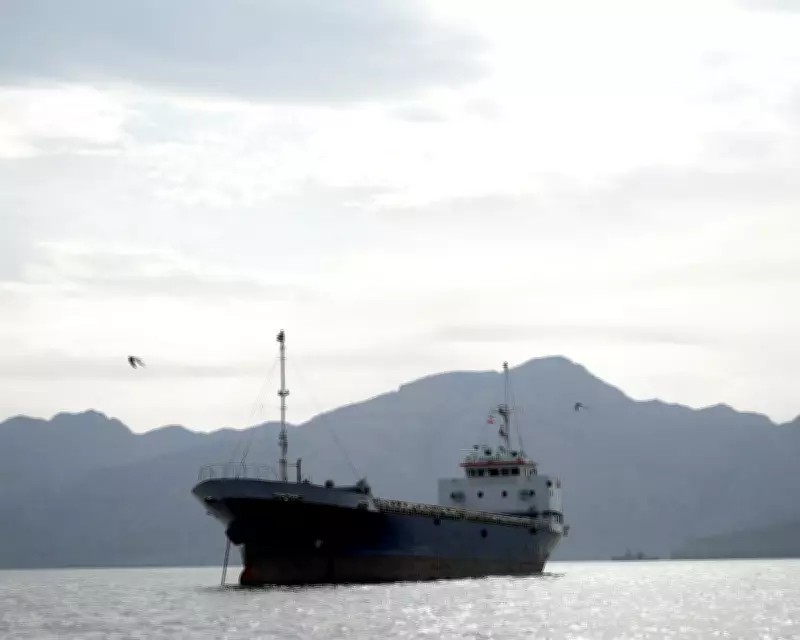
UK's Constrained Naval Capacity for Post-Conflict Hormuz Strait Operations
The United Kingdom is preparing to co-host a critical international summit this week, bringing together representatives from more than forty nations to address the complex challenge of safeguarding commercial shipping through the strategically vital Strait of Hormuz once hostilities with Iran conclude. Prime Minister Keir Starmer has emphasized the severe economic impact of the waterway's continued closure, describing it as profoundly damaging to global trade and highlighting that restoring maritime traffic is essential for alleviating worldwide cost of living pressures.
Iran's Mine Warfare and the Royal Navy's Diminished Presence
Intelligence assessments indicate that Iran has deployed at least twelve naval mines within the narrow strait, deliberately obstructing the passage of oil tankers and commercial vessels through a channel that typically handles approximately twenty percent of global oil shipments. Tehran maintains an arsenal containing thousands of additional naval mines, which can be deployed from modest-sized vessels, presenting a persistent threat even after extensive US airstrikes have degraded Iran's conventional naval capabilities.
With the Royal Navy operating at reduced strength, the United Kingdom's contribution to post-conflict security operations in the Gulf region will necessarily be more limited than in previous decades. The UK's final dedicated mine-hunting vessel stationed in Bahrain, HMS Middleton, was withdrawn just prior to the commencement of US and Israeli military strikes against Iranian targets, leaving a significant capability gap in the region.
The Royal Navy's Mine-Clearance Capability Constraints
Current analysis reveals that the Royal Navy possesses only seven dedicated mine-hunting vessels within its entire fleet. Of these, four are unavailable for immediate operational deployment due to maintenance, training, or other commitments. The remaining three vessels are considered absolutely essential for protecting United Kingdom territorial waters from potential Russian threats and for ensuring the secure transit of the nation's continuous at-sea nuclear deterrent submarines operating from Faslane naval base in western Scotland.
Transition to Autonomous Drone Technology
The Royal Navy's response strategy is increasingly focused on autonomous and remotely operated mine-hunting drone systems, which represent the future of naval mine countermeasures according to Western military experts. These sophisticated unmanned systems are designed to deceive naval mines into detonating safely by mimicking the acoustic and magnetic signatures of passing ships through carefully programmed flight patterns.
The Ministry of Defence currently oversees four distinct drone systems in various stages of operation and development, designated with the code names Wilton, Sweep, SeaCat, and MMCM. While the exact number of operational drones remains classified, defence officials have confirmed that some of these systems are already deployed within the Gulf region. Military planners are actively considering deploying a dedicated mothership vessel to serve as a launch and control platform for mine-clearing drones, with RFA Lyme Bay currently undergoing modifications in the Mediterranean to fulfill this emerging role.
Impracticality of Traditional Convoy Protection
Maritime security experts have largely dismissed the feasibility of implementing traditional convoy systems for protecting commercial shipping through the Strait of Hormuz. Analysis from leading shipping publication Lloyd's List indicates that providing adequate protection against aerial threats, waterborne drones, fast attack boats, and missile systems would require an impractical commitment of naval resources—potentially eight to ten destroyers to escort groups of just five to ten vessels simultaneously.
Given that the strait typically accommodated between 120 and 140 vessel transits daily before the conflict, a convoy system requiring one-way traffic patterns would at best restore only about ten percent of normal shipping volumes. This option was briefly considered by French and British military planners during the early stages of the conflict but was quickly abandoned as fundamentally unworkable for restoring meaningful commercial traffic.
International Summit Seeks Sustainable Solutions
The upcoming Hormuz summit, jointly convened by the United Kingdom and France, will examine all available options for guaranteeing safe navigation once the conflict concludes. Shipping industry representatives and security analysts agree that some form of international oversight will be necessary but caution against American military leadership in this role, given that US Navy vessels might themselves become targets for residual hostilities.
Potential solutions under consideration include multinational aerial surveillance of shipping lanes once mine clearance operations are complete, though the specific division of responsibilities among participating nations remains undefined. The shipping industry strongly advocates for reinstating the traditional traffic separation scheme that has governed navigation between Iran and Oman since 1968, while expressing concern about proposals for implementing tolling systems for strait transit.
UK's Regional Military Contributions
Defence Secretary John Healey has already authorized the reinforcement of British military presence in the Gulf region, deploying approximately one thousand personnel to support regional air defence systems, protect allied nations from security threats, and monitor developing situations. Following an incident involving an Iranian-manufactured missile launched from Lebanese territory toward RAF Akrotiri in Cyprus, the Royal Navy dispatched the warship HMS Dragon to the eastern Mediterranean, though the government faced criticism for the vessel's delayed response time.
Royal Air Force Typhoon and F-35 fighter jets, alongside Wildcat helicopters, have maintained continuous defensive patrol missions, while additional air defence systems have been transferred to the Gulf to enhance protection for regional allies. As the international community prepares for post-conflict stabilization, the United Kingdom's contribution will increasingly rely on technological innovation and multinational cooperation rather than traditional naval power projection.