Ukraine has initiated the mass production of a new, domestically developed interceptor drone, named 'Octopus', in a significant move to strengthen its air defences against relentless Russian attacks. This announcement from the defence ministry comes in the wake of a devastating night-time assault on Kyiv that claimed at least six lives and left dozens injured.
Scaling Up Domestic Defence Production
The Ukrainian defence ministry confirmed on Friday that the first three manufacturers have commenced production of the 'Octopus' interceptor drones, with an additional eleven companies preparing to establish their own production lines. This locally developed technology has already been tested in combat conditions and has proven effective against Russia's Shahed drones.
The ministry stated that the Octopus system operates successfully "at night, under jamming and at low altitudes", making it a versatile tool for air defence. President Volodymyr Zelenskyy has set an ambitious target for the nation's defence industry: to manufacture up to 1,000 of these interceptors every single day.
Deadly Assault on the Capital
The urgency of this new production effort was underscored by a massive Russian aerial bombardment. President Zelenskyy described the attack as "deliberate, calculated and wicked". Air raid sirens sounded in Kyiv shortly after midnight on Friday, followed by the distinct sound of Shahed drones in the sky and the heavy response from Ukrainian air defences.
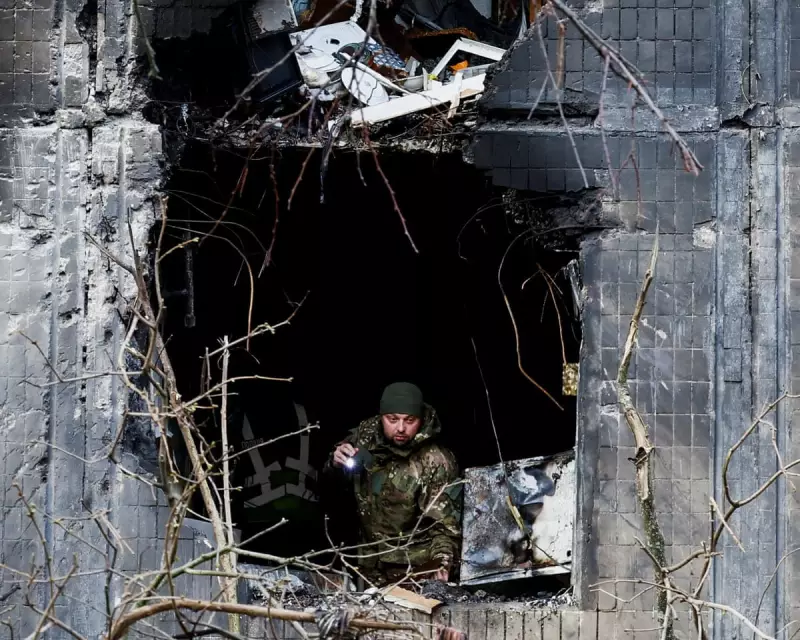
The assault involved 430 drones and 18 missiles, according to Zelenskyy. The six individuals killed were at home in a residential block on Kyiv's left bank when it was struck. The attack damaged dozens of other buildings, including the Azerbaijani embassy, prompting a strong protest from Azerbaijan to the Russian ambassador.
Broader Conflict Developments
In a concerning development for Ukrainian defences, a senior Ukrainian intelligence official, Major General Vadym Skibitskyi, revealed that Russia plans to manufacture up to 120,000 glide bombs this year. This figure includes 500 of a new, longer-range version, indicating a vast increase in the production of these cheap yet devastating weapons. Russian forces are currently firing between 200 and 250 glide bombs daily.
In a strategic countermove, Ukrainian forces struck the Russian Black Sea port of Novorossiysk, temporarily halting oil exports equivalent to 2% of the global supply. Ukraine's general staff confirmed the use of Neptune cruise missiles and various strike drones in the attack, stating it was part of efforts to "reduce the military and economic potential of the Russian aggressor." Separate Ukrainian strikes also hit an oil refinery and a fuel storage facility inside Russia.
As the war on day 1,361 continues to evolve, President Zelenskyy is scheduled to visit Madrid to meet with Spanish lawmakers, following a planned visit to Paris, as Ukraine seeks to maintain international support for its defence efforts.