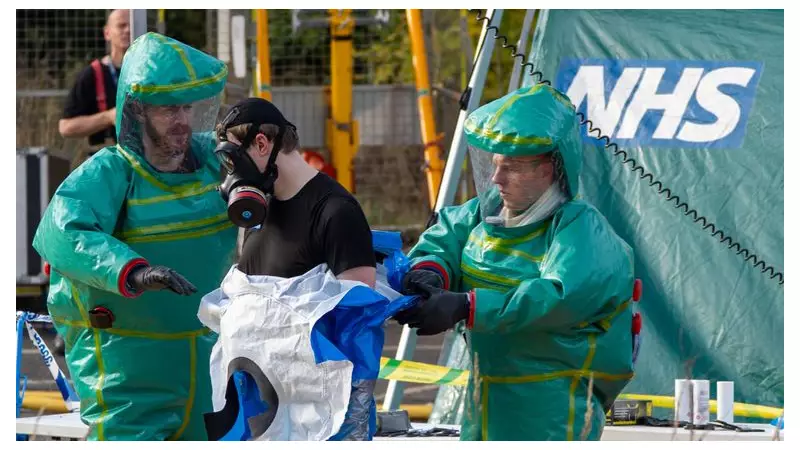
The United Kingdom has successfully conducted a large-scale simulation to test its emergency response capabilities in the event of a deadly biological toxin being discovered. The three-day exercise, which took place last week, forms a critical part of the nation's ongoing strategy to protect against complex threats.
Large-Scale Simulation Involving 600 Personnel
According to a statement from the Home Office, the drill involved up to 600 members of the military, police, ambulance, and other essential services. The comprehensive exercise was designed to assess the readiness of specialist troops and emergency responders to a multi-faceted attack scenario.
The simulation, which was not open to media attendance, was co-led by Eastern Region Counter Terrorism Policing and the Ministry of Defence. The scenario was built around the discovery of a biological toxin, the body of a would-be attacker, and a number of improvised explosive devices (IEDs).

Testing a Coordinated National Response
While the exercise did not simulate mass casualties, it rigorously tested the potential effects of exposure to a biological toxin on the first responders arriving at the scene. This aspect is crucial for ensuring the safety of those who would be first on the ground during a real incident.
Security Minister Dan Jarvis emphasised the importance of such training, stating, "Joint training is vital to ensure that our policing partners, armed forces and emergency responders can work seamlessly together to protect the British public from a range of threats." He added that this ongoing preparation ensures the UK can respond "rapidly, effectively and with confidence."
A History of Real-World Threats
This annual exercise is a key component of the UK's strategy to ensure preparedness for attacks involving chemical, biological, radiological, or nuclear (CBRN) weapons, as well as explosives. The need for such readiness was starkly demonstrated in March 2018, when the UK's emergency response to chemical threats was activated following the Novichok attack in Salisbury on former Russian double agent Sergei Skripal and his daughter, Yulia.
Armed Forces Minister Alastair Carns commented on the recent drill, saying, "Exercises like this show how the military is integral to keeping Britain safe and secure at home." The Home Office confirmed that these simulations are designed to test responses to a variety of severe threats, including large-scale poisoning or a hazardous materials release.