In an unprecedented move that signals a significant rupture in one of the world's closest military alliances, the United Kingdom has suspended its intelligence-sharing arrangement with the United States concerning suspected drug trafficking vessels in the Caribbean.
A Breach of International Law?
The decision, first reported by CNN, stems from profound concerns within the UK government that intelligence it provides may be facilitating lethal military strikes conducted by American forces. These strikes, which target boats allegedly used by drug traffickers, are considered by many legal experts to be potential breaches of international law.
This suspension represents a rare public divergence in the UK-US 'special relationship' and indicates that Britain does not believe the Trump administration's controversial practice of sinking narco-trafficking boats is legally justifiable. The UK has long collaborated with the US by sharing information on suspect vessels travelling from Latin America, enabling the US Coast Guard to intercept them. However, this cooperation was paused shortly after the US began a campaign of lethal strikes in September.

Mounting Casualties and Legal Questions
The scale of the US operation is significant. According to reports, an estimated 76 people have been killed in 19 separate attacks on small boats in both the Caribbean and the Pacific. The Trump administration defends its actions by claiming that drug smugglers are legally considered combatants in an ongoing "armed conflict" with the United States.
This legal interpretation is widely contested. Oona Hathaway, a former Pentagon legal adviser and president-elect of the American Society of International Law, stated, "I know they know what they are doing is wrong. If they refuse, they disobey orders. If they do it, they are violating international law and domestic law." Joaquin Castro, a Democrat congressman from Texas, has labelled the operations as "extrajudicial killings."
Strained Alliances and a Naval Dilemma
The intelligence suspension is not the only sign of strain in the US-UK relationship under the Trump administration. The New York Times reported a separate incident in which an FBI promise to protect a London-based surveillance officer was broken, leading to the position being axed and causing incredulity within MI5.
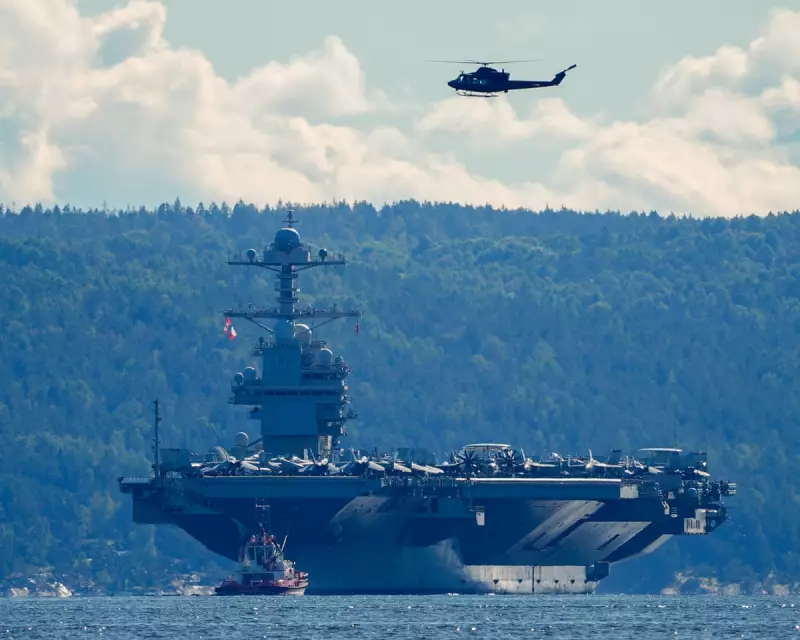
Complicating matters further is a significant US military buildup in the region. The USS Gerald R. Ford aircraft carrier, the US navy's largest warship, has been deployed to the Caribbean with its supporting strike group amid rising tensions with Venezuela. This presents a direct dilemma for the UK, as a senior Royal Navy officer, Lt Cdr Owen Long, is traditionally deployed on the USS Winston Churchill, a destroyer within that very strike group.
When asked about this deployment, a Royal Navy spokesperson commented, "Armed forces personnel regularly serve on exchange programmes with our key military partners around the world." However, British naval sources confirmed that a legal review would typically be conducted before any British sailor could be involved in US-led combat operations.
Brian Finucane, a senior adviser at the International Crisis Group, warned of the broader implications for allied nations: "The extent that the UK is involved in some way, with its personnel or, if it’s providing munitions... that could have legal implications for the United Kingdom." He added that supporting potential airstrikes on Venezuela would constitute a clear violation of international law.
A UK government spokesperson, responding to the developments, maintained the official line, stating: "It is our longstanding policy to not comment on intelligence matters."