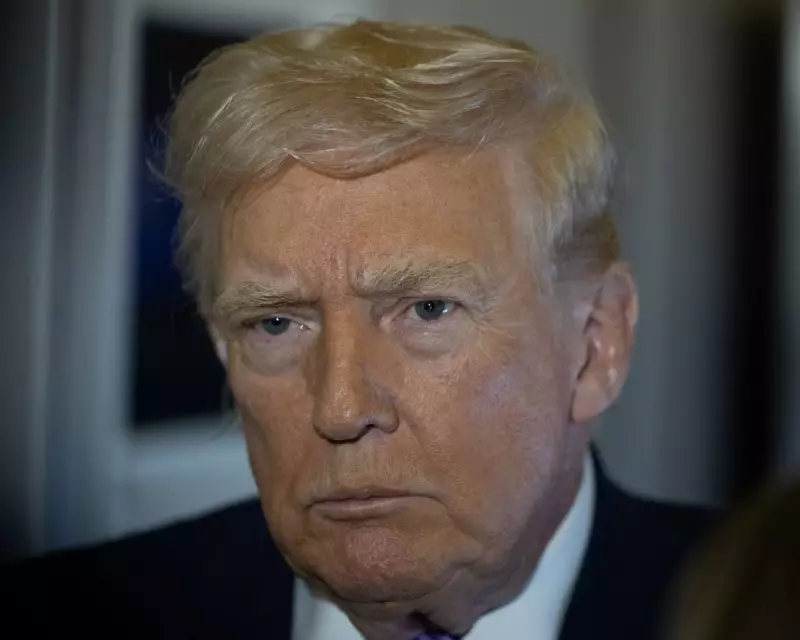
Weeks of escalating tensions between the United States and Venezuela appear to have culminated in a stark private ultimatum from President Donald Trump to his Venezuelan counterpart, Nicolás Maduro. According to revelations this week, during a telephone call on 21 November, Trump told Maduro he must "leave the country now" to save himself and his inner circle.
A Call to Quit or Face the Consequences
This direct threat, delivered from Air Force One as Trump travelled to Washington DC on 30 November, dispels any notion that the US administration is backing down from its aim of toppling Maduro's regime. The call followed a significant US military buildup in the Caribbean, described as the largest in Latin America since the 1962 Cuban missile crisis.
Trump has long branded Maduro a "narco-terrorist" and made unfounded accusations about Venezuela sending violent criminals to the US. The ultimatum marks a sharp departure from a brief period of potential compromise earlier this year. At that time, US special envoy Richard Grenell had secured agreements on migrant deportations and the release of American detainees.
Maduro has even dangled the prospect of granting the US access to Venezuela's vast oil and mineral reserves. However, the path of diplomacy has been overtaken by a more aggressive stance, championed by hawkish figures like Secretary of State and acting national security adviser Marco Rubio.
Unfinished Business and a Potential 'Decapitation Strike'
Analysts suggest that for Trump, Venezuela represents "unfinished business" from his first term, touching on key priorities: drug trafficking, regional migration, and countering Chinese influence. Ryan Berg, head of the future of Venezuela initiative at the Center for Strategic and International Studies, argues that the chief hawk in the administration is Trump himself.
Berg warns that the ultimatum raises the spectre of a US-led "decapitation strike" aimed at killing Maduro. The administration's potential justification would be its refusal to recognise Maduro as a legitimate head of state, citing the widely disputed 2018 and 2024 presidential elections.
"My sincere belief is that Trump is serious about this, and that we may well see strikes in Venezuela before Christmas," Berg stated. He added that an alternative, "easier" negotiated exit for Maduro—with safe passage to a country like Qatar, Cuba, or Turkey—is also being pursued.
Maduro's Resistance and Regional Backlash
Despite the immense pressure, there is little guarantee Maduro will accept any deal. One US businessman with ties to Venezuela noted that the prospect of exile with wealth is "not a very appetising prospect" for the leader, suggesting such figures often do not live long in exile.
Furthermore, Maduro has mobilised the Venezuelan military in a show of defiance. Steve Ellner, a veteran commentator on Venezuelan politics, argues that had the military been willing to overthrow Maduro out of fear, it would have happened already.
Significant pushback from key Latin American leaders, including Colombia's Gustavo Petro, Brazil's Lula, and Mexico's Claudia Sheinbaum, has also complicated any potential US military action. Ellner suggests Trump is currently using intimidation to extract maximum concessions while "playing it by ear" regarding a final decision on an invasion.
The situation remains perilously poised. While the full-throttle threats suggest a president ready for conflict, the resilience of Maduro's position and regional opposition mean the outcome is far from certain. The world now watches to see if Trump's "easy way or the hard way" ultimatum will trigger a new war in America's hemisphere.