
Trump's Military Threats Against Iran Could Provoke Dangerous Backlash
Former President Donald Trump has escalated his confrontational rhetoric toward Iran, deploying what he describes as an "Armada" of US naval vessels to the region while threatening "strong military options." The USS Abraham Lincoln and multiple guided missile destroyers have been positioned in waters near Iran, creating a tense standoff that has international security experts deeply concerned about potential miscalculation.
Why Trump Is Targeting Iran Now
Dr Dafydd Townley, a senior teaching fellow in International Security at the University of Portsmouth, explains that Trump views Iran as a major destabilising force in the Middle East. "He certainly wants to have a more pro-Western or Western-leaning government in place," Dr Townley told Metro. However, he cautioned that military action might achieve the opposite effect, pushing Iranians to unite against what they perceive as an existential American threat.
"There is a significant risk of pushing people to unite in Iran against an existential threat like the United States," Dr Townley warned. "At the moment, I don't think anyone there views the U.S. as an ally, and military action is not going to change that."
The Dangerous Precedent of Recent Successes
Security analysts suggest the Trump administration might feel "emboldened" by recent successes like the capture of Nicolas Maduro, but they emphasise the vast difference between targeted covert operations and full-scale military strikes against a nation-state. Dr Townley noted the particular irony of Trump's sudden international activism: "It is quite interesting that Trump, who has been very reluctant to get involved in international causes before, has suddenly become very vocal over the last two months."
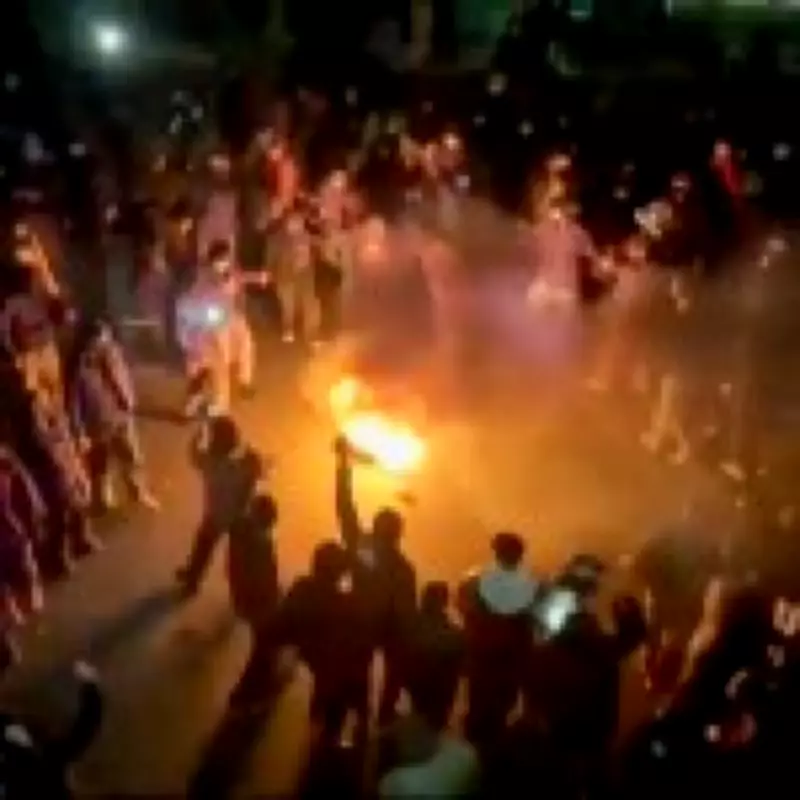
The timing coincides with Iran's internal turmoil, where government forces have reportedly killed thousands of protesters during a brutal crackdown over the past month. Trump and his national security team have reportedly considered various responses, including cyber-attacks and potential strikes conducted either directly by the US or through Israel.
How Military Action Could Strengthen Tehran's Hand
Dr Andreas Krieg, associate professor in Defence Studies at King's College London, explained the potential consequences of US strikes: "If Trump decides to strike Iran, it could allow Iranian forces to clamp down on anyone supporting US intervention. This could include wider lethal force, more arrests, and deeper information control."
However, Dr Krieg added an important qualification: "Strikes do not automatically strengthen the regime. If the public perceives U.S. action as targeted and punitive against coercive organs rather than society at large, the 'existential threat' narrative may not translate into durable rally-around-the-flag effects."
The Complex Reality of Regime Vulnerability
Dr Anahita Motazedrad, a visiting Senior Fellow in International Relations at LSE, described a regime already behaving as though its grip is slipping: "A crackdown is in full force regardless of external threats. They don't need a new 'existential threat' narrative to justify repression; they have already committed to it."
She added: "Against this backdrop — and amid a nationwide uprising — limited US pre‑emptive strikes are unlikely to unify the regime. Instead, they could deepen perceptions of weakness, widen internal fractures, and potentially accelerate the erosion of the IRGC's control rather than strengthen it."
The Ghost of 1953 and Western Intervention
Many Iranians fear a repeat of the 1953 coup, when the US and UK orchestrated the overthrow of Iran's first democratically elected government. Dr Arshin Adib-Moghaddam, Professor in Global Thought at the University of London, called this event "a trauma" that continues to shape Iranian attitudes toward Western intervention.
"The rhetoric of 'freedom' is largely discredited by the fact that US foreign policy in the region and beyond has never been geared to democracy and human rights," Dr Adib-Moghaddam argued. "The majority of Iranians distrust Netanyahu and Trump in particular, because of the brutality of their policies in Gaza and the hypocrisy surrounding 'human rights' in Western foreign policy discourse."
The Perilous Prospect of Power Vacuum
Should the regime collapse through protests or external intervention, experts warn of catastrophic consequences. Dr Bamo Nouri, a professor in International Relations at the University of West London, explained: "The biggest danger is not only chaos in Tehran, but fragmentation in the provinces, score-settling among armed actors, and a scramble over strategic assets and prisons."
Dr Motazedrad emphasised that the international community has learned from disastrous interventions in Libya and Iraq: "That's why the focus is already on immediate diplomatic coordination, support for an Iranian‑led transitional process, and clear limits on external involvement. The essential point is that Iranians themselves, not foreign powers, must shape the post‑regime landscape."
A World Unprepared for Iranian Collapse
Dr Nouri highlighted the global context that makes this moment particularly dangerous: "The world is emerging from a pandemic, facing ongoing war in Ukraine, inflationary pressures, debt crises, and political fragmentation across the US and Europe. This is not 2003 - there is little public appetite or financial capacity for large-scale reconstruction or prolonged intervention."
He concluded with a sobering assessment: "Without a credible, indigenous transition process, the risk is not democratic renewal, but fragmentation, instability, and a repeat of the post-intervention chaos seen elsewhere."
The consensus among security experts appears clear: while Iran's internal crisis demands international attention, military intervention by the Trump administration risks backfiring spectacularly, potentially strengthening the very regime it seeks to pressure while creating regional instability that could last for generations.




