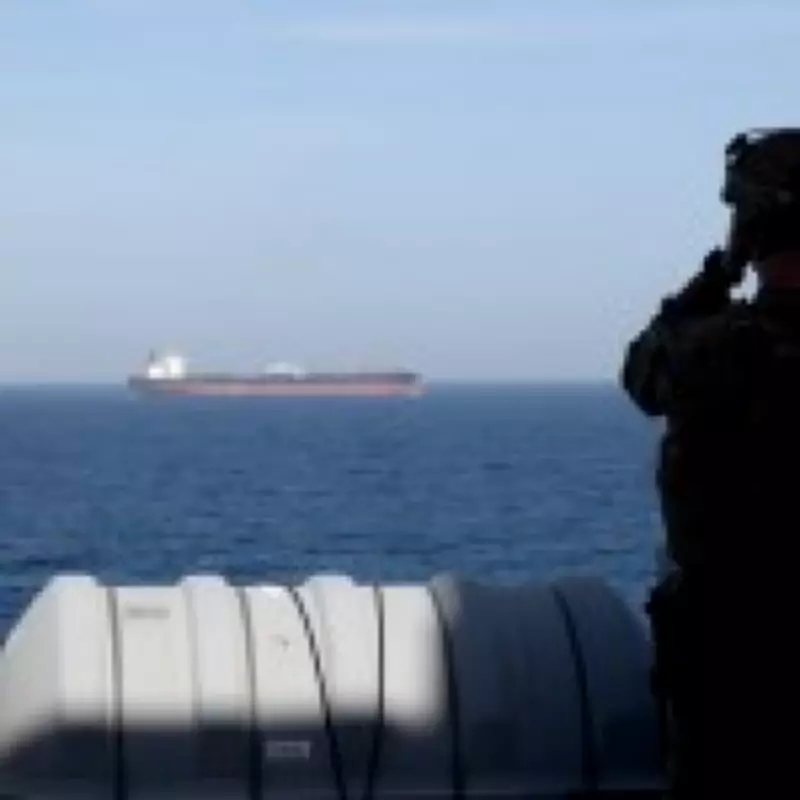
Trump Announces US Navy Seizure of Iranian Cargo Ship in Strait of Hormuz
In a dramatic escalation of maritime tensions, former US President Donald Trump has publicly claimed that the United States Navy forcibly intercepted and seized an Iranian cargo vessel in the strategic Strait of Hormuz. According to Trump, the naval action involved deliberately damaging the ship's engine room to halt its movement, a move that directly challenges the current fragile ceasefire agreement between the two nations.
Details of the Alleged Naval Interception
Trump stated that the incident occurred on Sunday evening, when the Iranian-flagged cargo ship TOUSKA, described as nearly 900 feet long and comparable in weight to an aircraft carrier, attempted to evade a US naval blockade. He asserted that the guided missile destroyer USS SPRUANCE issued warnings to the vessel, which were allegedly ignored by the Iranian crew.
The former president claimed, "Our Navy ship stopped them right in their tracks by blowing a hole in the engine room. Right now, U.S. Marines have custody of the vessel." He further justified the seizure by citing US Treasury sanctions against the TOUSKA due to its purported history of illegal activities, adding that authorities are currently inspecting the ship's contents.
Broader Context of Regional Tensions
This announcement comes amid heightened geopolitical friction in the Middle East. Trump accused Iran of violating the ceasefire agreement in the Strait of Hormuz and issued stark threats, including targeting Iranian power plants and bridges if negotiations fail. He declared, "NO MORE MR. NICE GUY" with Iran, calling for an end to what he termed "the Iran killing machine."
In a related claim, Trump alleged that Iran fired bullets at French and UK vessels in the strait, though the UK government has reportedly received no confirmation of such attacks on Saturday. These assertions contrast sharply with Iran's recent announcement to reopen the key shipping lane, which was swiftly reversed following the US blockade of Iranian ports.
Economic and Diplomatic Repercussions
The volatile situation has immediate economic implications. Iran's brief reopening of the Strait of Hormuz initially provided relief to global markets, with Brent crude oil prices dropping over 10% to around $89 per barrel and European stock indices, such as the FTSE 100 and Germany's Dax, posting gains. However, the renewed blockade and Trump's claims threaten to destabilize these trends.
Diplomatically, the US is pursuing talks, with Vice President J.D. Vance set to lead a delegation to Pakistan on Monday, potentially extending discussions to Iran. This occurs against a backdrop of a temporary truce between the US and Iran, set to expire on April 22, and a separate ceasefire between Israel and Lebanon.
Conflicting Reports and Regional Statements
Iran's joint military command has asserted that control of the Strait of Hormuz remains under the strict management of its armed forces, contradicting US narratives. Meanwhile, commercial shipping continues cautiously; Tui Cruises confirmed that two of its ships transited the strait after securing necessary approvals, indicating some operational normalcy amidst the tensions.
As developments unfold, the international community watches closely, with concerns over potential military escalation and impacts on global trade routes. The situation underscores the precarious balance in one of the world's most critical maritime chokepoints.