
Americans face numerous concerns in today's political climate, from economic instability to cancelled travel plans, but perhaps the most alarming development involves an institution traditionally kept separate from partisan politics: the United States military.
The Systematic Purge of Military Leadership
What's emerging is a clear and disturbing pattern: Donald Trump is systematically purging higher military ranks based on personal prejudices and demands for absolute loyalty. The armed forces are being transformed from a non-partisan institution into what critics describe as a partisan instrument and political prop.
The situation becomes more dangerous when considering how the president is instilling what analysts call a 'logic of impunity' throughout his governance approach. This philosophy has now extended to military operations and appointments.
Senior figures perceived as too close to Trump critics, such as General Mark Milley, have experienced delayed or cancelled promotions. Others targeted by far-right influencers face professional retaliation in what appears to be a coordinated effort to reshape military leadership.
Performance Over Principle: The New Military Ethos
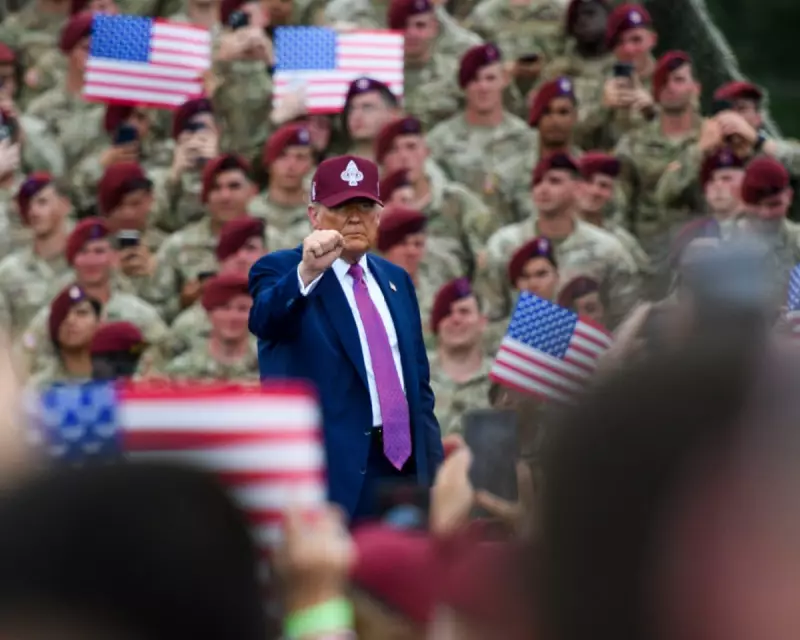
In one notable incident, Trump used soldiers associated with his 'Make America Great Again' movement as background props during a speech at Fort Bragg. This action violated longstanding norms against using state institutions for partisan purposes.
Each norm violation serves as a loyalty test, identifying who remains committed to the administration's agenda versus those potentially deemed disloyal. The administration has further complicated matters by issuing questionable orders, such as attacking boats in the Caribbean, which could morally compromise those who carry them out and potentially expose them to criminal liability.
This creates a perverse incentive structure where military personnel might feel pressured to ensure Trump-aligned politicians remain in power to guarantee their own protection.
Meanwhile, prominent pardons—most recently for those involved in attempts to overturn the 2020 election results—establish a clear promise of impunity for political allies. As numerous observers have noted, under this framework, law protects MAGA faithful but doesn't bind them, while those declared enemies are bound by law but receive no protection from it.
From Warrior Ethos to Political Performance
The transformation extends to military culture itself, heavily influenced by figures like Pete Hegseth, who has brought television's performative priorities into Pentagon operations. His self-branding through distinctive dress and theatrical speeches filled with alliteration suggests a shift where appearance often supersedes substance.
This approach recalls eighteenth-century writer Mary Wollstonecraft's surprising comparison between stereotypes about women and certain soldiers in standing armies. She observed that soldiers might 'acquire manners before morals,' focusing on pleasing appearances rather than ethical substance.
The current emphasis on a 'warrior ethos' often appears as pure television affectation, as if hand-to-hand combat represents the essence of modern warfare rather than the complex strategic operations that actually characterize twenty-first-century military engagement.
Central Command has become subject to what Trump himself called 'central casting' logic when viewing officers assembled by Hegseth in Virginia during September. The Prussian general Carl von Clausewitz's famous dictum that war represents politics continued by other means has been replaced by what critics describe as 'war as the continuation of fitness and fashion by other means,' evidenced by Hegseth prioritising the removal of personnel deemed physically unfit.
The Real Consequences of Political Militarisation
Deploying soldiers into Democratic-led cities shouldn't be dismissed as merely performative. This action serves to normalise military presence in civilian spaces, blurring distinctions between military and civilian life.
As Israeli scholar Avishay Ben Sasson-Gordis has argued, this deployment sends a dangerous message that citizens can be treated as enemies. The situation grows more confusing as it becomes increasingly unclear which uniformed personnel belong to which units and who possesses proper authorisation for specific actions.
The Pentagon and Department of Homeland Security are explicitly encouraged to operate in 'lockstep' as part of a shared 'homeland mission.' Trump appears to be merging various forces into what political scientist Dan Moynihan terms the 'omniforce'—an omnipresent military combined with what James Madison called an 'overgrown executive' that America's founders specifically feared.
The effects are twofold: impunity becomes more likely since unidentified individuals cannot be held accountable, and the omniforce begins to feel like Trump's personal creation and loyal guard. Investigations reveal that at least six of Trump's political appointees currently reside in military housing, reinforcing this perception.
The image of Trump as political patron was further reinforced when he attempted to redirect funds appropriated by Congress for other purposes to pay soldiers during government shutdowns—not to mention having a pro-regime oligarch fund military operations with private wealth.
Other aspiring autocrats have made similar moves, though at smaller scales. Hungary's Viktor Orbán instituted a special counter-terror unit headed by his former bodyguard and aide, widely seen as primarily loyal to the prime minister rather than state institutions.
Many remember the great democratisation wave of the 1970s and 1980s while forgetting how easily circumstances might have unfolded differently. We often overlook the military's critical role in democratic transitions—not only because juntas were sometimes willing to relinquish power but because individuals made correct moral choices at pivotal moments.
When Augusto Pinochet lost a 1988 plebiscite in Chile, he prepared to declare an emergency and maintain power by force. One general, Fernando Matthei, rejected this plan and informed journalists that Pinochet had legitimately lost the vote. While the United States isn't Chile, the question of what uniformed personnel will do during democracy's pivotal moments becomes more relevant with each passing day.




